

Teak wood is a tropical hardwood valued for its golden-brown appearance, dimensional stability, and naturally decay-resistant heartwood. It is widely used for outdoor furniture, boat decking, interior joinery, and decorative veneers.
Its main advantages are durability and relatively low maintenance, especially when compared with woods that have poor natural decay resistance. However, teak is expensive, its quality varies, and its natural oils can complicate gluing and finishing.
Before buying teak, it helps to understand what the name means, which properties matter, and how to care for the finished product.
What Is Teak Wood?
Most commercial genuine teak comes from Tectona grandis, a deciduous tree native to parts of South and Southeast Asia. It is also grown in plantations across other tropical regions.
Teak heartwood is usually golden to medium brown, while its sapwood is pale cream or yellowish-white. The grain is generally straight, although occasional wavy grain occurs.
Its natural extractives help protect the heartwood against decay and contribute to its characteristic oily feel. These properties make teak useful in demanding outdoor environments.
However, teak is water-resistant, not waterproof. It still absorbs and releases moisture, and unsuitable construction or prolonged damp conditions can cause problems.
Teak Wood Properties
| Property | Typical Characteristics |
|---|---|
| Scientific name | Tectona grandis |
| Wood classification | Hardwood |
| Heartwood color | Golden to medium brown |
| Sapwood color | Pale cream to yellowish-white |
| Grain | Usually straight; occasionally wavy |
| Texture | Medium to coarse |
| Average dried weight | Approximately 41 lb/ft³ (655 kg/m³) |
| Janka hardness | Approximately 1,070 lbf (4,740 N) |
| Natural decay resistance | High in suitable heartwood |
| Dimensional stability | Good, with relatively low shrinkage |
| Common uses | Furniture, boat decking, joinery, flooring, and veneers |
These are representative values. Actual properties vary with growing conditions, age, moisture content, and the individual board.
Common Uses of Teak Wood
1. Indoor and Outdoor Furniture
Teak is widely used for dining tables, chairs, benches, loungers, and other furniture.
For outdoor pieces, its durable heartwood and good stability are particularly valuable. Well-made teak furniture can tolerate changing weather conditions, provided joints drain properly and the furniture receives suitable care.
Indoors, its warm color and visible grain suit both traditional and modern designs.
2. Boatbuilding and Marine Joinery
Teak has a long history in boatbuilding, particularly for decks, trim, and joinery.
Its durability and relatively low movement make it useful where wood encounters changing moisture conditions. However, teak alone does not make a boat waterproof. Deck seams, adhesives, fasteners, sealants, and the underlying structure all matter.
3. Exterior Decking
Teak can be used for exterior decks because its heartwood resists decay and remains relatively stable.
Its cost makes it a premium option. Board quality, ventilation, drainage, and suitable fasteners remain important even when using durable timber.
4. Veneer and Plywood
Teak veneer provides the appearance of teak while using less of the valuable timber. It is commonly used on furniture, cabinetry, doors, and interior panels.
Teak-faced plywood is not necessarily made entirely from teak, and it is not automatically marine-grade. Its performance depends on the core veneers, adhesive bond, construction quality, and the standard it meets.
For damp or marine applications, check the panel specification rather than relying on the face veneer.
5. Flooring, Doors, and Interior Woodwork
Teak is also used for flooring, doors, stairs, and decorative joinery. Its warm appearance and stability are useful, although its hardness does not make it immune to dents or scratches.
Advantages of Teak Wood
Attractive Appearance
Teak’s golden-brown heartwood and generally straight grain give it a distinctive appearance.
Color changes with age, light exposure, and finishing. Indoors, the wood may develop a deeper tone. Outdoors, unfinished teak normally weathers toward silver-gray.
Natural Decay Resistance
Teak heartwood is valued for its resistance to wood-decaying fungi. This is a major reason for its use in outdoor furniture and marine applications.
The protection is not equal throughout every board. Sapwood lacks the same natural durability, and heartwood quality can vary.
Good Dimensional Stability
Teak has relatively low shrinkage compared with many other woods. This helps reduce movement as moisture conditions change.
It can still expand, contract, and develop small checks. Proper drying, acclimation, and construction remain necessary.
Long Service Life
Good-quality teak furniture can last for decades when its construction, environment, and maintenance are appropriate.
There is no reliable universal lifespan for every teak product. A well-built indoor cabinet and a poorly drained outdoor bench experience very different conditions.
Relatively Low Maintenance
Outdoor teak does not always require a coating to remain useful. If you like the silver-gray appearance, cleaning and routine inspection may be sufficient for furniture designed to weather naturally.
Maintaining its original golden color requires more attention.
Disadvantages of Teak Wood
High Cost
Teak is generally more expensive than many common furniture woods.
The price reflects factors such as demand, usable heartwood content, board dimensions, grading, drying, transport, and sourcing. Clear, wide boards usually cost more than smaller or more defective pieces.
Variable Quality
Two products labeled “teak” may differ considerably in heartwood content, drying quality, construction, and durability.
Country of origin alone does not establish quality. Inspect the actual material and ask for a clear product specification.
Tool Wear
Teak is usually workable with suitable tools, but its silica content can dull cutting edges.
Sharp carbide tooling is useful for repeated machining. Its moderate hardness should not be confused with easy cutting under every condition.
Gluing and Finishing Challenges
Natural oils can interfere with some adhesives and coatings.
Prepare the surface and choose products recommended for oily hardwoods. If the adhesive manufacturer specifies a cleaning solvent or particular preparation method, follow those instructions rather than using a universal solvent-wiping routine.
Color Changes Outdoors
Unfinished teak loses its golden appearance as it weathers.
This is normal and does not automatically indicate decay, but buyers who want a consistent golden-brown finish should plan for ongoing color maintenance.
Types of Teak: Genuine Teak and Trade Names
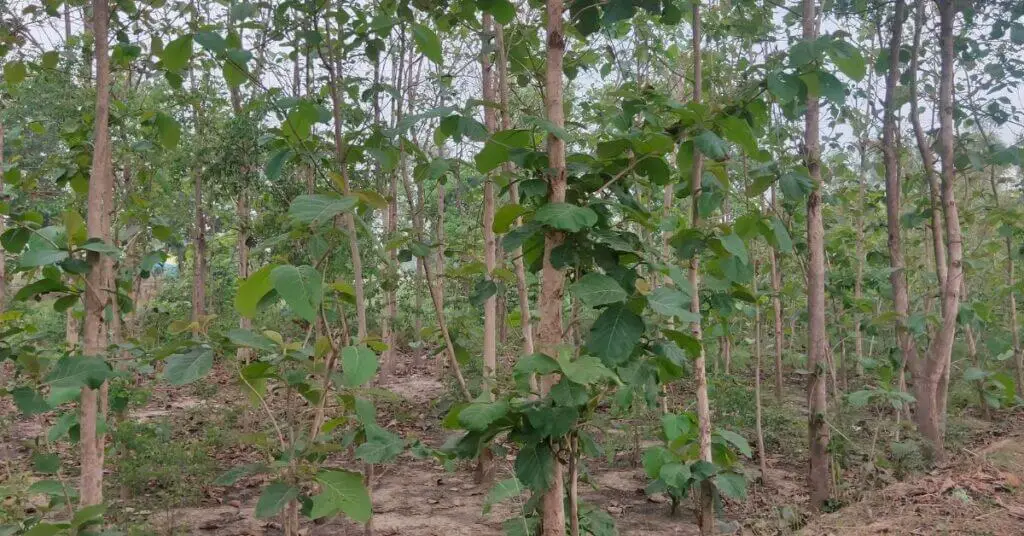
Many “types of teak” are geographic labels rather than separate species. Other products use the word teak even though they come from unrelated trees.
| Market Name | What It Usually Means |
|---|---|
| Burmese or Myanmar teak | Tectona grandis associated with Myanmar |
| Indian teak | Usually Tectona grandis grown in India |
| Thai teak | Usually Tectona grandis associated with Thailand |
| Indonesian teak | Usually plantation-grown Tectona grandis from Indonesia |
| Plantation teak | Teak grown in managed plantations; not a separate species |
| South American teak | May mean plantation-grown Tectona grandis; verify the species |
| African teak | An ambiguous name that may refer to plantation teak or unrelated timbers |
| Brazilian teak | Commonly cumaru, which is not genuine teak |
Is Plantation Teak Real Teak?
Yes. Plantation-grown Tectona grandis is genuine teak.
However, plantation conditions, harvest age, heartwood development, drying, and grading influence the finished lumber. “Plantation-grown” does not automatically mean either poor or excellent quality.
Is Brazilian Teak the Same as Teak?
No. Brazilian teak commonly refers to cumaru, a different timber that is generally much harder and heavier.
The two woods should not be treated as interchangeable when comparing weight, machining, fastening, or finishing requirements.
When buying, ask for the botanical name, not just the commercial name.
Teak Wood Grades: A, B, and C
Many furniture sellers describe teak as Grade A, B, or C. These labels can be useful, but their definitions are not identical across all suppliers.
Grade A Teak
Usually marketed as selected heartwood with relatively consistent color and few visible defects.
This is generally the premium category, especially for outdoor furniture. However, the label alone does not verify drying quality or good construction.
Grade B Teak
Often describes material with more color variation or less selective grading.
Some suppliers associate it with outer heartwood, but you should ask what the seller’s grade actually permits.
Grade C Teak
Commonly includes more sapwood, knots, or other defects.
A high sapwood content is particularly relevant outdoors because sapwood does not provide the same natural decay resistance as heartwood.
When comparing grades, look at the difference between heartwood and sapwood and request photographs or samples. Do not assume that darker color alone proves better quality.
How Fast Does Teak Grow?
Teak can grow relatively quickly under favorable tropical conditions, especially during its early years. However, growth rate and commercial harvest age are different questions.
Some intensively managed plantations use rotations of around 20–25 years, while other systems grow trees for several decades longer. The FAO’s overview of teak plantations describes these differences in management and rotation length.
There is no single age at which every teak tree becomes ready for high-quality lumber production. Site conditions, target board size, and heartwood development all matter.
Does Teak Furniture Need Teak Oil?
Teak oil is optional, and some outdoor furniture manufacturers advise against using it on their products.
Commercial teak oil is a finishing product, not oil extracted from teak trees. Its ingredients vary by brand and may include drying oils, solvents, resins, or other additives.
It can deepen the wood’s color, but repeated application may darken the surface or increase maintenance. Barlow Tyrie’s teak-oil guidance specifically notes that repeated applications darken teak and advises against repeated use.
Before applying anything, decide whether you want:
- A naturally weathered silver-gray appearance.
- A maintained golden-brown appearance.
- A specific coated finish recommended by the furniture manufacturer.
If You Choose to Apply Teak Oil
Follow the furniture manufacturer’s guidance and the finish label:
- Clean the surface with a compatible cleaner.
- Allow the wood to dry thoroughly.
- Test the product on an inconspicuous area.
- Apply the recommended amount and remove excess as directed.
- Observe the stated drying and recoating times.
Do not assume that every product needs two coats or a 30-minute interval. Handle oil-soaked cloths according to the product’s fire-safety instructions.
How to Care for Teak Furniture
Clean Gently
Remove loose dirt and leaves, then use a soft brush or cloth with a suitable cleaning solution.
Avoid treating aggressive sanding as a routine cleaning method. It removes wood and can change the surface.
Follow the Manufacturer’s Cleaning Instructions
Some cleaners can affect coatings, fittings, or surrounding materials. Use products appropriate for your furniture and rinse as directed.
Avoid high-pressure washing unless the manufacturer explicitly permits it, because it can erode the wood’s surface.
Let the Furniture Drain and Dry
Keep drainage gaps clear and avoid leaving furniture legs in standing water or persistently wet soil.
If using a cover, choose one that allows ventilation. A tightly sealed cover over damp furniture can trap moisture.
Maintain Color Only if Desired
A manufacturer-approved teak protector may help preserve the golden appearance. Such products require renewal and do not make the furniture waterproof or insect-proof.
If you prefer the natural gray color, focus on cleanliness and sound joints rather than repeatedly applying color-restoring products.
Inspect Joints and Hardware
Check for loose fasteners, damaged fittings, and areas where water collects. The lifespan of teak furniture depends on the whole construction, not just the wood.
How to Identify Teak Wood
Teak commonly has:
- Golden to medium-brown heartwood.
- Pale sapwood.
- Generally straight grain.
- A medium-to-coarse texture.
- A slightly oily feel on freshly prepared surfaces.
These characteristics are clues, not proof. Other timbers and stained woods can resemble teak.
For an expensive purchase, supplier documentation and reliable species identification are more dependable than color, smell, or a simple water-drop test.
What to Check Before Buying Teak
Ask the supplier:
- Is the wood Tectona grandis?
- Is the product solid teak, teak veneer, or teak-faced plywood?
- How much sapwood is present?
- What does the stated grade mean?
- Has the lumber been dried for its intended use?
- Is the product designed for indoor or outdoor exposure?
- What documentation supports its origin and sourcing?
- Which cleaning and finishing products does the manufacturer recommend?
For furniture, also inspect joints, hardware, drainage, and overall workmanship. Premium timber cannot compensate for poor construction.
Is Teak Wood Worth the Price?
Teak can justify its cost when you value durable heartwood, dimensional stability, and a distinctive natural appearance. These qualities are especially useful for well-made outdoor furniture and suitable marine components.
The best purchase is a clearly specified, responsibly sourced product with sound construction. Choose based on the actual wood and workmanship, rather than a country label, an impressive lifespan claim, or the word “premium.”
Comments are closed.