
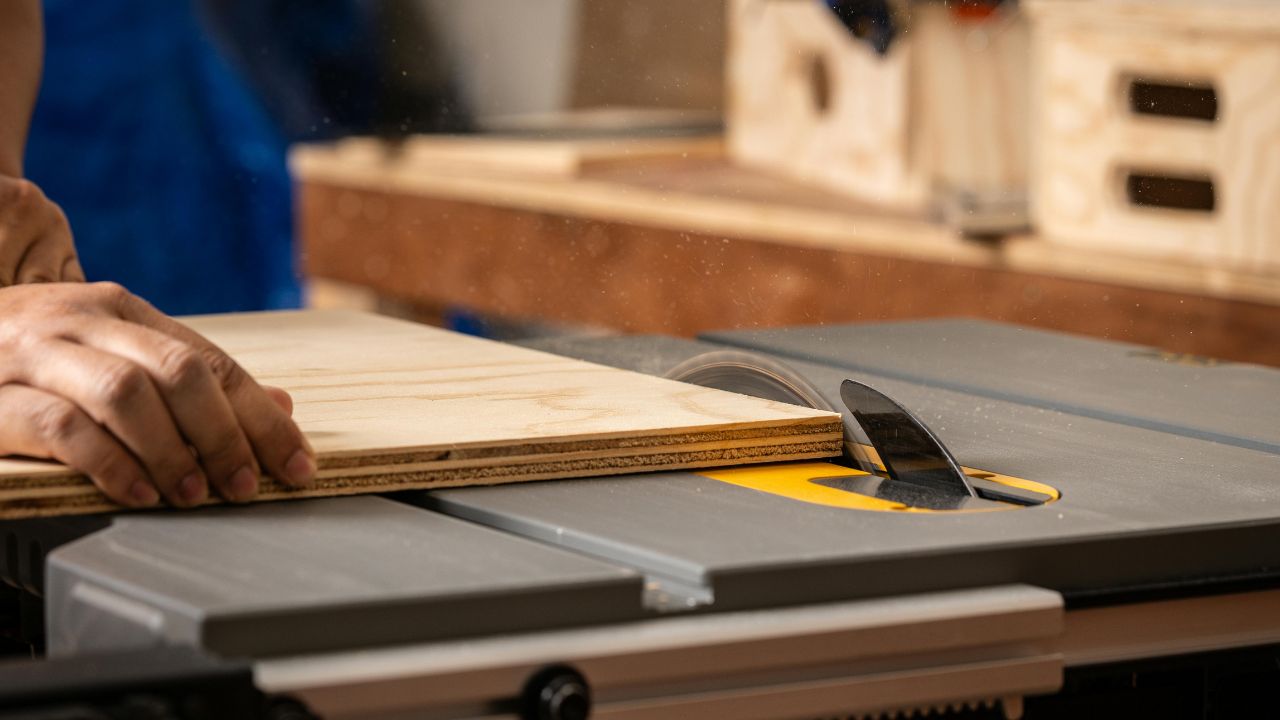
BWP plywood is a popular choice for kitchen cabinets, bathroom vanities, and furniture exposed to moisture. Its water-resistant bonding helps the layers stay together under demanding conditions, making it useful where ordinary interior plywood may be unsuitable.
However, choosing a sheet labeled “waterproof” is only part of the decision. The panel’s construction, thickness, certification, and installation also affect how well it performs.
This guide explains what BWP plywood is, where to use it, its advantages and limitations, and what to check before buying.
What Is BWP Plywood?
BWP stands for Boiling Water Proof. It is a plywood grade designed to meet specified water-resistance requirements, including resistance to bond failure under demanding test conditions.
Like other plywood, it consists of thin wood veneers glued together. The grain direction typically alternates between adjacent layers, helping the panel resist movement across its width and length.
BWP describes a performance grade, not a particular wood species. Different products can use different veneers, adhesives, and constructions while meeting the applicable requirements.
In India, IS 303:2024 includes BWP-grade general-purpose plywood. Marine plywood is covered separately by IS 710:2024. The BIS product manual for IS 303 lists MR, BWR, and BWP grades alongside separate classifications for bending performance, appearance, and formaldehyde.
That distinction matters: BWP plywood is not automatically marine plywood.
BWP Plywood Properties at a Glance
| Property | What it means for your project |
|---|---|
| Water-resistant bonding | Helps the veneers remain bonded during moisture exposure |
| Layered construction | Provides a useful panel material for furniture and cabinetry |
| Dimensional stability | Cross-grain construction helps reduce movement, but does not eliminate it |
| Strength | Depends on thickness, veneers, construction, and the panel’s rated properties |
| Surface appearance | Varies by face quality and product range |
| Finishing options | Can receive compatible laminates, veneers, paints, or coatings |
| Weight | Varies with timber species, thickness, and moisture content |
| Insect resistance | Must be checked separately from the BWP designation |
| Outdoor suitability | Depends on the specific product, protection, and exposure |
There is no single density, strength value, or lifespan that applies to every BWP sheet.
How Is BWP Plywood Made?
Manufacturers prepare and dry wood veneers, apply a suitable adhesive, and arrange the layers into a panel. Heat and pressure bond the assembly before trimming, sanding, and quality checks.
Phenol-formaldehyde-based adhesives are commonly associated with BWP plywood, although buyers should check the specific manufacturer’s information rather than assuming every product has an identical formulation.
The adhesive is only one part of the result. Poor veneer preparation, inconsistent bonding, or defects within the panel can affect performance.
This is why verified product quality matters more than a waterproof claim printed on the surface.
Main Properties of BWP Plywood
1. Resistance to Delamination
Delamination occurs when plywood layers separate. BWP-grade bonding is intended to withstand demanding moisture conditions and reduce this risk.
That makes it useful for furniture exposed to humidity or occasional water contact. However, a persistent leak should still be repaired promptly.
2. Dimensional Stability
Alternating grain directions help plywood control movement compared with a wide solid-wood board. This is useful for cabinet sides, partitions, and other broad surfaces.
BWP plywood can still expand, shrink, or warp when moisture conditions change. Uneven exposure and poor storage can create problems even before installation.
3. Strength for Furniture Applications
A suitable BWP panel can provide a strong base for cabinets, shelves, and other furniture.
However, the grade does not specify the correct thickness for every job. Shelf span, loading, supports, and joint design must also be considered.
A long shelf carrying books needs a different design from a lightly loaded cabinet back.
4. A Surface Suitable for Finishing
BWP plywood can be finished to suit different interiors. Decorative laminates and veneers are common choices, while suitably prepared faces can also be painted or coated.
Inspect the face quality before buying. A panel intended to sit beneath a laminate may not provide the appearance you want under a clear finish.
5. Water Resistance Without Complete Moisture Immunity
The wood veneers can absorb moisture even when the glue lines remain intact.
Water-resistant bonding should therefore be combined with sensible detailing and maintenance. As the APA plywood guidance explains, resistance to decay depends on design, construction, and care as well as the panel itself.
Common Uses of BWP Plywood
Kitchen Cabinets
BWP plywood is useful for cabinets exposed to cooking humidity, cleaning, and occasional splashes.
Pay particular attention to sink units. Protect cut edges and plumbing openings, and leave access for checking pipes. A well-built cabinet should make a leak easy to discover rather than trapping it out of sight.
Bathroom Vanities
For a bathroom vanity, choose a product approved for the intended application and protect its vulnerable surfaces.
Keep the cabinet clear of standing water and seal openings around pipes. BWP plywood should not be treated as a replacement for the waterproofing system in a shower or other continuously wet area.
Utility and Laundry Cabinets
Cabinets near washing machines or utility sinks may benefit from BWP-grade material.
Good ventilation and protected edges remain important. Avoid positioning an exposed panel edge where floor-cleaning water regularly collects.
Furniture in Humid Interiors
BWP plywood can be considered for wardrobes, storage units, and furniture in humid homes.
However, moisture-resistant bonding will not resolve a damp wall. Address the source of dampness and allow appropriate clearance or ventilation behind furniture.
Commercial Cabinetry
It can also be used in suitable shop fittings, counters, and storage cabinets where cleaning and occasional spills are expected.
Select the panel according to the actual exposure and load. A decorative counter front and a heavily loaded storage shelf have different requirements.
Sheltered Exterior Work
Some BWP products may be suitable for protected exterior applications, subject to the manufacturer’s instructions.
Do not assume that any BWP sheet can remain outdoors unfinished. Confirm the exposure rating and use an appropriate coating and construction method.
Advantages of BWP Plywood
Better Suited to Moisture-Prone Furniture
BWP offers a useful option where moisture exposure makes ordinary interior-grade material a poor fit. Kitchens and utility areas are common examples.
Reduced Risk of Moisture-Related Bond Failure
Its bonding performance can help protect the panel against layer separation under the conditions covered by its grade.
This is valuable in fitted furniture, where replacing a damaged cabinet can involve removing countertops, hardware, or adjacent units.
Versatile Appearance
You can use the same underlying panel type with different finishes throughout a home. A laminate may suit a kitchen, while a decorative veneer may suit a living-room cabinet.
Practical for Custom Furniture
Plywood sheets can be cut into cabinet components and assembled using suitable woodworking methods. This makes BWP useful for both standard and custom-sized furniture.
Potential Long-Term Value
Paying more for a suitable panel can make sense when failure would be costly to repair. The benefit depends on choosing the correct product and installing it properly.
Disadvantages of BWP Plywood
Higher Purchase Cost
Within comparable product ranges, BWP plywood often costs more than MR plywood.
For furniture in a consistently dry room, that extra expenditure may offer less benefit than it would around a sink.
Edges and Openings Still Need Protection
A finished face does not protect every part of a cabinet. Cut edges, joints, and holes remain important entry points for moisture.
Allow time and budget for those details during fabrication.
Quality Varies Between Products
Two BWP sheets may differ in face quality, construction, flatness, strength, and warranty coverage.
Compare the exact specification rather than assuming that the grade makes all brands equivalent.
It Can Be Heavy
Thicker panels can be awkward to handle and may require substantial hardware in large doors or cabinets.
Choose hinges, supports, and fixing methods to suit the completed assembly.
It Is Not a Universal Outdoor or Marine Material
BWP labeling alone does not establish suitability for boat construction, permanent wetting, or an exposed outdoor structure.
Those projects require their own material specifications.
The Grade Does Not Describe Every Property
BWP does not automatically mean termite-proof, fire-retardant, or zero-emission. Check any additional performance claims separately.
BWP vs BWR vs MR Plywood
| Grade | Full form | General selection guidance |
|---|---|---|
| MR | Moisture Resistant | Consider for suitable dry interior furniture |
| BWR | Boiling Water Resistant | Consider where greater water resistance is needed than an MR product offers |
| BWP | Boiling Water Proof | Consider for more demanding moisture-related furniture applications |
These names describe differences in water-resistance performance. They do not replace checking thickness, strength, surface quality, and application guidance.
For example, a thin BWP panel is not automatically a better shelf than a properly specified thicker panel of another grade.
Is BWP Plywood the Same as Marine Plywood?
No, not necessarily.
In India, general-purpose plywood under IS 303:2024 can carry a BWP grade. Marine plywood must meet the relevant IS 710 specification.
A marine panel may be described as BWP, but a general-purpose BWP panel should not automatically be substituted when marine plywood is specified.
Check the standard and grade together, especially when a quotation uses phrases such as “waterproof marine quality.”
How to Choose Good BWP Plywood
Before ordering, check the following:
- Standard and grade: Confirm the applicable IS number and the BWP designation.
- Certification: Verify the ISI mark and CM/L licence details through BIS.
- Thickness: Match the panel to its span, load, supports, and hardware.
- Visible condition: Look for separation, damaged corners, excessive warping, and obvious edge gaps.
- Face quality: Choose a surface suitable for your intended finish.
- Additional claims: Check treatment, emissions, and warranty information for the exact product.
- Invoice details: Record the brand, product range, thickness, standard, and grade.
Weight, color, and the number of visible layers can provide observations about a sheet, but none proves its quality on its own.
Installation and Maintenance Tips
Store sheets flat, supported, and away from damp floors before use.
During fabrication, protect cut edges and openings with a suitable system. Follow the finish manufacturer’s instructions and avoid leaving concealed surfaces vulnerable to moisture.
After installation:
- Wipe up spills promptly.
- Check under-sink plumbing periodically.
- Maintain ventilation around damp-prone areas.
- Repair damaged finishes and open joints.
- Avoid allowing water to collect against cabinet bases.
Lamination is optional; appropriate protection is not. Paint, veneer, laminate, or another compatible finish may suit the project, depending on the required appearance and exposure.
Is BWP Plywood Worth Buying?
BWP plywood is worth considering when furniture will face humidity, splashes, or occasional moisture exposure. It is particularly useful for appropriately designed kitchen, bathroom, and utility cabinets.
For dry interior furniture, another suitable plywood grade may be sufficient. Spend according to the conditions the furniture will actually face.
The best result comes from combining a verified panel with the right thickness, sound construction, protected edges, and prompt attention to leaks.