
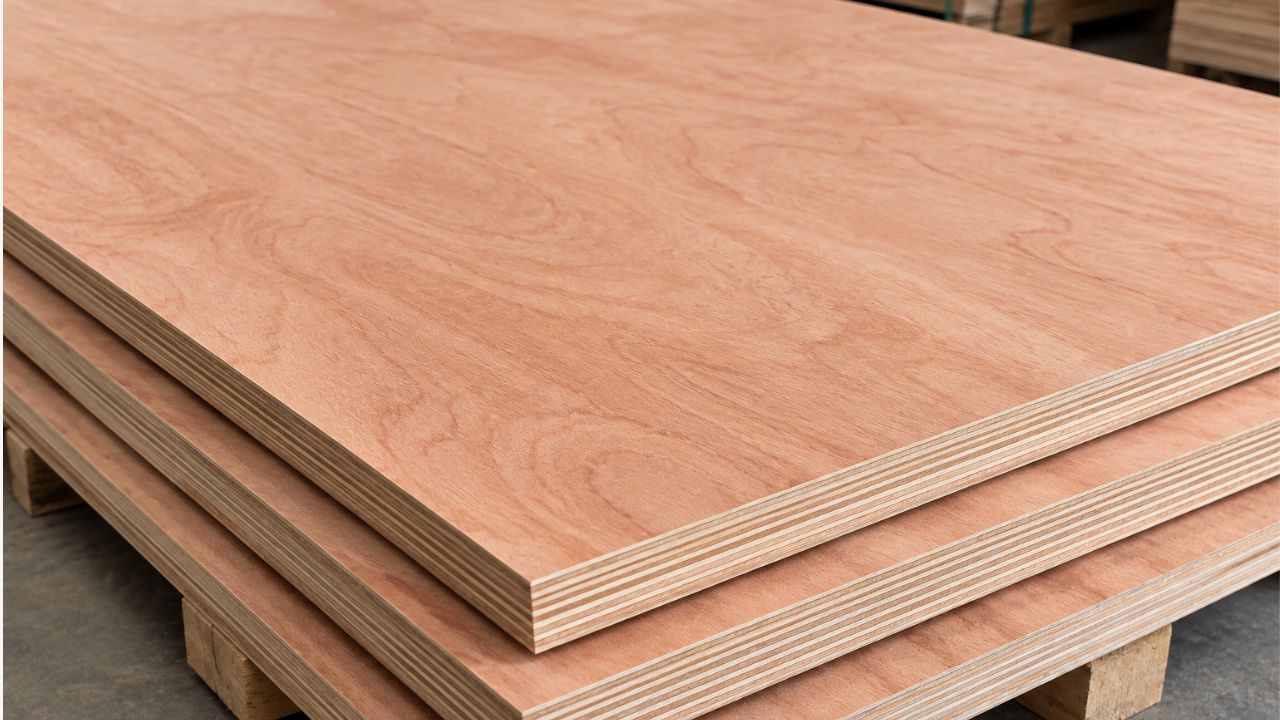
Choosing plywood can be confusing when several sheets look similar but carry different labels. BCX is one you will often encounter when shopping for shelving, cabinets, and general woodworking projects.
BCX plywood generally refers to plywood with a B-grade face, a C-grade back, and an exterior-type adhesive bond. Its smoother front makes it useful where one side will be visible, while the lower-grade back helps keep the panel economical.
However, the letters alone do not tell you everything. Before using BCX outdoors or for a load-bearing application, check the panel’s grade stamp and manufacturer’s specifications.
What Does BCX Plywood Mean?
Each letter describes a different part of the panel.
| Letter | Meaning | What to expect |
|---|---|---|
| B | B-grade face veneer | A solid, sanded surface that may contain tight knots and repairs |
| C | C-grade back veneer | More visible defects, including permitted knots, knotholes, and splits |
| X | Trade shorthand associated with exterior-type glue | Check the stamp for the actual bond classification and exposure suitability |
B-Grade Face
The B-grade face is the better-looking side of the sheet. It is suitable for many painted projects, but it is not necessarily free from knots, patches, or color variation.
For example, a repaired area might become barely noticeable under paint but remain obvious under a clear finish. If appearance matters, inspect the actual sheet before buying it.
C-Grade Back
The C-grade back has more allowable imperfections. It is usually positioned toward a wall, inside an enclosed assembly, or wherever a less refined appearance is acceptable.
This difference between the two faces makes BCX useful for projects where paying for two attractive surfaces would offer little benefit.
What Does the X Actually Tell You?
BCX is a common retail designation, but the X should not be treated as a complete outdoor-use specification.
Look for the actual bond classification:
- Exterior: Suitable for long-term exposure to weather or moisture when correctly specified and installed.
- Exposure 1: Suitable for temporary moisture exposure, such as rain during construction, before the panel receives permanent protection.
APA explains that Exposure 1 panels can use the same exterior-type adhesives as Exterior panels, while other construction factors limit their exposure suitability. Check the classification rather than relying on the product name. See APA’s explanation of plywood exposure ratings.
How Is BCX Plywood Made?
BCX plywood consists of thin wood veneers bonded together under heat and pressure. The grain generally runs at right angles between adjacent layers.
This cross-laminated construction helps the panel resist movement and distributes strength in both directions. However, plywood still has a stronger direction, and orientation matters in structural applications.
BCX describes the panel’s grading rather than a particular wood species. Products may use pine, Douglas-fir, or other softwoods, depending on the manufacturer.
For example, Boise Cascade’s sanded plywood includes BC panels made from Western species with a B-grade face and C-grade back. Another manufacturer’s BC panel may have a different veneer arrangement, thickness, or surface appearance.
Main Properties of BCX Plywood
1. One Face Suitable for Visible Work
The sanded B face provides a useful starting point for painted furniture, storage cabinets, and workshop fittings.
It still needs inspection and preparation. Small repairs, grain texture, and shallow surface irregularities can remain visible through a thin coat of paint.
2. Strength Depends on More Than the Grade Name
BCX is not a single strength rating. A panel’s performance depends on its thickness, wood species, veneer construction, orientation, and supporting framework.
A thicker shelf can still sag if its unsupported span is too long. Similarly, an attractive face does not make a panel suitable for a particular roof or floor.
For structural work, use the specified panel grade, thickness, and applicable span or design information.
3. Moisture-Resistant Bonding
An exterior-type adhesive helps the layers remain bonded when exposed to moisture. It does not stop the wood itself from absorbing water.
The distinction matters: a panel can have a durable glue bond and still develop swelling, surface damage, or decay if conditions remain wet.
4. Ordinary Woodworking Tools Can Be Used
BCX can be cut, drilled, routed, and fastened using common woodworking equipment.
Support the sheet during cutting, use a sharp plywood blade, and test your cutting setup on an offcut if a clean visible edge is important. Dust extraction and suitable eye and respiratory protection are sensible when machining or sanding.
Common Uses of BCX Plywood
Shelving and Storage Units
BCX is useful for garage shelves, utility cupboards, and workshop storage.
Place the better face where it will be seen, and plan supports around the expected load. Books, tools, and containers of hardware can quickly make a shelf much heavier than expected.
For a long shelf, an additional support or properly designed front stiffener may be more useful than simply choosing a better-looking plywood grade.
Painted Cabinets and Furniture
The B face can work well for painted cabinet components, simple desks, storage benches, and other practical furniture.
Consider which surfaces will remain visible after assembly. An open bookcase exposes both sides of some panels, so a sheet with two better-quality faces may reduce preparation work.
Exposed plywood edges can be covered with solid wood edging or edge banding, depending on the design.
Workshop Projects
Jigs, storage boxes, tool organizers, and workbench components are practical uses for BCX.
These projects often need a reasonably smooth surface without the appearance requirements of decorative hardwood plywood. Select the thickness and construction to suit the job rather than choosing by price alone.
Soffits and Protected Exterior Components
A suitable Exterior-rated BC panel may be used for soffits and other exterior components where the manufacturer permits it.
Pay attention to cut edges, joints, ventilation, and drainage. A coating helps protect the surface, but good detailing is what prevents water from becoming trapped.
Do not assume a general-purpose BCX sheet is an approved siding product.
Construction and Flooring Components
Some BC panels can serve in construction applications when their specifications meet the project requirements.
However, BCX is not automatically approved as flooring underlayment. Vinyl, tile, and other flooring systems may require specific panel grades, surface preparation, fastening patterns, or additional layers. Follow the flooring manufacturer’s instructions.
Is BCX Plywood Waterproof?
No. BCX plywood should not be described as completely waterproof.
Moisture can enter through exposed edges, screw holes, surface defects, and unfinished faces. Prolonged wetting can damage the wood even when the adhesive remains intact.
For an exterior project:
- Confirm that the panel is marked Exterior.
- Follow the manufacturer’s finishing instructions.
- Protect cut edges and penetrations.
- Design the assembly so water drains away.
- Maintain the coating and repair damage when needed.
Painting an Exposure 1 panel does not change its classification to Exterior.
BCX Plywood Advantages
Practical Surface Quality
The better face can reduce preparation compared with rough construction sheathing. This is useful for painted projects where the surface will remain visible.
Economical for Projects With One Visible Side
BCX can offer good value when only one face needs an attractive finish. Paying for premium veneers on a hidden back may be unnecessary.
Useful Across Many Projects
The same general type of panel can serve in storage, furniture, and workshop work, provided the selected sheet meets the application’s requirements.
BCX Plywood Disadvantages
Repairs May Show Through a Clear Finish
Knots, patches, and differences in grain can remain noticeable after staining or varnishing. Choose individual sheets carefully if you want to show the natural wood.
The Back Requires More Preparation
The C-grade side may need filling or covering if it will be visible. For projects with two exposed faces, a different grade may save time.
It Is Not Automatically Decay-Resistant
BCX is not a pressure-treatment designation. If your project requires preservative-treated plywood, check for separate treatment markings and an appropriate use category.
BCX vs ACX vs CDX Plywood
| Plywood designation | Typical face and back | Main consideration |
|---|---|---|
| BCX | B face, C back | Useful when one reasonably smooth face is needed |
| ACX | A face, C back | Better face appearance for more visible work |
| CDX | C face, D back | Commonly used as construction sheathing where appearance matters less |
ACX generally offers a cleaner face than BCX, but this does not automatically make it stronger.
CDX is commonly an Exposure 1 construction panel. It should not be selected for permanent weather exposure simply because its name includes an X.
For all three, check the full specification rather than treating the retail abbreviation as a guarantee.
BCX vs Marine Plywood
BCX and marine plywood are not interchangeable.
Marine plywood is manufactured to a specified marine standard with requirements for veneer quality and core construction. Ordinary BCX can contain imperfections that make it unsuitable where a marine-grade panel is required.
For a boat repair, follow the designer’s or boat manufacturer’s material specification. An exterior glue bond alone does not make BCX marine plywood.
Common BCX Plywood Sizes and Thicknesses
A common sheet size is 4 × 8 feet, covering 32 square feet before cutting.
Suppliers may stock thickness categories around 1/4, 3/8, 1/2, 5/8, and 3/4 inch, although availability varies. Some sheets are sold under fractional categories such as 15/32 or 23/32 inch.
Measure the actual material before cutting grooves, rabbets, or other fitted joints. Do not assume a sheet sold as “3/4 inch” measures exactly 0.750 inch.
Weight also varies with thickness, species, construction, and moisture content. Use the supplier’s weight information when planning transport or handling.
Can You Paint or Stain BCX Plywood?
Painting BCX
Yes. Painting is often a practical choice because it helps conceal differences between the natural veneer and repaired areas.
For a typical painted project:
- Inspect the face and fill suitable surface imperfections.
- Sand lightly where needed without thinning the face veneer excessively.
- Remove sanding dust.
- Prepare exposed edges.
- Apply a compatible primer and paint system according to the coating instructions.
For exterior work, use products intended for the exposure conditions and follow the panel manufacturer’s recommendations.
Staining BCX
BCX can be stained, but the result may look uneven. Patches, filler, and surrounding wood do not always absorb stain in the same way.
Test the complete finish on an offcut containing both natural veneer and a repaired area. If you want a consistent decorative appearance, a higher appearance-grade panel may be a better starting point.
What to Check Before Buying BCX Plywood
Before choosing a sheet, check:
- The grade stamp: Confirm the bond classification and relevant panel information.
- The visible face: Look for repairs or color changes that will affect your finish.
- Flatness: Avoid badly bowed or twisted sheets for fitted projects.
- The edges: Check for separation or damage.
- Actual thickness: Especially important for joinery and matching existing materials.
- Application requirements: Verify that the sheet suits the planned loads, exposure, and finish.
BCX is a useful choice for practical projects that need one smooth face. The best purchase is the panel whose construction and rating suit the job—not simply the sheet with the most familiar label.