
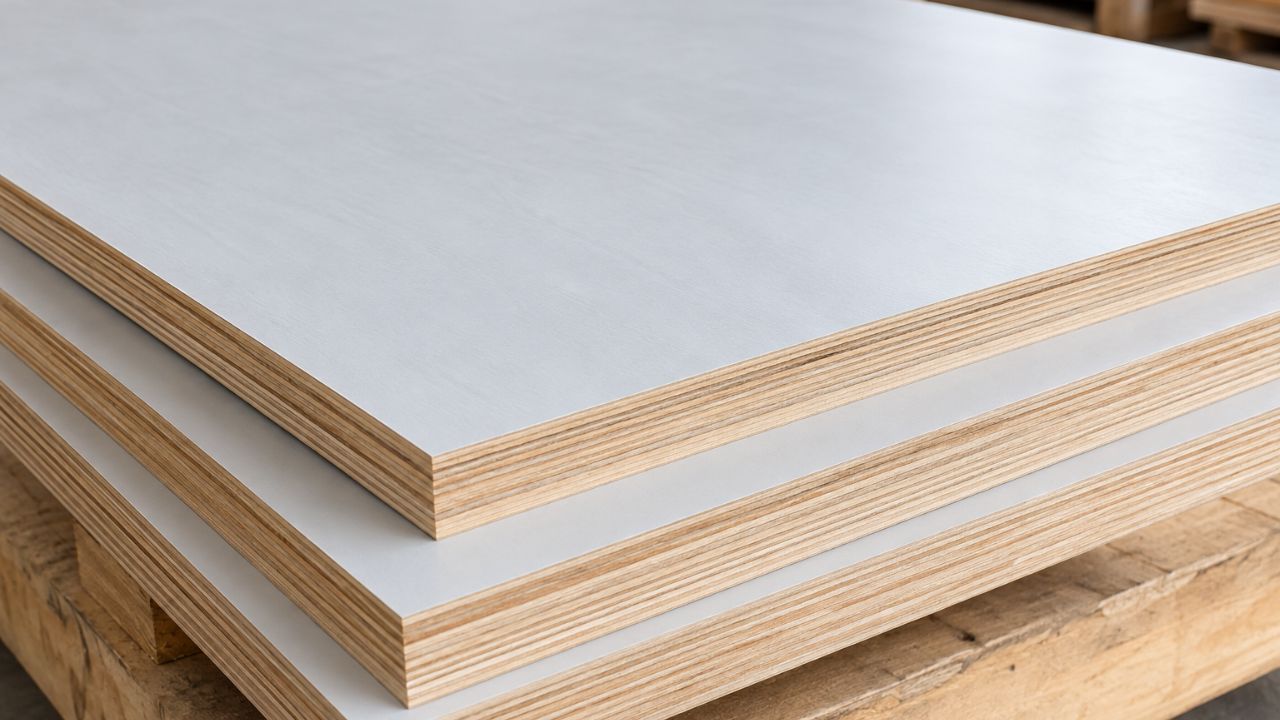
MDO plywood is an exterior-bonded plywood panel with a resin-impregnated fiber overlay on one or both faces. The overlay creates a smooth, durable surface, making paint-grade MDO a familiar choice for outdoor signs, painted panels, and selected building applications.
Although its name sounds similar to MDF, MDO has a layered plywood core. Understanding that construction—and choosing the correct overlay grade—helps you select the right sheet for your project.
What Does MDO Stand For?
MDO stands for Medium Density Overlay.
“Medium density” describes the overlay category, not the density of the entire panel. The material beneath the overlay is plywood, made from thin wood veneers bonded together.
The overlay is also different from decorative wood veneer. Its purpose is to provide a consistent working surface rather than display natural wood grain.
How Is MDO Plywood Made?
Manufacturers assemble the plywood core with adjacent veneer layers generally running in different grain directions. This cross-grain construction helps control movement across the panel.
A fiber sheet impregnated with thermosetting resin is bonded to the face under heat and pressure. Depending on the product, the overlay covers one face or both.
The result combines a plywood core with a specialized surface. Some panels are supplied unprimed, while others receive a factory primer or finish.
The APA overview of MDO and HDO panels identifies exterior bonding and distinguishes general-purpose MDO from concrete-form grades.
MDO Plywood Features
| Feature | Description |
|---|---|
| Core | Layers of wood veneer |
| Face | Resin-impregnated fiber overlay |
| Overlay options | One-sided or two-sided |
| Surface preparation | Unprimed, preprimed, or other product-specific options |
| Bond classification | Exterior for recognized standard MDO panels |
| Appearance | Uniform overlay rather than decorative wood grain |
| Main grades | MDO-General and MDO-Concrete Form |
| Working methods | Cutting, drilling, routing, and fastening with suitable woodworking tools |
The MDO label does not specify every detail. Thickness, veneer quality, intended use, and finishing instructions still need checking.
Main Types of MDO Plywood
MDO-General
MDO-General is intended for applications such as painted signs and suitable exterior panels. Its surface provides a base for paint.
Choose this category when a smooth painted face is central to the project, then confirm the particular product’s application guidance.
MDO-Concrete Form
MDO-Concrete Form is manufactured for contact with fresh concrete. Its overlay formulation differs from general-purpose paint-grade MDO.
The required release agent, cleaning method, and reuse expectations depend on the product. Do not substitute a sign panel simply because both sheets carry the MDO name.
One-Sided and Two-Sided Panels
These describe how many faces receive an overlay.
A two-sided sign may need a paintable face in both directions. For a wall-mounted panel, one overlaid face might meet the appearance requirements, but the back still needs appropriate protection for its exposure.
Preprimed MDO
Preprimed panels arrive with a factory-applied primer, reducing some preparation work.
Check whether the primer covers one or both faces and whether it is compatible with your selected topcoat. Cut edges and new holes need separate attention.
What Is MDO Plywood Used For?
Outdoor Signs
MDO is commonly selected for painted business signs, property signs, and display panels.
Before ordering, decide whether the sign will be single-sided or double-sided. Also plan its supports and attachment points: a good sign face still needs a suitable mounting system.
Exterior Panels and Trim
Appropriate products can be used for soffits, fascias, and other painted exterior components.
Follow the specified installation details, including drainage and clearances. The overlay is part of the panel, not a replacement for the building’s weather-management system.
Painted Cabinets and Furniture
MDO can provide a plywood base for painted cabinet components, storage units, and display furniture.
Consider how you will finish the edges before cutting. Depending on the design, you may paint the prepared edges, add edging, or conceal them within a joint.
Concrete Formwork
Concrete-form grades are used where the panel must contain fresh concrete and provide the required surface finish.
Panel thickness, support spacing, pour conditions, and form design must suit the job. Selecting an overlay alone does not establish adequate formwork capacity.
Displays and Custom Fabrication
MDO can also be considered for exhibition panels, shaped signs, and painted decorative assemblies.
For routed designs, remember that machining through the overlay exposes the core. Include those surfaces in the finishing plan.
Common Sizes and Thicknesses
A 4 × 8-foot sheet is a common retail format. Other sizes, including longer panels, depend on the supplier.
Commonly stocked thicknesses include ½ inch and ¾ inch, with additional options available in some ranges.
Measure the actual thickness before cutting fitted grooves or joints. Choose the panel according to the design’s loading and support requirements rather than assuming a particular thickness suits every sign or cabinet.
Is MDO Plywood Waterproof?
MDO is designed for demanding exposure, but it is not completely waterproof.
Exterior bonding helps the layers resist separation under specified conditions. The wood core can still absorb moisture, particularly through exposed edges, holes, or damaged areas.
For an outdoor project, plan the coating system and installation together. A painted front face will not compensate for water collecting against an unprotected bottom edge.
How to Cut and Drill MDO Plywood
Start by marking the visible face and planning your cuts around any defects.
Use a sharp blade suitable for plywood, support the sheet securely, and make test cuts when the edge quality matters. A backing piece can help reduce breakout when drilling through the panel.
After machining:
- Remove loose fibers without damaging the surrounding overlay.
- Clear away dust.
- Check holes and edges for damage.
- Protect newly exposed wood as required.
Use suitable dust extraction and eye and respiratory protection during fabrication.
How to Paint MDO Plywood
These steps apply to paint-grade MDO, not concrete-form preparation.
1. Check the Manufacturer’s Instructions
Confirm whether the panel is bare, preprimed, or factory-finished. Match the primer and topcoat to that surface and its intended exposure.
2. Clean and Prepare the Face
Remove dust and contamination. Repair small defects with compatible materials.
Avoid aggressive sanding that cuts through the overlay. Follow the product instructions if light scuffing is required.
3. Protect Edges and Openings
Prepare and coat exposed edges, drilled holes, and other areas where fabrication reveals the plywood core.
The APA MDO/HDO product guide provides application-specific finishing guidance, including treatment of exposed wood.
4. Prime and Topcoat
Apply the recommended primer where needed, followed by the specified topcoat system.
Follow coverage, temperature, drying, and recoating instructions. Leave sufficient curing time before handling or installing the finished panel.
How to Choose the Right MDO Panel
Give the supplier a clear description of the project. A useful request might be:
“I need a 4 × 8-foot, ½-inch MDO panel for a double-sided painted outdoor sign. Please confirm the overlay grade, whether both faces are primed, and the recommended finishing system.”
Before paying, check:
- Exact product and manufacturer.
- Intended application.
- Thickness and dimensions.
- Overlay on one or both faces.
- Factory primer or finish.
- Bond classification and relevant performance information.
- Visible damage, flatness, and edge condition.
Frequently Asked Questions
Is MDO the Same as MDF?
No. MDO has a plywood core with a surface overlay. MDF is a panel made from bonded wood fibers. Their construction and application requirements differ.
Can You Stain MDO Plywood?
MDO is generally selected for painting, not a natural stained-wood appearance. The overlay conceals the face veneer’s grain. Choose decorative veneered plywood if visible wood grain is the goal.
Is MDO Marine Plywood?
Not automatically. MDO identifies the overlay, while marine plywood must meet a particular marine specification. Confirm the required panel construction for any boatbuilding application.
Can You Leave MDO Unpainted Outdoors?
Do not assume that bare paint-grade MDO is a finished exterior surface. Follow the manufacturer’s requirements for coatings and edge protection. Concrete-form panels have different use and maintenance instructions.
How Should You Store MDO?
Store sheets flat on level supports, protected from rain and ground moisture. Protect the overlay during handling so the surface remains suitable for finishing.
MDO works best when you specify the complete panel—grade, thickness, overlay faces, and finish—for the intended project.