
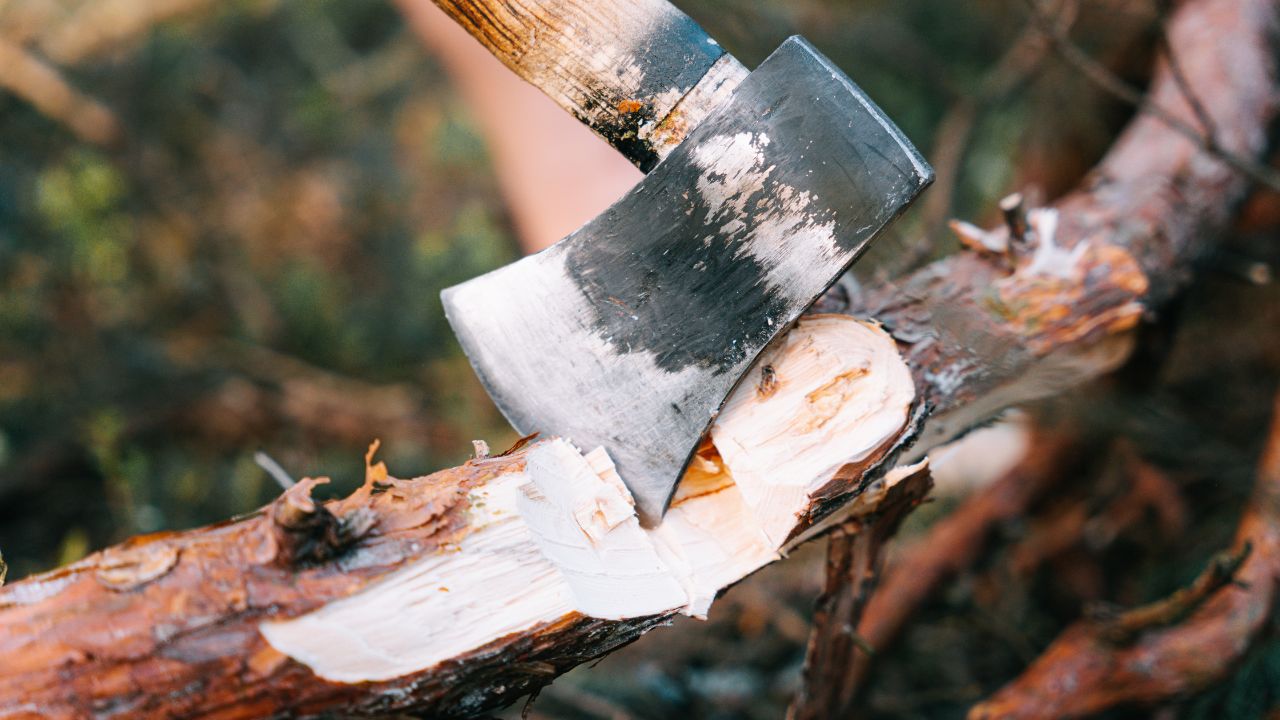
The best wood splitting maul is one you can swing accurately and repeatedly—not simply the heaviest tool on the rack. A powerful maul is useful for stubborn rounds, but extra weight becomes a disadvantage when it reduces control or wears you out.
The Fiskars IsoCore 8 lb, 36-inch maul is a strong starting point for buyers who want a full-size tool with a shock-control handle. The Gränsfors Bruk Splitting Maul is worth considering if you prefer a traditional hickory handle, protective steel collar, and a serviceable design.
These recommendations are based on published manufacturer specifications and intended uses, rather than hands-on comparative testing. Neither tool will be the best fit for every person or every pile of firewood.
Best Wood Splitting Mauls at a Glance
| Maul | Best suited to | Main consideration |
|---|---|---|
| Fiskars IsoCore 8 lb, 36-inch | Buyers seeking a heavy maul with a shock-control handle | Its weight and length can be tiring or difficult to control |
| Gränsfors Bruk Splitting Maul | Buyers who prefer traditional construction and a replaceable wooden handle | Check the handle option, local price, and replacement-part availability |
Compare weights carefully: an advertised head weight is not the same as the complete tool’s weight. Listings do not always distinguish them clearly.
1. Fiskars IsoCore 8 lb Maul: Best for Buyers Prioritizing Shock Control
The Fiskars IsoCore is a practical option for someone who regularly encounters rounds that require a heavier splitting tool.
The 8 lb, 36-inch version combines a long handle with Fiskars’ IsoCore shock-control design. The manufacturer positions its mauls for splitting wood and using the designated driving face with wedges.
The main reason to shortlist it is the handle system, which is designed to reduce transmitted shock and vibration. That feature is worth considering if handle sting is a concern, although it cannot eliminate the physical effort of splitting. See Fiskars’ axes and mauls overview.
Why Choose It?
- Shock-control design is a useful feature for repeated work.
- Full-size configuration suits buyers looking for a heavy splitting tool.
- The designated driving face adds versatility when used as instructed.
What to Consider
A long, heavy maul can be awkward for a smaller user or excessive for easy-splitting logs. Handle replacement may also be less straightforward than with a conventional wooden-handled tool.
Best fit: Someone comfortable controlling a heavy maul who values its handle design.
2. Gränsfors Bruk Splitting Maul: Best Traditional Option
The Gränsfors Bruk Splitting Maul combines a hickory handle with a steel collar beneath the head to help protect against overstrikes.
Its blade starts relatively thin at the edge and broadens behind it to push wood apart. The manufacturer lists a weight of 3.2 kg and handle options within a 70–80 cm length range, so confirm the version you are ordering.
The poll is designed for striking suitable splitting wedges. A leather sheath is included. These details are listed on the Gränsfors Bruk Splitting Maul product page.
Why Choose It?
- Traditional wooden handle can be replaced when necessary.
- Steel collar provides additional protection near the head.
- Two handle options allow some choice in fit.
- Designed for heavy splitting and compatible wedge work.
What to Consider
A wooden handle needs inspection and appropriate storage. Its traditional construction may appeal to you, but that does not prove it will outperform every less expensive tool.
Best fit: Someone who values a wooden handle, repairability, and traditional tool construction.
What Is a Wood Splitting Maul?
A splitting maul is a heavy striking tool designed to separate wood along the grain. Its broad head forces the fibers apart after the edge enters the log.
Many mauls have a hammer-like face opposite the cutting edge. However, use that face for driving wedges only when the manufacturer approves it.
A maul is different from a chopping axe, which is designed primarily to cut across wood fibers.
Splitting Maul vs Splitting Axe
| Feature | Splitting maul | Splitting axe |
|---|---|---|
| Typical design | Heavier head with a broad splitting profile | Lighter head designed for efficient splitting |
| Main advantage | Useful for difficult rounds and approved wedge work | Easier repeated swings on manageable wood |
| Main drawback | Greater fatigue | May struggle with particularly resistant rounds |
| Sensible choice for | Stubborn wood and occasional heavy splitting | Much routine firewood preparation |
A maul is not automatically the quickest choice for every log. If most of your firewood splits readily, a lighter splitting axe may help you work longer with less fatigue.
For exceptionally knotty rounds or large quantities of wood, a mechanical splitter may be more practical than continually increasing maul weight.
How to Choose the Best Splitting Maul
1. Choose a Weight You Can Control
Do not buy the heaviest model simply because it appears more powerful.
A lighter tool that you can place accurately may be more productive than a heavier one that causes missed strikes. If possible, handle the tool in-store and assess its balance without swinging it.
Think about an entire splitting session, not just whether you can lift it.
2. Consider Handle Length
A longer handle changes reach and swing mechanics, but it also requires space and control.
Your height, stance, strength, and splitting setup all affect the fit. There is no universal handle length that suits every adult.
A compact splitting tool may be useful for reducing small pieces, but it should not be treated as a direct replacement for a full-size maul.
3. Compare Handle Construction
Wooden handles appeal to buyers who want a traditional feel and the possibility of replacing a damaged handle.
Fiberglass or composite handle systems can offer durability and integrated shock-control features. Replacement options vary, so check before buying.
Whatever the material, inspect for cracks, looseness, or other damage before use.
4. Look for Overstrike Protection
An overstrike occurs when the handle strikes the wood instead of the head.
A collar or protective section near the head can help limit damage, but it does not make the handle indestructible. Treat visible damage as a reason to stop and inspect the tool.
5. Check Wedge Compatibility
If you expect to split difficult rounds with wedges, confirm that the maul’s striking face is approved for that purpose.
Do not assume an ordinary axe can serve as a hammer. Likewise, do not strike the back of a stuck maul with another tool unless the manufacturer expressly permits it.
6. Compare the Complete Purchase
Consider the delivered price, sheath, handle availability, warranty terms, and local support.
A higher price may buy features or craftsmanship you value. It does not automatically mean fewer swings per log.
Tips for More Effective Splitting
Use a stable working surface and position the round securely. Clear the swing area and keep other people well away.
Inspect the end grain for existing cracks and consider working from an edge on a large round rather than repeatedly attacking a resistant center.
If repeated controlled strikes make little progress, change the approach. Suitable wedges or a mechanical splitter may be a better solution.
Wear eye protection and sturdy footwear. Stop when fatigue begins to affect your accuracy.
How to Care for a Splitting Maul
Clean off dirt and moisture after use, then store the tool somewhere dry with its edge protected.
Maintain the cutting edge according to the manufacturer’s instructions. Avoid grinding away excessive material or overheating the steel.
Check the head, handle, and striking face regularly. A loose head, cracked handle, or damaged striking surface needs attention before the next session.
Frequently Asked Questions
Is a 6 lb or 8 lb Maul Better?
Neither is better for everyone. A 6 lb model may be easier to control over repeated swings, while an 8 lb model may suit someone who can comfortably handle the additional weight. Check whether the listed weight refers to the head or the entire tool.
Should a Splitting Maul Be Sharp?
It should have a properly maintained edge that enters the wood effectively. Preserve the manufacturer’s edge profile rather than trying to turn the maul into a thin chopping axe.
Can a Maul Split Every Log?
No. Knots, twisted grain, round size, and wood condition can make some pieces difficult to split manually. More force is not always the best answer.
Which Maul Should a Beginner Buy?
Start with fit and control. Neither a heavy maul nor a premium tool is automatically suitable for a beginner. If your wood is relatively easy to split, a lighter splitting axe may be the better first purchase.
What Is the Best Wood Splitting Maul Overall?
The Fiskars IsoCore is a sensible shortlist choice for its shock-control design, while the Gränsfors Bruk suits buyers who prefer traditional construction. Choose between them by handling comfort, repair preferences, and the wood you actually split.