Walk into any woodworking store that carries exotic species and redheart will stop you in your tracks. Its vivid scarlet heartwood looks almost too bold to be real — a colour so intense that first-time buyers often do a double take. But beyond the visual drama, is redheart a practical wood to work with? And what are the real-world limitations you should know before you buy?
This guide covers everything: redheart’s properties, its genuine advantages, its notable drawbacks, best use cases, and how to care for it properly.
What Is Redheart Wood?
Redheart is a tropical hardwood native to Central and South America, found in forests ranging from southern Mexico through to southern Brazil and Paraguay. Despite its single common name, redheart actually comes from three botanically unrelated tree species — Erythroxylum havanense, Cosmocalyx spectabilis, and Sickingia salvadorensis — all of which produce similarly striking red timber.
The Mayan civilisation knew it as chakte kok (“Chock-tee cuck”), and it has been part of human craft and construction for centuries. Today it is most commonly encountered as turning blanks, pen blanks, and small decorative boards — though furniture-grade boards are available from specialist exotic wood dealers.
Key Technical Specifications
| Property | Value |
|---|---|
| Janka Hardness | 1,210 lbf |
| Average Dried Weight | ~40 lbs/ft³ |
| Density | Midway between hard maple and cherry |
| Grain | Straight to irregular; sometimes wild |
| Texture | Fine and even |
| Natural Luster | Low to medium |
| Origin | Mexico, Central America, South America |
| CITES Status | Not listed — not a threatened species |
What Does Redheart Wood Look Like?
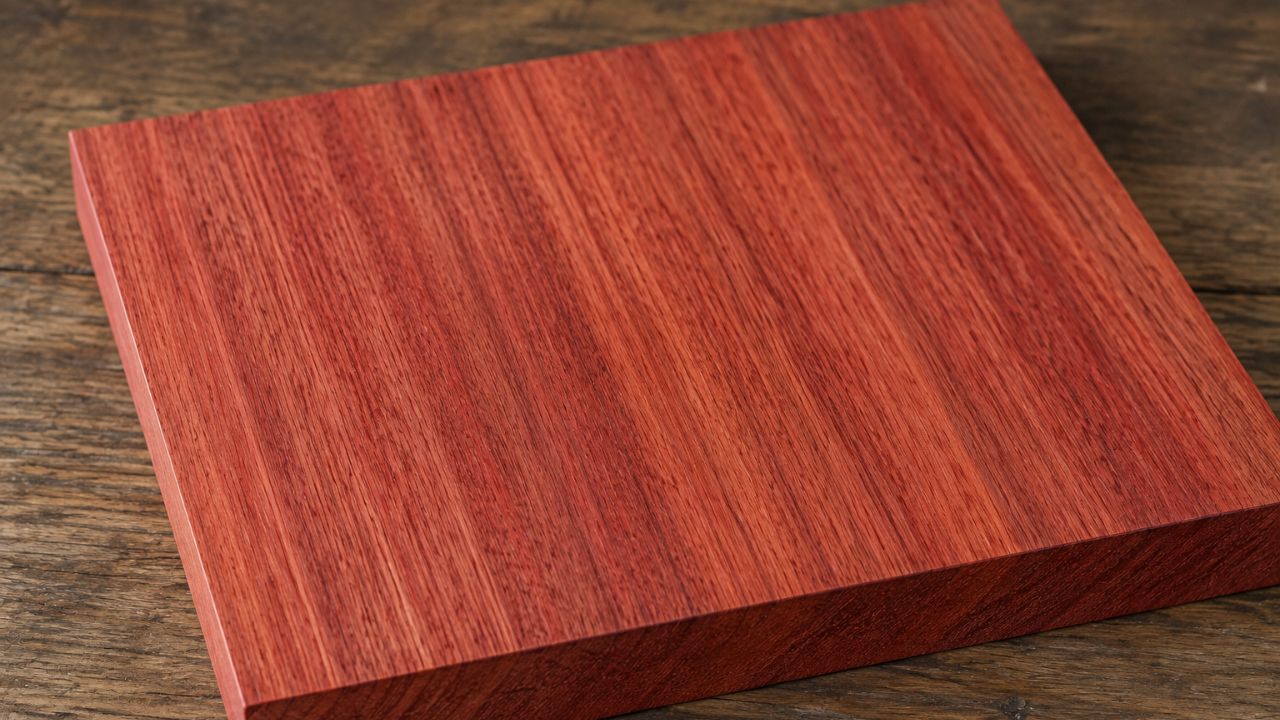
The defining feature of redheart is, predictably, its colour. Freshly surfaced redheart can be a vivid, almost watermelon red — though colour varies considerably board to board, ranging from a pale orangey-pink (similar to Pink Ivory) to a deep brownish-red. Some boards display dramatic streaks of yellow, orange, and even occasional purple tones, making each piece genuinely unique.
The grain ranges from straight to highly irregular and overlapping, producing striking multi-dimensional figure in some specimens. The texture is fine and smooth, though redheart lacks the high natural luster of species like lacewood or maple.
Redheart Wood Pros
1. Exceptional, Head-Turning Colour
Redheart’s scarlet heartwood is its greatest asset. There are very few naturally red woods available at any price point, and redheart is among the most accessible of them. Its vivid hue makes it a standout material for decorative work, inlays, turning projects, and accent pieces where visual impact is the goal.
For woodworkers accustomed to the subdued tans and browns of domestic lumber, redheart’s colour can seem almost theatrical — but that’s precisely why so many craftspeople seek it out.
2. Excellent Workability for an Exotic Hardwood
Despite being a tropical species, redheart is remarkably cooperative to work with. It planes, machines, and sands well with both hand tools and power tools. It does not tear out when planed, and it responds well to scroll sawing. For an exotic hardwood of its density class, this level of workability is a genuine advantage — many comparably dramatic woods (like bloodwood) are far more demanding to work.
3. Glues and Finishes Readily
Redheart accepts glue and finishes readily, making joinery and final surface treatment straightforward. It responds well to stains and adhesives due to its moderate density and fine, even texture. Most standard woodworking finishes — oils, lacquers, and polyurethanes — work well on the surface.
4. Turns Beautifully
Redheart has become a favourite among woodturners for good reason. Its fine, even texture and moderate hardness allow it to take crisp detail on the lathe, and the colour contrast in turned bowls, pens, and decorative objects is visually dramatic. A significant portion of the redheart imported to North America is processed specifically into turning blanks.
5. Similar to Bloodwood — Without the Allergy Risk
Bloodwood is another popular red exotic with a broadly similar appearance. However, bloodwood is known to cause allergic reactions in some woodworkers. Redheart produces a similar aesthetic without the documented allergy risk — a meaningful practical advantage for anyone sensitive to exotic wood dust.
6. Not Listed as Threatened
Redheart is not listed in the CITES Appendices or on the IUCN Red List of Threatened Species. While responsible sourcing is always encouraged, buyers do not need to navigate the regulatory concerns that apply to species like rosewood or Brazilian mahogany.
7. Moderate Rot Resistance
Laboratory testing has shown redheart to be moderately durable against decay fungi — a useful characteristic for projects that may see some environmental exposure, though it should not be relied upon for sustained outdoor use without finishing.
Redheart Wood Cons
1. Significant Colour Fading with Sun Exposure
This is redheart’s most serious limitation and the one most likely to disappoint buyers who don’t know about it in advance. Redheart’s vivid colour fades rapidly and significantly when exposed to sunlight or strong indoor lighting. UV exposure oxidises the red pigments, shifting the colour toward a reddish-brown — similar to how padauk and bloodwood behave over time.
This colour change can be slowed — but not stopped — by applying a finish with UV inhibitors and keeping finished pieces away from direct or strong artificial light. If you’re expecting the vivid showroom red to last for years without any intervention, you will be disappointed.
2. Difficult and Inconsistent to Dry
Redheart is tricky to season and kiln-dry properly, even with modern technology. This drying difficulty is considered one of the main reasons the species has never achieved wider commercial popularity in North American woodworking markets. Improperly dried boards are prone to defects, and the inconsistency of the drying process makes large-format furniture boards harder to source reliably.
3. Limited Availability — Especially in Wide Boards
Redheart has never had a large or consistent supply chain to North America. Most available material is processed into narrow turning blanks (1×1, 2×2, and 3×3 squares) or pen blanks. Boards suitable for furniture-making are available from specialist online merchants but are typically narrow — around 4 inches wide — and available in limited quantities. If your project requires wide, consistent boards, redheart may be genuinely hard to source in the dimensions you need.
4. Can Burn When Resawn with Dull Tools
Despite its moderate density, redheart burns easily during resawing if blades and cutting tools are not kept sharp. This burning produces a black tar-like resin that adheres to the wood’s surface and requires patient sanding to remove. It’s not a dealbreaker, but it does demand sharp tooling and attentive work practice — more so than many woods of comparable hardness.
5. Distinctive Rubber-Like Odour When Worked
Redheart produces a distinct, rubber-like smell when being cut and machined, which some woodworkers find unpleasant. It is not a health hazard beyond standard wood dust precautions, but it can make extended workshop sessions less comfortable. Good dust collection and ventilation are recommended regardless.
6. Brown Colour Shift During Finishing
Even fresh, properly dried redheart will undergo a subtle brownward colour shift during the finishing process itself. This is not the same as UV fading — it happens during application. Woodworkers should test their chosen finish on a scrap piece first to understand how much the colour will shift before committing to a final project.
7. Higher Price Than Domestic Species
As an imported tropical exotic, redheart costs more than domestic hardwoods like oak, maple, or cherry. While not among the most expensive exotics available, it is priced at a meaningful premium — particularly for the wider furniture-grade boards that are already rare and inconsistently available.
Redheart Wood Pros and Cons
| Pros | Cons |
|---|---|
| ✅ Vivid, unique scarlet colour | ❌ Colour fades significantly with UV exposure |
| ✅ Excellent workability | ❌ Difficult and inconsistent to kiln-dry |
| ✅ Glues and finishes readily | ❌ Limited availability in wide boards |
| ✅ Turns beautifully on the lathe | ❌ Burns when resawn with dull tools |
| ✅ No documented allergy risk | ❌ Distinctive rubber-like odour when worked |
| ✅ Not a threatened species | ❌ Brown colour shift during finishing |
| ✅ Moderate rot resistance | ❌ Priced above domestic species |
Best Uses for Redheart Wood
Redheart’s properties make it well-suited to specific applications where its colour is the star and wide boards aren’t required:
- Turned objects — bowls, vases, pens, and decorative spindles
- Inlays and accent strips — dramatic colour contrast in furniture and cabinetry
- Veneer — thin slices for decorative panel work
- Small decorative boxes and caskets — where the colour is showcased
- Musical instruments — guitar bodies, fretboards, and necks
- Knife handles — fine texture and moderate hardness make it practical
- Jewellery and small craft items — pen blanks and small turnings
Where redheart is less suited: large furniture builds requiring wide, consistent boards; outdoor projects; applications where colour permanence is critical.
How to Preserve Redheart’s Colour
Given that UV fading is redheart’s most significant drawback, colour preservation is worth addressing directly:
- Apply a finish with UV inhibitors as soon as the piece is complete — this is the single most effective step.
- Avoid direct sunlight. Keep finished pieces away from windows and skylights.
- Use low-UV interior lighting in display areas. LED lighting with low UV output is better than incandescent or halogen.
- Re-apply UV-protective finish periodically — UV inhibitors in finish degrade over time and need refreshing.
- Accept the change gracefully. Like padauk, many woodworkers come to appreciate the mellow reddish-brown that redheart matures into over time — it’s still a beautiful, warm tone.
Frequently Asked Questions
Is redheart wood expensive?
Redheart is priced above domestic hardwoods but below the most premium exotics. Turning blanks are relatively affordable; wide furniture-grade boards are harder to find and cost more.
Is redheart wood good for beginners?
Yes — its good workability with both hand and power tools makes it accessible to woodworkers of all experience levels. The main caution is keeping tools sharp to avoid burning during resawing.
How hard is redheart compared to oak?
Redheart has a Janka hardness of 1,210 lbf, which is slightly harder than white oak (1,080 lbf) but softer than hickory (1,820 lbf). It sits in the mid-hardness range.
Does redheart stain well?
Yes — redheart responds well to stains and is generally receptive to most woodworking finishes.
Is redheart sustainable?
Redheart is not listed on CITES or the IUCN Red List, meaning it is not currently considered threatened. However, as with all tropical hardwoods, sourcing from responsible suppliers is advisable.
Read Also: Redheart vs Bloodwood: Differences, Hardness, Uses & Durability
The Verdict
Redheart is a wood that rewards woodworkers who know what they’re getting into. Its colour is genuinely extraordinary — among the most vivid and naturally dramatic of any commercially available species. Its workability is better than many exotics of comparable visual appeal, and its turning properties have made it a firm favourite in that corner of the craft.
The limitations are real but manageable: UV fading is significant but slowed with proper finishing; limited availability in wide boards is a genuine constraint for furniture-makers; and the burning tendency during resawing is easily avoided with sharp tooling.
If you want a wood that makes people stop and ask questions — and you’re prepared to protect it from light and work with its availability constraints — redheart is a genuinely rewarding material to add to your project list.