
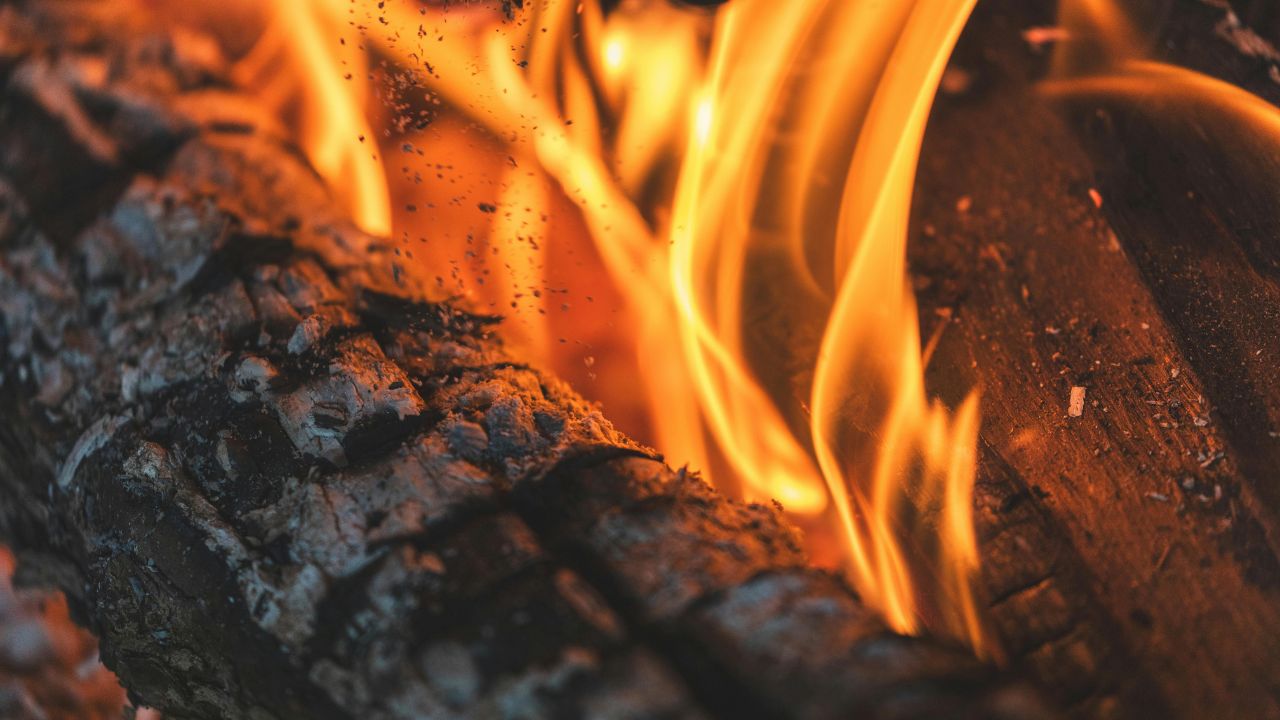
When you toss a log onto a fire and watch it transform into glowing embers and ash, you’re witnessing one of the most fundamental chemical processes in nature. But is burning wood actually a chemical change — or just a dramatic physical one? This question comes up in school science classes and chemistry exams alike, and the answer is unambiguous: burning wood is a chemical change. Here’s exactly why, explained clearly from the science up.
What Is the Difference Between a Physical and a Chemical Change?
Before we dive into wood specifically, it helps to understand what separates a physical change from a chemical one — because that distinction is the whole point.
A physical change alters the form or appearance of a substance without changing its chemical composition. When you snap a stick in half, melt an ice cube, or shred a piece of paper, the material still has the same molecular structure it started with. The change is reversible — or at least, no new substances have been created.
A chemical change, by contrast, involves a chemical reaction that produces one or more entirely new substances with different properties from the original. The atoms are rearranged into new molecules. The process is typically irreversible, and you can usually detect it by signs like heat production, light emission, gas release, or colour change.
Burning wood ticks every single box for a chemical change — as we’ll break down below.
So Is Burning Wood a Chemical Change? Yes — Here’s the Proof
The burning of wood is a chemical change as it leads to the formation of new substances like carbon dioxide gas, water vapour, and ash — substances that have entirely different chemical compositions from that of the original wood.
Here are the four key reasons why:
1. New Substances Are Formed
When wood burns, it reacts with oxygen in the air, breaking down its internal structure and creating new compounds — primarily carbon dioxide and water vapour. Ash is left behind, which is itself made up of different compounds entirely distinct from wood.
The original wood — primarily composed of cellulose, hemicellulose, and lignin — no longer exists after combustion. In its place are carbon dioxide (CO₂), water vapour (H₂O), ash, charcoal residue, and various other gases. These are chemically distinct substances with completely different properties.
2. The Change Is Irreversible
Once wood has been burned and turned into ash and gases, it cannot be returned to its original form. This irreversible nature of the change is a hallmark of a chemical reaction.
You cannot gather the ash and CO₂ from a campfire and reassemble them back into a log. This is the single clearest test of a chemical change — if it can’t be undone, new substances have been formed.
3. Chemical Bonds Are Broken and Re-formed
The process of burning wood involves breaking and forming chemical bonds — a key characteristic of a chemical change. The complex organic molecules in wood are broken apart by heat, and their atoms recombine with oxygen to form entirely new molecular structures.
4. Energy Is Released as Heat and Light
The combustion of wood is an exothermic reaction — it releases energy in the form of heat and light. When wood undergoes combustion, it reacts with oxygen in the air and undergoes a chemical reaction called oxidation. This reaction releases heat and light energy, producing carbon dioxide, water vapour, and various other combustion byproducts. Energy release of this kind is a defining characteristic of a chemical reaction, not a physical one.
What Is Wood Actually Made Of?
To understand the chemistry of burning, it helps to know what wood is made of at the molecular level.
Wood contains approximately 50% carbon, 40% oxygen, 8% hydrogen, 1% nitrogen, and 1% other elements like calcium, potassium, and magnesium.
These elements are locked into complex organic polymers — primarily:
- Cellulose (40–50%) — a carbohydrate polymer with the repeating formula C₆H₁₀O₅
- Hemicellulose (20–30%) — a shorter, branched carbohydrate polymer
- Lignin (20–30%) — a complex aromatic polymer that gives wood its rigidity
When heat is applied, these molecules begin to break down in a process called pyrolysis — and that’s where the chemistry really begins.
What Happens Chemically When Wood Burns? Step by Step
When wood burns, it undergoes pyrolysis — thermal decomposition releasing volatile gases that produce flames, leaving behind glowing charcoal and ash.
Here is what happens, stage by stage:
Stage 1 — Drying (up to ~100°C / 212°F)
Before combustion begins, heat drives moisture out of the wood as steam. No chemical reaction occurs yet — this part is a physical change. The wood dries out and begins to warm.
Stage 2 — Pyrolysis (100°C–300°C / 212°F–572°F)
The bulk of wood is cellulose, a carbohydrate with the repeating formula C₆H₁₀O₅. As temperature rises, thermal energy breaks the bonds holding these large molecules together. The wood begins to decompose, releasing flammable volatile gases — methane, carbon monoxide, and hydrogen — along with tars and oils. This is pyrolysis: thermal decomposition without direct combustion. The wood is not yet “burning” — but the chemistry has already begun.
Stage 3 — Ignition and Flaming Combustion (~300°C+ / 572°F+)
The volatile gases released during pyrolysis mix with oxygen from the surrounding air and ignite. This is the visible flame you see. The chemical reaction is:
C₆H₁₀O₅ + O₂ → CO₂ + H₂O + Heat + Light
The cellulose reacts with oxygen to produce carbon dioxide, water vapour, and energy. This reaction sustains itself as long as fuel (wood), oxygen, and sufficient heat are all present — the classic fire triangle.
Stage 4 — Charcoal Combustion (glowing embers)
Once the volatile gases are exhausted, what remains is charcoal — nearly pure carbon. This burns more slowly without a visible flame, producing carbon dioxide and intense radiant heat. This is the glowing ember phase of a dying fire.
Stage 5 — Ash
What’s left after complete combustion is ash — a mixture of mineral oxides (calcium oxide, potassium oxide, magnesium oxide) that were originally present as trace elements in the wood. These cannot be turned back into cellulose, hemicellulose, or lignin. The chemical transformation is complete and permanent.
Physical vs. Chemical Change: A Quick Comparison
| Property | Physical Change | Chemical Change |
|---|---|---|
| New substances formed? | No | Yes |
| Reversible? | Usually yes | No |
| Chemical bonds broken? | No | Yes |
| Energy released as heat/light? | Rarely | Yes |
| Example | Cutting wood | Burning wood |
Burning wood satisfies every criterion for a chemical change and none of the criteria for a physical one.
Common Misconceptions
“The wood just disappears — so isn’t that physical?”
It might look like the wood simply vanishes, but it hasn’t. When wood burns, it combines with oxygen and changes not only to ashes but also to carbon dioxide and water vapour. The gases float off into the air, leaving behind just the ashes. The wood’s mass is conserved — it’s just been converted into gases that disperse into the atmosphere, ash that stays behind, and energy released as heat and light.
“Melting is a chemical change too, right?”
No — melting is a physical change. When ice melts into water, or a metal melts in a furnace, the molecular composition doesn’t change. H₂O is still H₂O whether it’s solid, liquid, or gas. Wood burning is fundamentally different: the molecules themselves are destroyed and replaced with entirely new ones.
“Can the ash be turned back into wood?”
No. Since burning wood is a reaction that is hard to reverse and leads to new substances being formed from the original one, it is considered a chemical change. There is no process by which ash, carbon dioxide, and water vapour can be reassembled into a log. Trees build wood through photosynthesis — an entirely separate chemical process that takes years.
Why Does This Matter?
Understanding that burning is a chemical change has real-world implications beyond chemistry exams:
- Energy production: Wood burning releases stored chemical energy from the sun, captured during photosynthesis. This is why wood is a renewable energy source — new trees can capture new solar energy.
- Carbon cycle: The CO₂ released when wood burns was originally absorbed from the atmosphere by the tree during its lifetime. This is the basis of wood’s carbon-neutral classification as a biofuel.
- Fire safety: Understanding combustion chemistry — fuel, heat, and oxygen — explains why fire suppression methods work: remove any one element and the chemical reaction stops.
- Cooking and industry: Every industrial process that uses combustion — from steel production to electricity generation — relies on the same fundamental chemical change happening in your fireplace.
Key Takeaways
- ✅ Burning wood is a chemical change — confirmed by every test science applies to the question
- ✅ New substances are formed: carbon dioxide, water vapour, and ash
- ✅ The process is irreversible — ash cannot become wood again
- ✅ Chemical bonds in cellulose, hemicellulose, and lignin are broken and re-formed
- ✅ Energy is released as heat and light — a hallmark of a chemical (exothermic) reaction
- ✅ The wood’s mass is conserved — it doesn’t disappear, it transforms
Frequently Asked Questions
Is burning wood a physical or chemical change?
Burning wood is a chemical change. It produces entirely new substances — carbon dioxide, water vapour, and ash — that are chemically different from the original wood, and the process cannot be reversed.
What type of chemical reaction is burning wood?
Burning wood is an exothermic combustion reaction — specifically, rapid oxidation. Wood reacts with oxygen to release carbon dioxide, water vapour, heat, and light.
Is the smoke from burning wood a chemical change?
Yes. The smoke contains newly formed compounds — including carbon particles, carbon monoxide, tar, and various volatile organic compounds — that did not exist in the original wood. Their formation is part of the same chemical change.
Why can’t you turn ash back into wood?
Because the complex organic molecules (cellulose, hemicellulose, lignin) that made up the wood have been chemically destroyed during combustion. Rebuilding them requires photosynthesis — a process only living trees can perform, and one that takes years.
Is a campfire a chemical or physical change?
A campfire is a chemical change. The wood undergoes combustion, producing new substances with different properties from the original logs. The heat and light you see are byproducts of that chemical reaction.
Understanding the science behind everyday processes like burning wood brings us closer to appreciating the chemistry that shapes the world around us. Whether you’re studying for an exam or simply curious about what’s happening in your fireplace, the answer is clear: burning wood is one of chemistry’s most fundamental — and most ancient — chemical changes.