
Parquet flooring is made from small pieces of wood arranged in geometric and decorative patterns. It has been used for centuries and became especially popular in European architecture during the 16th and 17th centuries.
Parquet flooring is known for its distinctive appearance because individual wood pieces can be arranged in different patterns, creating a decorative alternative to traditional straight-laid flooring. Different wood species, colors, and grain patterns can also be combined to create contrast.
Traditionally, parquet floors were cut and installed by hand, with individual pieces carefully positioned to create the desired pattern. Today, parquet flooring is also available in pre-assembled panels and engineered parquet tiles, which can make installation faster and more consistent.
There are many parquet flooring designs available, from simple layouts to highly decorative patterns. In this article, we will look at 6 popular parquet flooring design ideas.
1. Herringbone
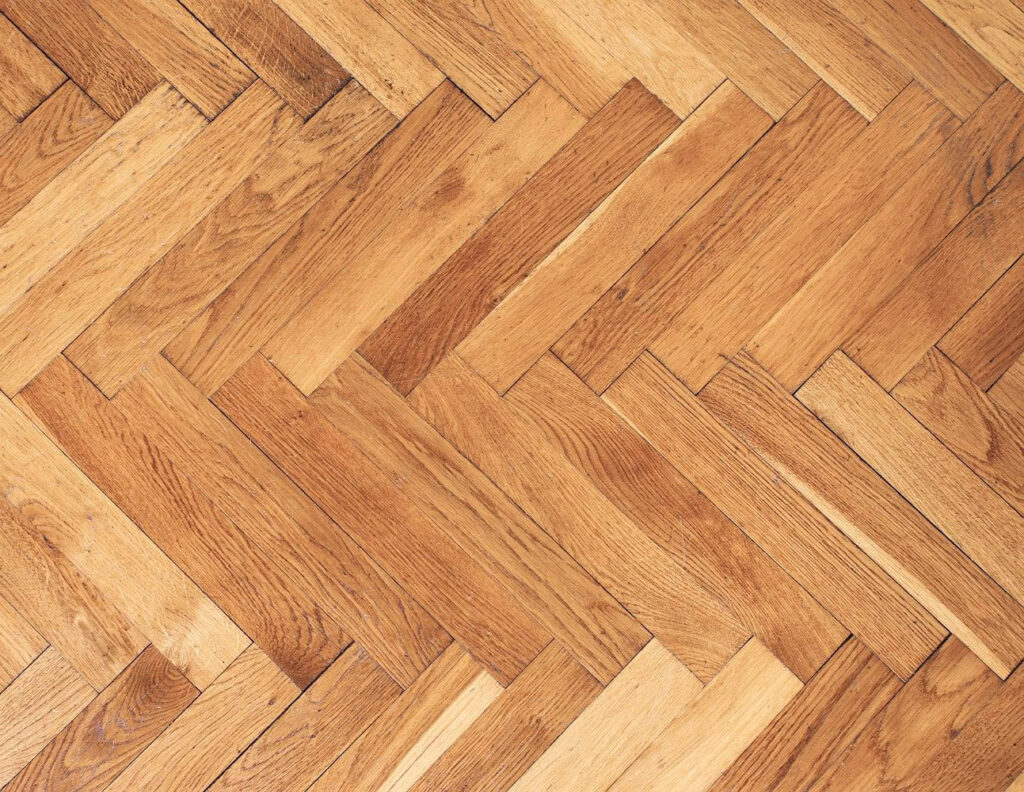
The herringbone pattern is made by arranging equal-sized rectangular wood pieces in a zigzag pattern. The ends of the pieces meet at 90-degree angles, creating the distinctive broken zigzag appearance.
Herringbone is one of the most popular and recognizable parquet flooring patterns. It can give a room a traditional appearance while also working well in modern interiors.
The pattern can be installed using different wood species, colors, and plank sizes to create different visual effects.
Why Choose Herringbone?
- Classic and timeless appearance
- Works well in traditional and modern interiors
- Available in many wood species and colors
- Can make a room visually more dynamic
- Suitable for both small and large spaces
2. Chevron
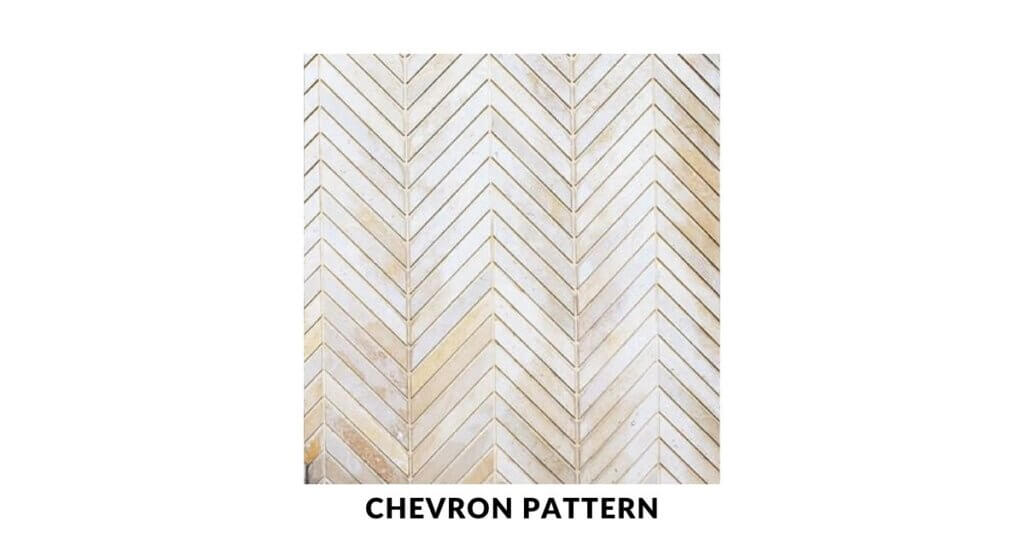
The chevron pattern looks similar to herringbone, but the two patterns are constructed differently.
In a chevron design, the ends of the wood pieces are cut at an angle, commonly 45 degrees, so they meet to form a continuous V-shaped pattern. In a traditional herringbone pattern, the rectangular pieces meet at 90-degree angles.
Because the pieces need angled cuts, chevron flooring can require more precise manufacturing and installation than a basic herringbone pattern.
Why Choose Chevron?
- Creates a strong V-shaped visual effect
- Gives floors a more formal and decorative appearance
- Works well in large rooms and open spaces
- Available in different wood species and finishes
- Creates a continuous directional pattern
3. Basket Weave
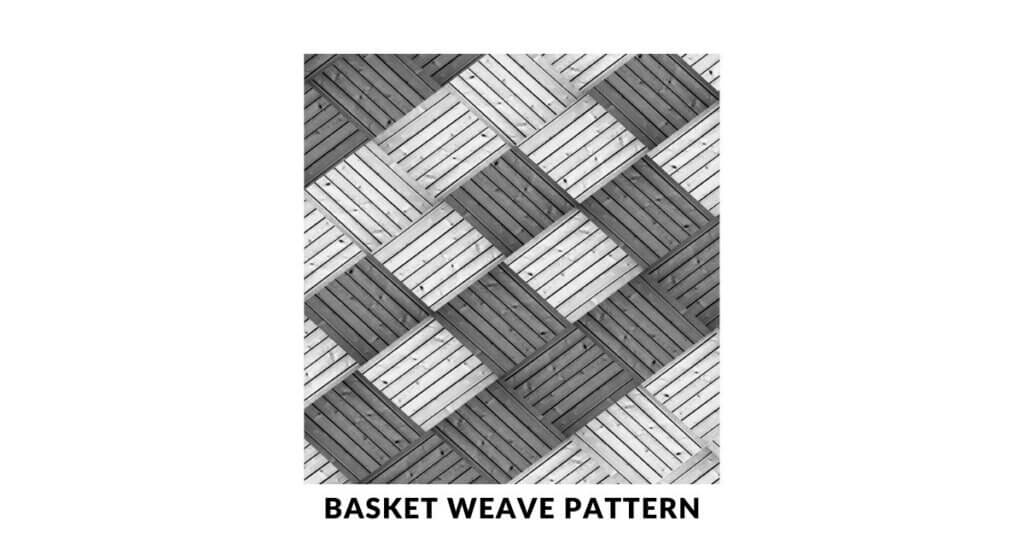
The basket weave pattern is created by arranging rectangular wood pieces in groups that resemble the woven structure of a basket.
Depending on the size and arrangement of the parquet pieces, the pattern can have a simple or highly decorative appearance. It is a good choice if you want something different from the more common herringbone and chevron patterns.
Basket weave designs can be made using different wood species, stains, and contrasting colors to emphasize the geometric pattern.
Why Choose Basket Weave?
- Distinctive geometric appearance
- Works well in traditional interiors
- Can be customized with different wood colors
- Creates visual interest without being overly complex
- Suitable for feature areas and larger rooms
4. Brick Bond
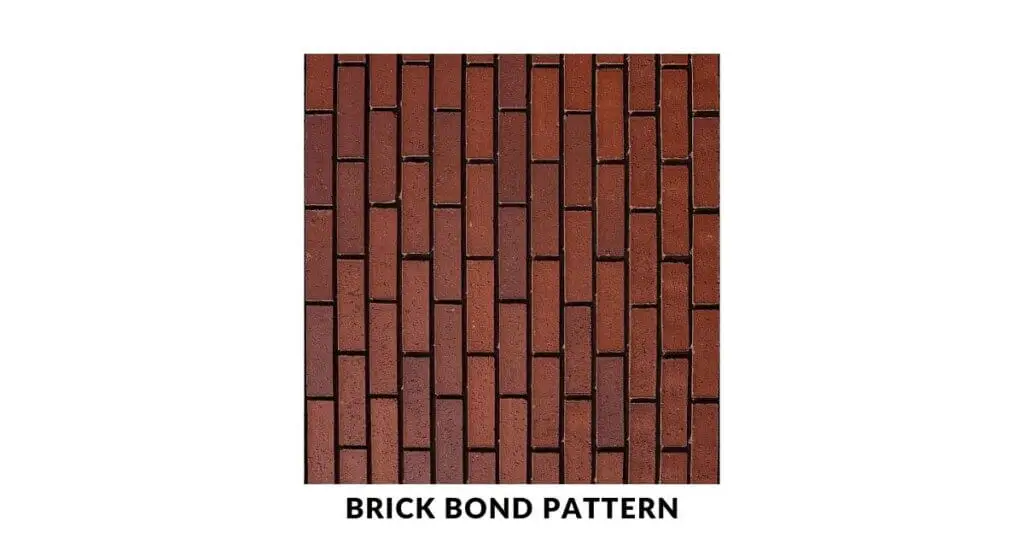
The Brick Bond pattern is one of the simpler parquet flooring designs. Rectangular wood pieces are arranged in staggered rows, similar to the layout of a traditional brick wall.
Unlike herringbone and chevron, the pieces run in the same general direction. This creates a cleaner and more uniform appearance.
Brick Bond can be a good option if you want the visual interest of parquet flooring without a highly intricate geometric pattern.
Why Choose Brick Bond?
- Simple and clean appearance
- Easier to coordinate with different interior styles
- Less visually busy than herringbone or chevron
- Works well in contemporary and traditional spaces
- Can be installed using different wood species and finishes
5. Versailles
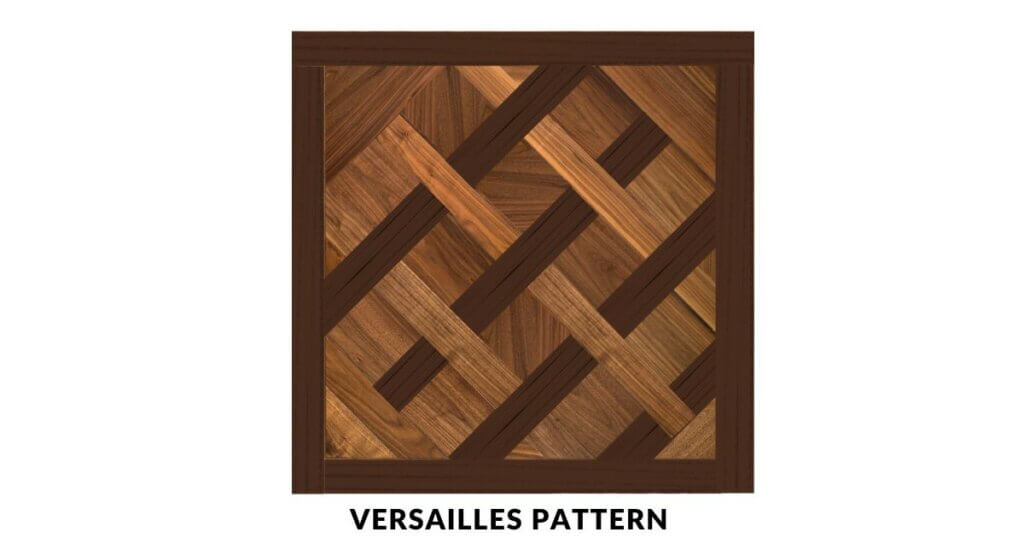
The Versailles pattern is one of the most elaborate and decorative parquet flooring designs. It is associated with the Palace of Versailles in France, where intricate wood flooring became an important part of historic interior design.
The pattern consists of a geometric framework of wood strips surrounding smaller pieces arranged in a decorative lattice or woven-style design.
Versailles parquet is often made from high-quality hardwoods such as oak, walnut, and mahogany.
Because of its detailed layout, Versailles flooring generally requires careful planning, precise cutting, and experienced installation.
Why Choose Versailles?
- Luxurious and historic appearance
- Excellent for formal interiors
- Creates a strong architectural feature
- Works particularly well in large rooms
- Can be customized with different wood species and finishes
6. Dutch Pattern
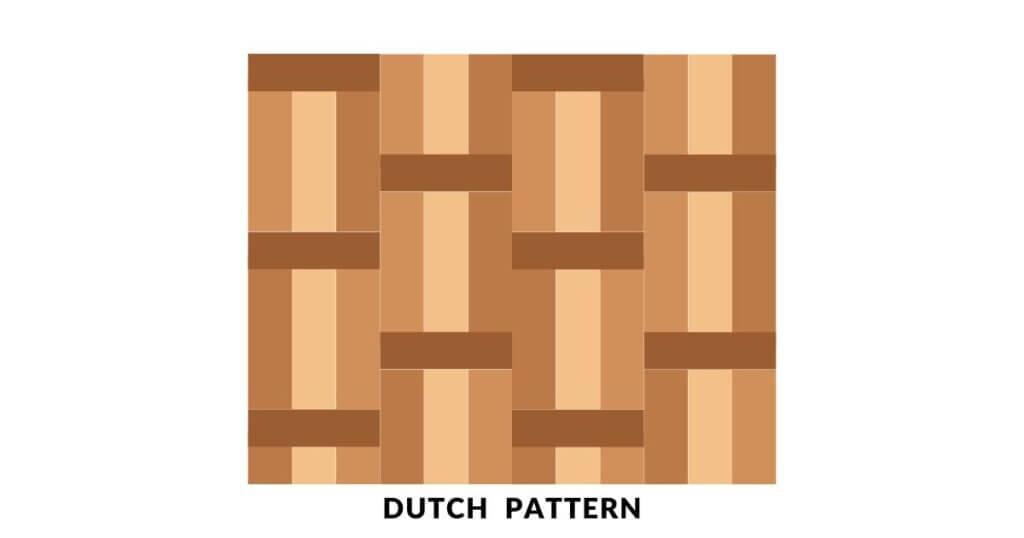
The Dutch pattern, sometimes called the Dutch brick pattern, is a traditional parquet design made by combining groups of vertically and horizontally positioned rectangular wood pieces.
The arrangement creates a repeating geometric pattern that is more decorative than a conventional straight plank floor while remaining relatively structured and symmetrical.
The exact layout can vary depending on the size of the parquet pieces and the desired design.
Why Choose the Dutch Pattern?
- Traditional appearance
- Repeating geometric design
- Works well with different wood species
- Can complement classic and contemporary interiors
- Offers an alternative to herringbone and chevron
Custom Parquet Flooring Designs
Parquet flooring does not have to follow a standard pattern. Custom parquet designs can be created by combining different wood species, colors, dimensions, borders, and geometric arrangements.
Custom designs are often created to match the architectural style and interior design of a particular room. A flooring manufacturer can produce pre-assembled panels based on a specific pattern, which can simplify installation compared with positioning every individual piece on-site.
Some common customization options include:
- Different wood species
- Contrasting wood colors
- Custom borders
- Different piece sizes
- Geometric patterns
- Decorative center designs
- Mixed wood species
How to Choose the Right Parquet Flooring Design
The right parquet pattern depends on the room size, interior style, installation method, and overall look you want to achieve.
Classic look: Herringbone is a reliable choice.
Bold geometric look: Chevron creates a strong directional pattern.
Something distinctive: Basket weave or Dutch patterns can add visual interest.
Luxurious traditional interior: Versailles parquet is an excellent option.
Simple geometric appearance: Brick Bond is easier to coordinate with many interior styles.
Which Parquet Pattern Is Best?
There is no single best parquet flooring pattern. The best option depends on your room and design preferences.
Herringbone and chevron are among the most popular choices because they create strong geometric patterns without being as elaborate as Versailles parquet. Basket weave and Dutch patterns are useful alternatives when you want something more distinctive.
For large formal spaces, a decorative pattern such as Versailles can create a dramatic focal point.
Final Thoughts
Parquet flooring offers many ways to create a distinctive and decorative floor. The six popular designs discussed here—Herringbone, Chevron, Basket Weave, Brick Bond, Versailles, and Dutch Pattern—each have a different appearance and level of complexity.
When choosing a parquet design, consider the size of the room, the type of wood, installation requirements, maintenance, and the overall interior style. The right combination of pattern, wood species, color, and finish can create a floor that is both attractive and long-lasting.