

Zinc roofing is valued for its long service life, distinctive appearance, and ability to form a protective surface layer. It suits both traditional buildings and modern homes, particularly where the roof is an important part of the architectural design.
However, zinc is a premium roofing material. Its performance depends on skilled installation, suitable detailing, and proper moisture control beneath the metal.
The main advantages of zinc roofing are longevity, low surface-maintenance needs, and design flexibility. Its biggest disadvantages are upfront cost, specialist installation requirements, and vulnerability to corrosion when moisture or incompatible materials are overlooked.
Here is what you should know before choosing a zinc roof.
What Is Zinc Roofing?
Architectural zinc roofing uses rolled zinc alloy sheets or panels. Small additions of metals such as copper and titanium help provide properties suitable for building applications.
Common systems include standing-seam panels and smaller interlocking tiles or shingles. The appropriate system depends on the roof’s shape, slope, exposure, and design.
Zinc Roofing vs Galvanized Steel
Architectural zinc roofing is different from galvanized steel.
Galvanized steel has a steel core protected by a zinc coating. Architectural zinc sheet is primarily zinc throughout its thickness.
This distinction matters when comparing prices, maintenance, and expected performance. A quotation for “zinc sheets” may refer to galvanized steel in some markets, so confirm the actual material.
Zinc Roofing Advantages and Disadvantages at a Glance
| Advantages | Disadvantages |
|---|---|
| Potential for a long service life | High initial cost |
| Naturally protective patina | Sensitive to poorly managed underside moisture |
| Usually no routine repainting for natural finishes | Requires experienced installers |
| Suitable for curved and detailed designs | Can dent under impact or careless foot traffic |
| Recyclable material | Must be compatible with adjacent materials |
| Distinctive appearance that develops with age | Weathering may be uneven |
| Relatively lightweight roof covering | Movement and fastening need careful design |
Advantages of Zinc Roofing
1. Long Service Life
A correctly designed and installed zinc roof can provide many decades of service. RHEINZINK describes its architectural zinc as having a potential lifespan of 100 years or more.
That is a manufacturer’s service-life claim, not a guarantee for every roof. Exposure, thickness, workmanship, drainage, and the condition of the underlying construction all affect the result.
Avoid assuming that zinc will last for centuries regardless of its installation or environment.
2. Naturally Protective Patina
When exposed to suitable atmospheric conditions, zinc develops a surface layer called a patina. This slows further corrosion and gives the metal its characteristic weathered appearance.
Natural zinc commonly changes from a brighter metallic surface toward a softer gray finish. Pre-weathered products provide a more developed appearance from installation, although they can continue to change.
Patina formation is one reason zinc can perform well without regular decorative painting.
3. Minor Scratches Can Become Less Noticeable
Zinc is often described as “self-healing.” This means exposed metal in a minor surface scratch can develop a new patina over time.
However, the term has limits. It does not mean zinc repairs dents, punctures, failed seams, or damaged flashings.
Serious damage still requires professional assessment and repair.
4. Flexible Design Options
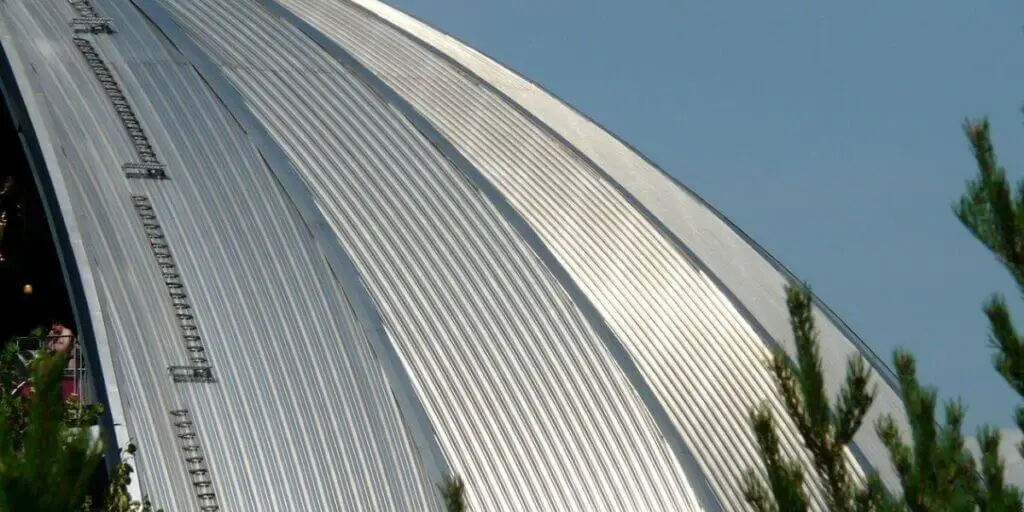
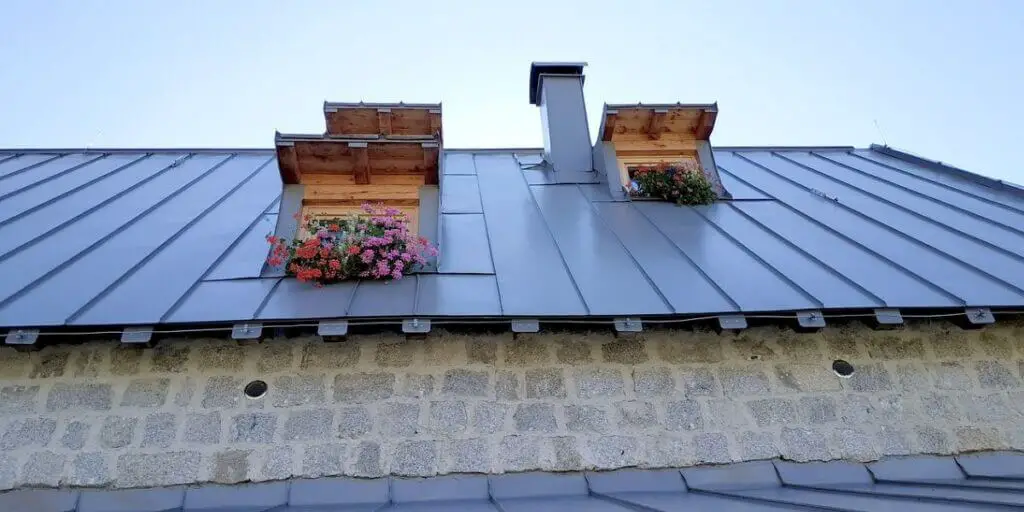
Zinc can be formed into curves, folds, and detailed shapes. This makes it useful for dormers, curved roofs, roof edges, and other architectural features.
Its formability gives designers freedom, but intricate work still takes skill and time. A complex zinc roof is not necessarily quick or inexpensive to install.
5. Low Surface-Maintenance Requirements
Natural and certain pre-weathered zinc finishes generally do not require routine repainting.
The roof system still needs care. Gutters, outlets, flashings, and penetrations should be checked, and debris should not be allowed to trap moisture.
“Low maintenance” is a more accurate description than “maintenance-free.”
6. Recyclability
Zinc roofing can be recovered and recycled at the end of its service life. Installation offcuts can also be collected for recycling.
Its environmental performance depends on more than recyclability, however. Production, transportation, service life, and actual recovery should all be considered.
For a project with environmental targets, request a product-specific environmental declaration rather than relying on a general “eco-friendly” label.
7. Relatively Low Roof-Covering Weight
Thin zinc roofing is relatively lightweight compared with heavy coverings such as concrete tiles or slate.
However, the complete roof includes decking, insulation, membranes, and supporting construction. Assess the whole assembly rather than the metal sheet alone.
Disadvantages of Zinc Roofing
1. High Upfront Cost
Zinc is usually selected as a premium roofing option. The cost includes both the material and the expertise needed to install it correctly.
Complicated roof shapes, difficult access, custom flashings, and limited local installer availability can increase the total.
It may offer long-term value, but it is rarely the obvious choice when the lowest initial price is the main priority.
2. Specialist Installation Requirements
Zinc roofing needs appropriate seaming, fastening, drainage, and allowance for thermal movement.
An installer experienced with another metal is not automatically experienced with zinc. Ask for completed zinc projects and familiarity with the exact manufacturer’s system.
Errors can be expensive to correct once panels and roof details are complete.
3. Underside Moisture Can Cause Corrosion
Zinc’s protective surface behavior does not eliminate the risk of corrosion beneath the sheet.
Condensation and trapped moisture need to be addressed in the roof design. Depending on the product and assembly, this may involve ventilation, a suitable substrate, separation layers, or zinc with a protective backside coating.
The VMZINC guidance on zinc and water explains why controlling underside condensation matters, including in roof systems using backside-protected zinc.
4. Compatibility with Other Materials Matters
Some materials can accelerate zinc corrosion through direct contact or contaminated runoff.
Copper is an important example. Contact between copper and zinc in wet conditions can cause galvanic corrosion, and runoff from copper above zinc also requires attention.
Flashings, fasteners, sealants, membranes, and timber treatments should all be checked against the zinc manufacturer’s compatibility guidance.
5. Denting and Surface Distortion
Zinc can dent from falling branches, severe impact, or careless access.
Visible waviness, often called oil canning, may also occur in sheet-metal panels. It is not automatically evidence of a leak, but it can affect appearance.
Panel design, support, handling, and installation influence the finished result.
6. Uneven Weathering
Patina does not develop at exactly the same rate everywhere. Sheltered areas, different roof orientations, and varying exposure can produce differences in tone.
Choose zinc with an understanding that it is a changing material. If uniform color is essential, discuss samples and surface options with the supplier.
How Much Does Zinc Roofing Cost?
There is no single dependable price for every zinc roof. Location, currency, roof size, panel system, and installation complexity all affect the quotation.
Rather than relying on an old price-per-square-foot estimate, request current itemized quotations covering the same scope.
| Cost component | What to confirm |
|---|---|
| Zinc covering | Product, thickness, finish, and panel system |
| Supporting construction | Decking condition and required repairs |
| Moisture-control layers | Membranes, separation layers, insulation, and ventilation |
| Installation | Seaming, clips, flashings, and specialist labor |
| Access | Scaffolding, lifting equipment, and site restrictions |
| Roof details | Valleys, chimneys, roof windows, and drainage |
| Removal | Existing roof disposal and temporary weather protection |
Compare complete installed systems. A cheaper material-only quotation may exclude substantial work.
How to Calculate Roofing Squares
One roofing square equals 100 square feet of roof surface.
For example:
2,000 square feet ÷ 100 = 20 roofing squares
Measure the actual sloping roof area, not simply the building’s floor area. The final order also needs allowances for seams, details, and cutting waste, calculated for the chosen system.
Is Zinc Roofing Noisy in the Rain?
Rain noise depends on the complete roof assembly, including the supporting deck, insulation, internal ceiling, and panel arrangement.
A thin sheet over an open structure behaves differently from a roof over an insulated living space. It is therefore misleading to describe zinc as always noisier than aluminum or other metals.
If sound is a concern, discuss the roof assembly before installation. Avoid adding improvised foam or other layers that could interfere with drainage, ventilation, or material compatibility.
Does Zinc Roofing Need Underlayment?
Follow the requirements for the specific zinc system.
Many assemblies use an underlay, separation layer, or drainage mat, but these products perform different functions and are not interchangeable.
The design also needs to account for insulation, air leakage, vapor control, and ventilation where required. A generic membrane is not a substitute for a correctly designed roof assembly.
Does Zinc Roofing Need Painting?
Natural zinc generally does not need painting to develop its protective patina.
Some products have factory-applied colors or treatments with their own maintenance instructions. Do not paint or chemically clean zinc simply because its appearance changes with age.
If staining, white deposits, or unusual corrosion appears, identify the cause before covering it with a coating.
Is Zinc Roofing Suitable for Coastal Homes?
It may be, but the exact product and location need assessment.
Salt exposure, distance from breaking surf, sheltered surfaces, and local conditions can affect performance and warranty terms. Obtain manufacturer guidance for the site rather than assuming all zinc roofs are suitable for every coastal location.
Is Zinc Roofing Worth It?
Zinc roofing is worth considering when you value a long service life, architectural flexibility, and a naturally developing finish.
It is a stronger candidate when experienced installers are available and the budget covers the complete roof system. If initial cost or easy access to local repairs is more important, compare other roofing materials as well.
The best zinc roof starts with suitable design and skilled installation. Those choices matter more than promises of “self-repair” or a fixed century-long lifespan.
Comments are closed.