
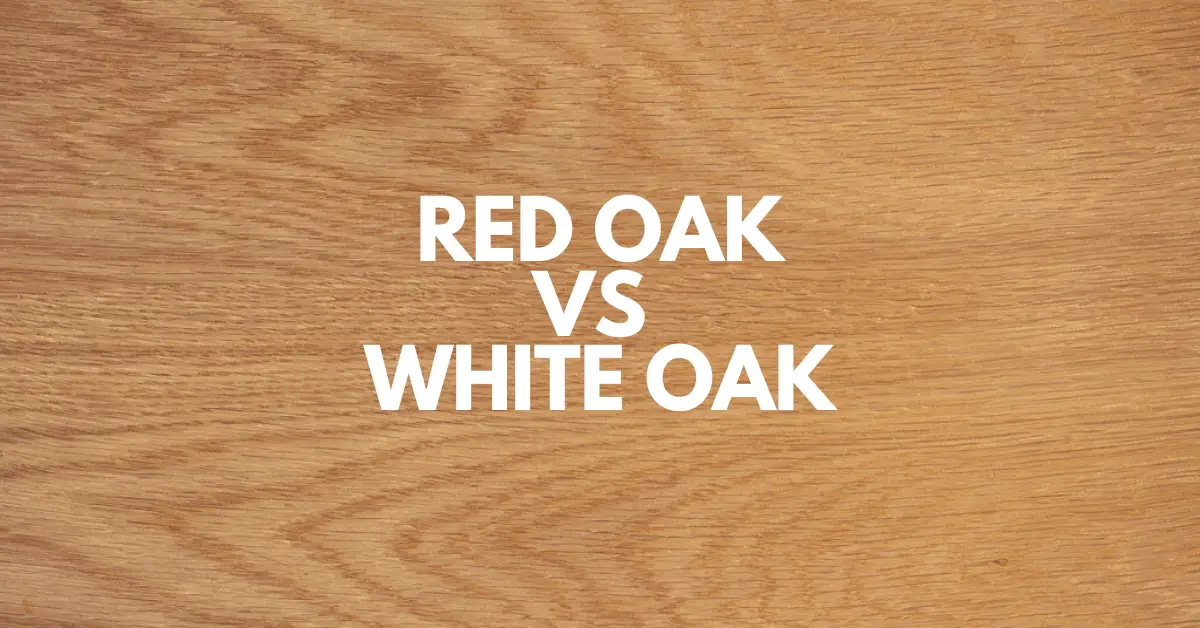
White oak is slightly harder than northern red oak, and its heartwood generally offers better decay resistance and lower water permeability. Red oak is often a more economical choice for indoor furniture, cabinets, and flooring. Both are strong, attractive hardwoods, but they suit different priorities.
For flooring, the decision often comes down to color, grain, finish, and price. For outdoor projects or cooperage, the differences in moisture performance become much more important.
Here is how these two popular oak woods compare.
Are Red Oak and White Oak Individual Species?
The names have two meanings.
Northern red oak refers to the species Quercus rubra, while white oak refers to Quercus alba. However, lumber sold as red oak or white oak may include several species within their respective commercial groups.
These groups reflect botanical relationships and shared characteristics. They are not quality grades, and white oak is not simply a higher grade of red oak.
Unless otherwise stated, the hardness figures in this article refer to Quercus rubra and Quercus alba. Individual boards and other species within each group can differ.
What Is Red Oak Wood?
Red oak is a strong hardwood with prominent grain and a relatively coarse texture. It is widely used for furniture, cabinetry, flooring, and interior trim.
Northern red oak is native to eastern and central North America. It is also planted in parks and gardens as a shade or ornamental tree and grown for timber.
Its heartwood is generally light brown with pinkish or reddish tones. Red oak works well for many indoor projects, but it has poor natural decay resistance and is generally unsuitable for prolonged outdoor exposure without an appropriate protective system.
What Is White Oak Wood?
White oak is a strong, relatively heavy hardwood valued for its appearance, wear resistance, and durable heartwood.
The species Quercus alba is a long-lived deciduous tree native to eastern and central North America. Commercial white oak lumber may also include related species.
White oak is commonly used for flooring, furniture, cabinets, doors, and architectural joinery. Selected heartwood is also used for outdoor furniture, boatbuilding, and barrels.
Its exterior performance depends on the species, heartwood content, construction, and exposure. It should not be treated as suitable for every wet application.
Red Oak vs White Oak: Quick Comparison
| Characteristic | Red Oak | White Oak |
|---|---|---|
| Representative species | Quercus rubra | Quercus alba |
| Typical heartwood color | Light brown with pinkish or reddish tones | Light to medium brown, sometimes with olive tones |
| Grain and texture | Prominent grain and coarse texture | Prominent grain and medium-to-coarse texture |
| Janka hardness | Approximately 1,290 lbf | Approximately 1,360 lbf |
| Water permeability | Generally higher | Generally lower in suitable heartwood |
| Natural decay resistance | Generally poor | Generally better in heartwood |
| Common uses | Indoor furniture, cabinets, flooring, and trim | Furniture, flooring, joinery, barrels, and selected exterior work |
| Relative price | Often less expensive | Often more expensive |
| Staining | Takes stain well with preparation | Takes stain well with preparation |
Common Uses of Red Oak and White Oak
Red Oak Uses
Red oak is widely used for:
- Furniture and cabinetry.
- Flooring and stair components.
- Interior doors and trim.
- Veneer and decorative panels.
- Selected industrial products, including treated railroad ties.
It is particularly useful where the wood will remain dry and protected.
Northern red oak can also be used to make charcoal. However, charcoal production time depends on the equipment, wood dimensions, moisture content, and process. There is no universal 14–16-hour production cycle.
White Oak Uses
White oak is commonly used for:
- Indoor and outdoor furniture.
- Flooring and stair components.
- Cabinets, doors, and architectural joinery.
- Boatbuilding and selected marine components.
- Whiskey and wine barrels.
- Fence posts, railroad ties, and other applications where the specified material is suitable.
Barrel-making requires carefully selected timber and specialized construction. Not every board sold as white oak is suitable for holding liquids.
Appearance: Color and Grain
Red Oak Appearance
Red oak heartwood typically ranges from light brown to pinkish or reddish-brown. Its sapwood is usually pale to light brown.
The grain is generally straight, with large earlywood pores that create a noticeable pattern. Flat-sawn boards often display broad, curved “cathedral” grain.
Its warm tones can suit traditional furniture and interiors, although the final appearance depends on the finish.
White Oak Appearance
White oak heartwood usually ranges from light to medium brown and may have grayish or olive undertones. The sapwood is whitish to light brown.
Quarter-sawn white oak can display prominent ray fleck—the ribbon-like markings associated with some traditional oak furniture.
Despite its name, white oak is not necessarily lighter than red oak. Their colors overlap, so color alone is not a dependable way to identify the wood.
Which Is Harder: Red Oak or White Oak?
White oak is slightly harder than northern red oak:
| Species | Approximate Janka Hardness |
|---|---|
| Northern red oak | 1,290 lbf (5,740 N) |
| White oak | 1,360 lbf (6,050 N) |
This makes white oak approximately 5% harder in the Janka test—a modest difference rather than a dramatic performance advantage.
The Janka test measures resistance to indentation. It does not directly measure scratch resistance, surface smoothness, decay resistance, or structural strength.
For floors and furniture, the finish and everyday treatment can matter as much as this small hardness difference.
Water Resistance and Rot Resistance
White oak heartwood generally performs better around moisture than red oak.
Both are open-grained woods. The important difference is that many vessels in white oak heartwood contain tyloses, structures that obstruct water movement. Red oak vessels are generally more open.
This helps explain the use of selected white oak in barrels and boatbuilding. The American Hardwood Export Council’s white oak guide also identifies its heartwood as resistant to decay.
However, three distinctions matter:
- Lower permeability does not mean waterproof.
- Heartwood and sapwood do not have equal natural durability.
- A protective finish does not eliminate the need for drainage and maintenance.
Neither species should remain unnecessarily wet. Red oak is usually the better choice for dry interiors, while suitable white oak heartwood offers more options outdoors.
Paint, epoxy coatings, and preservative treatments can improve performance in specific applications, but they do not make every piece of wood suitable for every exposure.
Workability and Finishing
Both woods generally machine, glue, and finish well with suitable tools and preparation.
Their density makes sharp cutting edges important. Pre-drilling helps prevent splitting near board ends and makes screw installation easier.
Both also have visible pores. If you want a completely level, glossy surface, a compatible grain filler may be needed.
Which Oak Takes Stain Better?
Both red oak and white oak can take stain well. Neither is automatically the winner.
Their natural colors influence the result. A light stain may leave red oak’s pink undertones visible, while the same product may look browner or more muted on white oak.
Test the complete finishing process on an offcut from the actual boards. A sample on a different species or grade may not predict the finished appearance accurately.
Which Oak Is More Expensive?
White oak often costs more than red oak, but the difference varies by market and product.
Price depends on:
- Lumber grade and usable yield.
- Board thickness, width, and length.
- Flat-sawn, quarter-sawn, or rift-sawn cutting.
- Drying and machining.
- Local supply, demand, and transport.
White oak’s use in flooring, furniture, and cooperage contributes to demand. Its price cannot be explained by a blanket claim that it always contains less heartwood.
Compare equivalent products. A wide, clear, rift-sawn white oak board is not directly comparable with a narrow, character-grade red oak board.
Red Oak vs White Oak for Firewood
Both make excellent firewood when properly seasoned. They provide substantial heat and long-lasting coals.
For reference, Utah State University’s wood-heating guide lists approximately:
| Firewood | Estimated Heat per Cord |
|---|---|
| Red oak | 24.6 million BTUs |
| White oak | 29.1 million BTUs |
These figures are estimates. Actual heat delivered to a room depends on moisture content, the amount of solid wood in the stack, and appliance efficiency.
Straight-grained oak may split reasonably well, but knots and twisted grain can make the job harder. Oak can also take considerable time to dry.
For burning, check the freshly exposed interior of a split piece with a moisture meter and aim for below 20% moisture. Dry red oak is a better fuel choice than wet white oak, regardless of their theoretical heat values.
Red Oak vs White Oak Flooring
Both are established flooring choices. The better option depends on your preferred appearance, budget, and the flooring product itself.
When White Oak May Be the Better Choice
White oak may suit you if you prefer:
- Brown, muted, or olive undertones.
- Prominent ray fleck in quarter-sawn flooring.
- Slightly higher resistance to indentation.
- Lower-permeability heartwood.
However, white oak flooring is still vulnerable to standing water. Its species characteristics do not make the installed floor waterproof.
When Red Oak May Be the Better Choice
Red oak may suit you if you prefer:
- Warmer pinkish or reddish undertones.
- A pronounced grain pattern.
- Potentially lower material costs.
- A match for existing red oak floors or woodwork.
Matching existing flooring also requires attention to grade, board width, cut, and finish.
Does White Oak Require Less Maintenance?
Not necessarily. Finished red oak and white oak floors generally need similar care.
Remove grit, wipe spills promptly, use furniture pads, and follow the finish manufacturer’s cleaning instructions. Indoor humidity, installation quality, and coating condition affect both species.
For engineered flooring, the core construction, wear-layer thickness, and installation requirements also matter.
Which Is Better for Outdoor Projects?
Between the two, suitable white oak heartwood is generally the better outdoor choice.
Use sound material, provide drainage, avoid moisture-trapping joints, and select compatible corrosion-resistant fasteners. Oak tannins can react with iron and cause dark staining, especially when damp.
Red oak’s poor natural decay resistance makes it a less practical choice for ordinary exposed outdoor furniture.
Even with white oak, confirm that the product and construction suit the intended conditions. Above-ground furniture and posts in soil face very different exposures.
Frequently Asked Questions
Is White Oak Stronger Than Red Oak?
Both are strong hardwoods. White oak is slightly harder in typical Janka comparisons, but hardness is not the same as bending strength or stiffness.
For load-bearing work, use properly graded lumber and appropriate design values.
Can Red Oak and White Oak Be Used Together?
Yes, but their colors and grain may remain visibly different after staining.
Make samples before combining them in a project where a uniform appearance is important.
Is White Oak Waterproof?
No. Its heartwood is generally less permeable than red oak, but it can still absorb moisture and suffer damage under unsuitable conditions.
Which Is Better for Cabinets?
Both are good options. Choose red oak for its warm appearance and potentially lower cost, or white oak for its more muted color and preferred grain character.
Cabinet construction and finishing are more important than the small difference in hardness.
Which Oak Should You Choose?
Choose red oak for indoor furniture, cabinetry, and flooring when its appearance and price suit your project.
Choose white oak when you prefer its color and grain or need the better decay resistance and lower permeability of suitable heartwood.
For either wood, buy the right grade, check the moisture condition, and judge the actual boards. Those details often matter more than choosing a species based on hardness alone.
Comments are closed.