
Pine is one of the most affordable and widely used softwoods for woodworking and construction projects. It is valued for its strength, stiffness, durability, and shock resistance. Although pine is classified as a softwood, many pine species are stronger than some hardwoods.
There are more than 100 pine species worldwide, but only a few are considered true commercial pines. Pine lumber is generally grouped into three broad categories: White Pine, Yellow Pine, and Red Pine.
White Pine Species
White Pine includes:
- Eastern White Pine (Pinus strobus)
- Western White Pine (Pinus monticola)
- Limber Pine (Pinus flexilis)
- Chinese White Pine (Pinus armandii)
- Japanese White Pine (Pinus parviflora)
- Vietnamese White Pine (Pinus dalatensis)
Yellow Pine Species
Yellow Pine includes:
- Longleaf Pine (Pinus palustris)
- Shortleaf Pine (Pinus echinata)
- Slash Pine (Pinus elliottii)
- Loblolly Pine (Pinus taeda)
White Pine vs Yellow Pine Comparison
| Feature | Eastern White Pine (White Pine) | Longleaf Pine (Yellow Pine) |
|---|---|---|
| Scientific Name | Pinus strobus | Pinus palustris |
| Color | Light brown with a slight reddish tint | Reddish-brown |
| Height | 65–100 ft (20–30 m) tall, 2–4 ft trunk diameter | 100–115 ft (30–35 m) tall, 2–3 ft trunk diameter |
| Workability | Very easy to work with | Generally easy to work with |
| Finishing | Accepts finishes well | Accepts finishes well |
| Availability | Widely available | Widely available |
| Durability | Moderate to low | Moderate to low |
| Common Uses | Crates, boxes, millwork, carving, boatbuilding | Roof trusses, joists, poles, piles, stringers |
White Pine vs Yellow Pine Uses
White Pine Uses
1. Crates and Boxes
White Pine is commonly used for manufacturing crates and boxes because it is lightweight yet strong. It can support heavy loads while remaining easy to transport. Its excellent workability makes it suitable for both hand and machine tools.
2. Wood Carving
Eastern White Pine and Western White Pine are among the most popular woods for carving. Their low Janka hardness rating makes them easy to carve using both hand tools and power carving tools. Even beginners can create detailed carvings with White Pine.
3. Plywood and Veneer
White Pine is widely used in the production of plywood and veneer due to its attractive color, uniform grain pattern, and affordability. Plywood and veneer products are often more economical than solid wood while still providing a beautiful appearance.
Yellow Pine Uses
1. Deck Construction
Yellow Pine is an excellent choice for deck construction, especially when pressure-treated. Pressure-treated Yellow Pine offers improved durability and moisture resistance compared to untreated pine, making it ideal for outdoor environments.
2. Roof Trusses and Beams
Yellow Pine is dense, strong, and has an excellent strength-to-weight ratio. These qualities make it a preferred material for roof trusses, beams, joists, and structural framing.
3. Bridge Construction
Compared to White Pine, Yellow Pine performs better in outdoor conditions and humid environments. Its higher density, moderate moisture resistance, and good load-bearing capacity make it suitable for bridge construction and other heavy-duty applications.
Common Uses of White Pine and Yellow Pine
1. Flooring
Many people assume softwoods are unsuitable for flooring because they are softer than hardwoods. However, this is not entirely true. Softwoods, including pine, have been used as flooring materials for centuries.
Because pine is less dense than most hardwoods, it is more susceptible to dents and scratches. However, properly maintained pine flooring can last for over 100 years.
Yellow Pine is generally preferred for flooring because it is denser and harder than White Pine. Pine flooring is also appreciated for its light color and attractive grain pattern.
2. Furniture
Both White Pine and Yellow Pine are durable, shock-resistant, and easy to work with, making them excellent choices for furniture making.
Higher-grade pine lumber contains fewer knots and is commonly used for quality furniture. Pressure-treated pine is especially suitable for outdoor furniture because it resists rot, decay, and insect damage.
White Pine vs Yellow Pine: Color and Grain
White Pine
The heartwood of White Pine ranges from light brown to a slightly reddish hue, while the sapwood is pale yellow to nearly white. Exposure to sunlight and air gradually darkens the wood over time.
White Pine typically features a straight grain and a uniform medium texture, often accompanied by small dark knots.
Yellow Pine
The heartwood of Yellow Pine ranges from soft yellow to tan, while the sapwood is yellowish-white. Its warm natural color and attractive appearance make it popular for both structural and decorative projects.
Yellow Pine usually has a straight grain and a uniform texture.
White Pine vs Yellow Pine: Workability
Working with White Pine
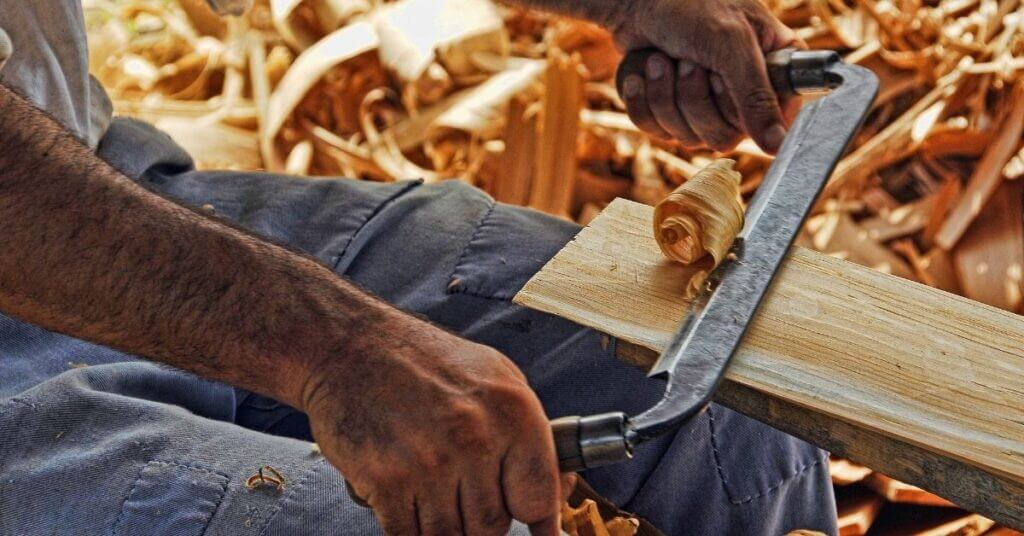
White Pine is one of the easiest woods to work with. It machines, cuts, sands, glues, and finishes exceptionally well. Its straight grain and relatively low density make it ideal for beginners and professionals alike.
Working with Yellow Pine
Yellow Pine works well with both hand and power tools. However, its high resin content can sometimes gum up saw blades and clog sandpaper.
Because Yellow Pine contains more moisture and resin than White Pine, it should be properly dried before finishing. Well-seasoned lumber produces better results during staining and finishing.
How to Stain Pine
Pine generally accepts stains well, but its uneven grain structure can cause blotchy stain absorption.
To achieve a more uniform finish, apply a pre-stain wood conditioner before staining. The conditioner helps regulate stain absorption and produces a smoother, more consistent appearance.
Rot Resistance
The heartwood of both White Pine and Yellow Pine is rated as having low to moderate natural decay resistance. The sapwood has little resistance to rot and insect attack.
As a result, untreated pine is generally not recommended for long-term outdoor use. Pressure-treated pine is a much better option because it offers improved resistance to moisture, decay, termites, dents, and wear.
Allergies and Toxicity
Some people may experience allergic skin reactions when working with pine. Pine dust can also irritate the respiratory system and may aggravate asthma symptoms.
When cutting, sanding, or machining pine, always wear safety glasses, a dust mask or respirator, and protective clothing to minimize exposure.