Hickory wood is stronger, more durable, and more shock-resistant than ash wood. Ash wood is not naturally rot-resistant, so it is generally not recommended for outdoor applications. However, ash wood is easier to work with than hickory because it is lighter and less dense.
Ash Wood
Ash wood is durable, attractive, and relatively inexpensive. It is a light brown hardwood with a straight grain and smooth texture. Its natural appearance makes it a popular choice for furniture.
Ash wood is lightweight, shock-resistant, and easy to work with using both hand and power tools.
There are about 18 species of ash, including White Ash, Black Ash, and Green Ash. The physical properties of each species vary slightly, including hardness, weight, and shrinkage.
Ash trees are medium to large deciduous trees belonging to the Fraxinus genus. They grow best in rich, moist, and well-drained soil.
Hickory Wood
Hickory is an extremely strong, durable, and stable hardwood. It is one of the hardest domestic hardwoods and is known for its outstanding shock resistance.
Its heartwood ranges from brown to reddish-brown, and the grain is usually straight but may occasionally be wavy. Hickory has a medium texture and a natural luster.
Because of its high density and weight, hickory is more difficult to machine than ash. However, it is readily available in the United States at a moderate price.
There are about 18 species of hickory. Around 12 species are native to North America, while the remaining species are native to Asia. Some of the best-known species include Shagbark Hickory and Pignut Hickory.
| Property | Ash Wood | Hickory Wood |
|---|---|---|
| Scientific Name | Fraxinus | Carya |
| Tree Size | 40–60 ft (12–18 m) tall, 2–5 ft (0.6–1.5 m) trunk diameter | 65–100 ft (20–30 m) tall, 1–2 ft (0.3–0.6 m) trunk diameter |
| Wood Color | Beige to light brown | Brown to reddish-brown |
| Rot Resistance | Not naturally rot-resistant | Non-durable; susceptible to insect attack |
| Workability | Easy to work | Moderately difficult to work |
| Availability | Widely available | Widely available |
| Durability | Good | Very good |
| Type | Hardwood | Hardwood |
| Common Uses | Flooring, millwork, boxes, crates, baseball bats, and turned objects | Tool handles, ladder rungs, wheel spokes, flooring, furniture, and cabinetry |
Ash Wood Uses
Boxes and Crates
Ash is both lightweight and strong, making it suitable for manufacturing boxes and crates that need to support heavy loads while remaining easy to transport.
Molding and Millwork
Ash wood is easy to carve, shape, and machine. It also responds well to steam bending, making it an excellent choice for molding and millwork.
Other Uses
Some ash species are also used in construction because of their strength and durability.
Hickory Wood Uses
Tool and Sports Handles
Hickory has exceptional shock resistance and is stronger than ash. It is widely used for making tool handles, baseball bats, hammer handles, axe handles, and other sporting goods.
Common Uses
Furniture
Both ash and hickory are excellent choices for making durable furniture and cabinetry.
Hickory is more resistant to scratches and dents because of its greater hardness, while ash is easier to machine and shape.
Flooring
Ash and hickory are both attractive flooring materials.
Hickory offers greater resistance to wear, dents, and heavy foot traffic, making it an excellent option for high-use areas.
Ash provides a lighter appearance and is easier to work with during installation.
Color/Appearance
Ash Wood Color and Grain
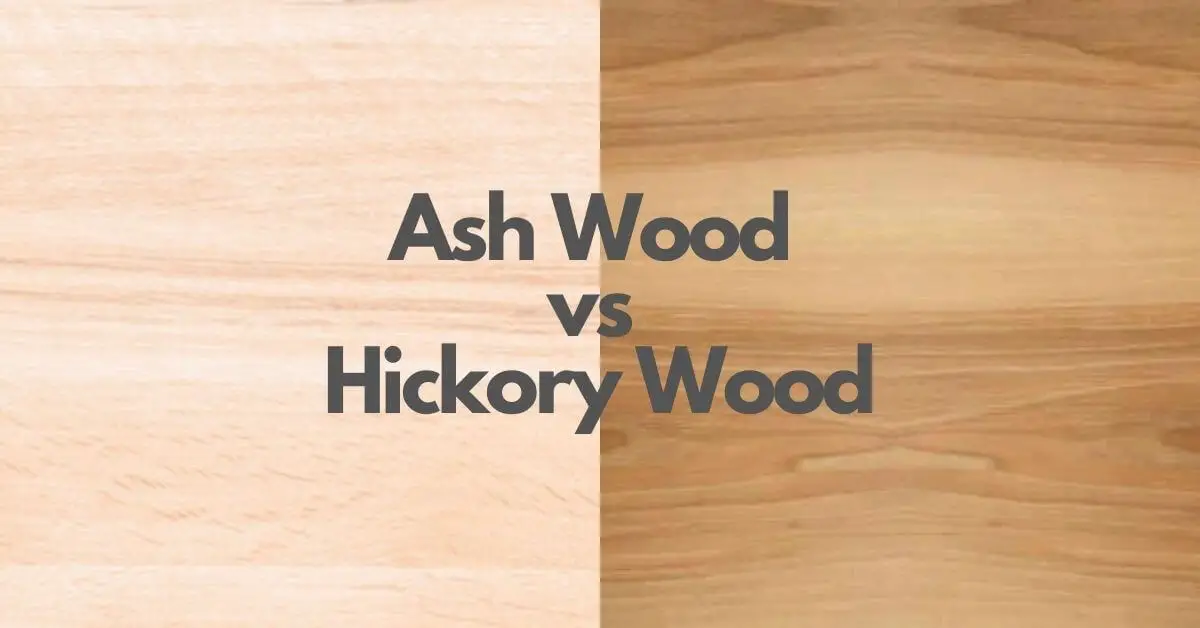
Ash heartwood ranges from light to medium brown, while the sapwood is usually beige or pale brown.
There is only a slight color difference between the heartwood and sapwood.
Ash generally has a straight grain, although it can occasionally be curly. It has a medium to coarse texture.
Hickory Wood Color and Grain
Hickory heartwood ranges from light to medium brown with a slight reddish hue, while the sapwood is pale yellow to light brown.
Some species, such as Pignut Hickory, have slightly darker heartwood than others.
The grain is generally straight but may occasionally be wavy. Hickory has a medium texture with open pores.
Workability
Ash Wood
Ash is easy to work with using both hand and power tools. It bends well with steam and glues, stains, and finishes easily.
Because of its open pore structure, ash accepts stains evenly and can be stained in a wide variety of colors.
Hickory Wood
Hickory is more difficult to work with because of its hardness and density. Sharp cutting tools are recommended, as dull blades may cause tear-out.
Like ash, hickory glues, stains, and finishes well.
Maintenance
Both ash and hickory require basic maintenance to maintain their appearance and durability.
Ash has larger pores and can absorb moisture more quickly than hickory, so it generally requires a little more attention.
Applying paint, oil, varnish, or polyurethane helps protect both woods from moisture, dirt, and everyday wear.
Regular cleaning and proper finishing will significantly extend the life of furniture and flooring made from either wood.
Which Wood Is Better for Outdoor Use?
Ash wood is generally not recommended for outdoor applications because it has poor natural resistance to decay and insect attack.
Some species, such as Mountain Ash (often sold as Victorian Ash), offer slightly better durability, but regular protection is still required.
Hickory is also not considered naturally durable for outdoor use. However, when properly sealed and maintained, it generally performs slightly better than ash in outdoor conditions.
Neither wood is the best choice for prolonged exposure to moisture or direct ground contact.
Conclusion
Ash and hickory are both excellent hardwoods known for their strength, attractive appearance, and versatility.
Hickory is harder, stronger, and more shock-resistant, making it ideal for tool handles, heavy-duty flooring, and high-impact applications.
Ash is lighter, easier to machine, and an excellent choice for furniture, millwork, and interior woodworking.
The right choice depends on your project, budget, and the characteristics that matter most to you.