
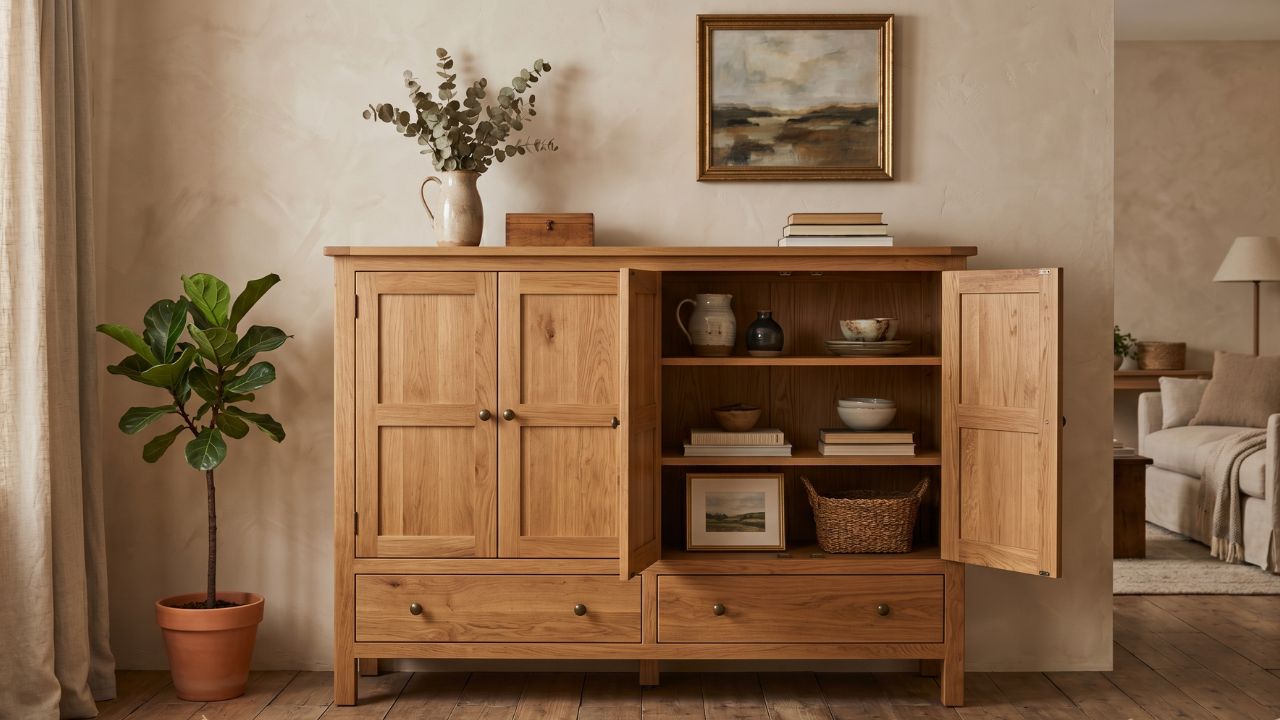
If you’re planning a kitchen remodel or custom cabinet build, there’s a good chance you’ve landed on two finalists: cherry and walnut. Both are premium American hardwoods. Both are gorgeous. Both carry a price tag that reflects their quality. And yet, they couldn’t look — or behave — more differently.
Cherry brings warmth, a reddish elegance, and a wood that grows more beautiful every year. Walnut brings drama, bold chocolate-brown grain, and a cool, contemporary edge. The right choice depends entirely on your kitchen style, how you live, and what you want your space to look and feel like in 20 years.
This guide walks you through everything you need to know: color and grain, hardness and durability, how each ages over time, finishing options, cost, and which kitchen styles each wood suits best.
Cherry Wood vs Walnut at a Glance
| Feature | Cherry | Walnut |
|---|---|---|
| Janka Hardness | 950–995 lbf | 1,010 lbf |
| Color | Light pinkish-brown → deep reddish-brown | Chocolate brown with gray/purple tones |
| Grain | Fine, smooth, straight, closed | Straight to wavy, open, more pronounced |
| How it ages | Darkens richly over time | Lightens and mellows over time |
| Finishing | Takes natural and dark finishes beautifully | Usually left natural; resists heavy staining |
| Cost (custom cabinets) | $500–$700/linear foot | $500–$800+/linear foot |
| Best kitchen style | Traditional, Colonial, transitional, warm modern | Contemporary, minimalist, mid-century modern |
| Availability | Widely available; domestic US species | Premium domestic species; limited supply |
Appearance: Color and Grain
This is where cherry and walnut go their completely separate ways, and it’s usually the deciding factor for most US homeowners.
Cherry Wood
American black cherry (Prunus serotina) starts life as a pale, pinkish-tan wood — almost blond in freshly milled boards. But give it time and light, and it transforms into one of the most beautiful domestic hardwoods in the country. Over months and years, cherry deepens into a rich, warm reddish-brown with golden undertones that no stain can fully replicate. This natural aging process — called photosensitive oxidation — is one of cherry’s most prized characteristics.
The grain is fine, smooth, and straight with a closed-pore surface that creates a satiny appearance when finished. Cherry occasionally features small gum pockets (dark streaks or spots within the wood), which some homeowners consider character marks and others find distracting. Most cabinet makers can sort for more consistent boards if you prefer a cleaner look.
Walnut
Black walnut (Juglans nigra) is the opposite of cherry in almost every way visually. It’s dark from day one — a rich chocolate brown with subtle gray, purple, and even greenish undertones depending on the board. Its grain is more open and pronounced than cherry, ranging from straight to beautifully wavy or figured, giving each cabinet door a bold, almost artistic presence.
Unlike cherry, walnut actually lightens with age. The dark chocolate tones gradually mellow to a warm, medium brown over decades of exposure to light and air. This is the reverse of cherry’s aging path, and it’s an important distinction: a walnut kitchen installed today will look noticeably different in 15 years.
The bottom line on appearance: If you want warm, reddish elegance with a traditional feel that deepens beautifully over time, choose cherry. If you want dramatic, dark, contemporary sophistication with bold natural grain, choose walnut.
Hardness and Durability
Both woods are genuine hardwoods well-suited to cabinetry, but there are meaningful differences.
Cherry (Janka: 950–995 lbf)
Cherry sits on the softer end of the hardwood spectrum. It’s harder than pine or poplar by a wide margin, but softer than oak (1,290 lbf), maple (1,450 lbf), or hickory (1,820 lbf). In practical terms for kitchen cabinets, this means cherry can show dents and dings more readily than denser alternatives if subjected to daily hard impacts.
That said, cherry has an impressive real-world track record. It has been used in American Colonial cabinetry and busy family kitchens for generations and performed outstandingly. The difference between 950 and 1,450 lbf matters less in cabinet applications than it does in flooring, because cabinet surfaces don’t take the same sustained physical beating that floors do. With proper care, cherry cabinets will last decades.
Walnut (Janka: 1,010 lbf)
Walnut is marginally harder than cherry — roughly 60 extra lbf of force on the Janka scale separates them. In practical terms, this is a minor difference. Both woods will hold up well for kitchen cabinet use. Where walnut does have an edge is density: it’s a heavier, denser wood that handles daily use in high-traffic kitchens with slightly more resilience than cherry.
Walnut is also naturally resistant to moisture, which is a genuine advantage in kitchen environments where steam, spills, and humidity fluctuations are part of daily life. Its excellent dimensional stability means walnut cabinet doors and boxes are less likely to warp, swell, or develop gaps over time.
The bottom line on hardness: Walnut has a slight edge in density and moisture resistance, making it the marginally better choice for busy, high-traffic kitchens. For most households, cherry is more than adequate and will last just as long with routine care.
How Each Wood Ages: The Most Important Difference
This is arguably the single most important factor to understand before you choose, and it’s the one most homeowners don’t fully research ahead of time.
Cherry Gets Darker
Cherry starts light and transforms dramatically. If your cabinets are installed in a room with uneven light exposure — say, one wall of upper cabinets catches morning sunlight and another wall is in perpetual shade — the sun-exposed cabinets will darken significantly faster than the shaded ones. This creates visible color variation across the same kitchen.
This isn’t a defect. It’s the nature of cherry. But it means you need to think carefully about your kitchen’s light exposure before committing. Most cabinet makers recommend consistent, even lighting across all cherry cabinet surfaces to allow them to age uniformly. Over 5 to 10 years, cherry cabinets in a well-lit kitchen settle into a gorgeous, even, deep reddish-brown that homeowners consistently describe as looking better than the day they were installed.
Walnut Gets Lighter
Walnut does the opposite. Its rich chocolate tones gradually fade and lighten with light exposure over time, mellowing toward a warm medium brown. Many walnut cabinet owners appreciate this softening effect — the cabinets look slightly less intense than when freshly installed, and the grain takes on an even more refined character.
The practical implication for walnut is the reverse of cherry: if you want to preserve that dramatic dark tone as long as possible, minimize UV exposure or use window treatments that filter direct sunlight.
Finishing Options
Cherry
Cherry is somewhat unusual in that it’s rarely stained to a color very different from its natural tone. The reason: cherry has a tendency to blotch unevenly when stained, especially with lighter or water-based stains. This is why most skilled cabinet makers seal cherry with a wash coat of shellac before any stain application, and why the most popular finish for cherry cabinets is a simple clear oil, lacquer, or varnish that lets the natural color show through.
Dark stains (deep walnut, espresso) do work on cherry and create a rich, layered appearance. Avoid pale gray or cool-toned stains — they fight against the wood’s inherent warmth and tend to look unnatural.
One important note: cherry cabinets will change color regardless of your finish. The aging process comes from within the wood itself, not from the surface coating. Plan for it and embrace it.
Walnut
Walnut is almost always finished naturally. Its color is so compelling and distinctive on its own that staining it would be counterproductive for most homeowners. A clear oil finish or a satin lacquer is the standard treatment, allowing the natural grain to speak for itself.
If you want to deepen walnut’s tone, a light fumed or smoked finish works beautifully. Avoid heavy dark stains — they obscure the grain variation that makes walnut worth the investment in the first place.
Walnut takes clear finishes so cleanly and uniformly that it’s considered one of the most satisfying woods to finish, making it a favorite of American custom cabinet makers.
Cost: Cherry vs Walnut Cabinets
Both cherry and walnut are premium domestic hardwoods, and both will cost significantly more than oak, maple, or alder. Here’s what US homeowners should expect to pay in 2025–2026:
| Cabinet Type | Cherry | Walnut |
|---|---|---|
| Semi-custom (per linear foot) | $400–$600 | $500–$700 |
| Fully custom (per linear foot) | $500–$700 | $600–$800+ |
| Average full kitchen (installed) | $15,000–$30,000 | $18,000–$35,000+ |
Walnut consistently commands a premium over cherry, driven by two factors: it grows more slowly, making quality lumber harder to source, and demand has surged significantly in recent years as walnut became the wood of choice in contemporary American kitchen design. Cherry, while still expensive, is slightly more widely available and tends to come in at 10–20% less than comparable walnut cabinetry.
Budget tip: If walnut exceeds your budget for an entire kitchen, consider a strategic use approach — walnut for the island or a statement bank of lower cabinets, with cherry or a stained maple for the rest. The contrast, when done well, can be striking.
Which Kitchen Styles Suit Each Wood?
Cherry Wood Cabinets Work Best In:
Traditional and Colonial kitchens — Cherry has deep roots in American furniture history and feels completely at home in kitchens with raised-panel doors, detailed molding, and classic hardware. Think antique brass or oil-rubbed bronze pulls.
Transitional kitchens — Cherry’s warmth bridges traditional and contemporary styles effectively. Shaker-style cherry cabinets with clean hardware are a popular middle ground.
Warm-toned interiors — If your countertops are cream, gold, beige granite, or warmer quartz tones, cherry’s reddish-brown wood color complements them beautifully.
Formal dining rooms and built-ins — Cherry’s elegance makes it one of the best choices for built-in cabinetry, butler’s pantries, and home libraries.
Walnut Cabinets Work Best In:
Contemporary and modern kitchens — Walnut’s dark, sophisticated grain is the defining material of modern American kitchen design. Flat-panel (slab) doors in walnut with minimal hardware and clean lines are currently among the most sought-after looks.
Mid-century modern spaces — Walnut was the defining wood of mid-century American furniture design in the 1950s and 60s, and it’s experiencing a genuine renaissance in that context today.
Light countertop pairings — Walnut cabinets look exceptional paired with white marble, light quartz, or concrete countertops. The contrast between dark wood and pale stone is one of the most visually striking combinations in modern kitchen design.
Statement pieces — Even in a kitchen where budget limits the use of walnut to one or two elements, a walnut island or accent cabinet becomes an instant focal point.
Cherry vs Walnut: Maintenance and Care
Both woods are relatively straightforward to care for, but they have different sensitivities.
Caring for Cherry Cabinets
- Wipe spills immediately — cherry’s closed grain resists absorption but isn’t immune
- Clean with mild soap and a slightly damp cloth; avoid harsh cleaners
- Apply a cabinet-appropriate wood polish or wax annually to maintain the finish
- Manage light exposure — try to ensure all cherry cabinets in a kitchen receive roughly equal amounts of natural light to age uniformly
- Avoid placing cherry cabinets directly adjacent to heat sources (oven walls, dishwasher sides) without proper insulation panels
Caring for Walnut Cabinets
- Like cherry, mild soap and water is all you need for daily cleaning
- Apply a food-safe mineral oil or paste wax once or twice a year on natural-finished surfaces
- Minimize sustained direct UV exposure if you want to preserve the dark tones for longer
- Walnut’s excellent moisture resistance makes it more forgiving than cherry around sinks and dishwashers
- Touch up any surface scratches with a matching walnut furniture marker — they’re almost invisible when blended properly
Resale Value: Does Wood Choice Affect Home Value?
For most US homeowners, kitchen cabinetry is the single highest-value investment in a kitchen remodel. Both cherry and walnut cabinets hold their value well and are recognized by buyers and real estate professionals as premium materials.
Walnut currently has a slight edge in the resale market because its contemporary aesthetic aligns with the design preferences of the current generation of home buyers. Cherry cabinets in excellent condition in a traditional-style home are equally valued, but the resale premium is slightly higher in modern kitchens where walnut fits the expected aesthetic.
If resale value is a primary concern, consider the overall design direction of your home before choosing. A sleek contemporary home benefits from walnut; a classic Colonial or craftsman-style home benefits from cherry.
Side-by-Side Summary: Which Should You Choose?
Choose cherry if you:
- Prefer warm, reddish tones and traditional elegance
- Want a wood that gets richer and more beautiful with every passing year
- Are working on a transitional, Colonial, or Shaker-style kitchen
- Have a slightly tighter budget between the two options
- Love the idea of heirloom-quality cabinetry rooted in American woodworking history
Choose walnut if you:
- Want bold, dark, dramatic grain and a contemporary look
- Are designing a modern, mid-century, or minimalist kitchen
- Prefer a wood that mellows and softens over time rather than darkening
- Want the most striking visual contrast with light countertops
- Are willing to invest in the premium tier of domestic hardwood cabinetry
Frequently Asked Questions
Is cherry or walnut more expensive for cabinets? Walnut is typically more expensive — expect to pay roughly 10–20% more for walnut than cherry in custom cabinetry. Both are premium materials compared to oak, maple, or MDF.
Do cherry cabinets go out of style? Cherry cabinets have gone through cycles of popularity. The warm, reddish tones associated with 1990s and 2000s kitchen design fell out of favor for a period, but cherry is experiencing a genuine resurgence as homeowners move away from painted cabinets and gray tones back toward natural wood warmth.
Will walnut cabinets look dark and cave-like in a small kitchen? This is a real concern and warrants careful thought. In a small, low-light kitchen, dark walnut cabinets can feel heavy. Pairing walnut base cabinets with lighter upper cabinets, or using walnut only on an island, is a popular way to get the look without overwhelming a smaller space.
Can you mix cherry and walnut in the same kitchen? It’s generally not recommended as a standard combination — the red undertones of cherry and the cool brown-purple tones of walnut create a color clash. However, if separated by different zones of the kitchen (cherry uppers, walnut island, for example, with a clear visual break), it can work in the right space with the guidance of a skilled designer.
How long do cherry and walnut cabinets last? Both are among the longest-lasting cabinet materials available. With normal use and basic maintenance, solid cherry or walnut cabinets can last 30 to 50 years or more. Custom-built solid wood cabinets are typically refinishable, meaning a full surface restoration can give them another full lifecycle.
Final Verdict
There is no objectively “better” wood between cherry and walnut for cabinets — they serve different kitchens, different tastes, and different long-term visions for a home.
Cherry is the choice for homeowners who love warmth, history, and a wood that rewards patience — one that looks good the day it’s installed and extraordinary 20 years later. Walnut is the choice for homeowners who want drama, modernity, and one of the most visually striking natural materials available in American cabinetry today.
Visit a showroom, hold actual samples under your kitchen’s specific lighting, and imagine what your cabinets will look like in a decade. That exercise, more than any guide, will tell you which wood belongs in your home.