
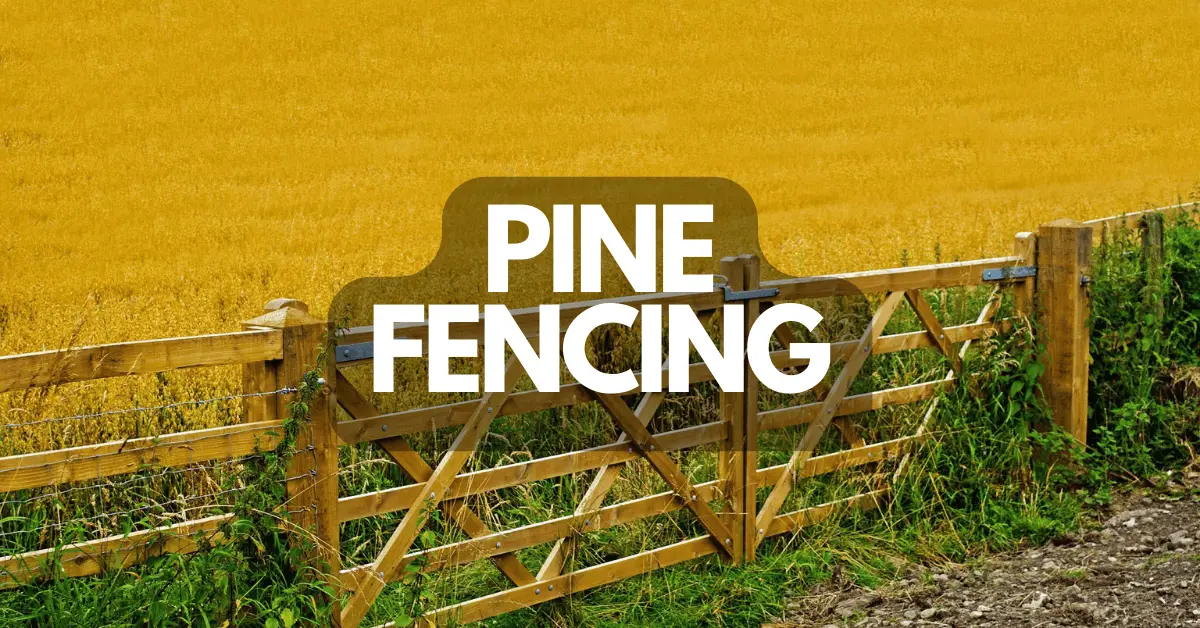
Pine is a durable, strong, and shock-resistant softwood native to the Northern Hemisphere. Pine wood is widely used for crates, boxes, fences, interior millwork, construction lumber, carving, and boatbuilding.
Pine wood comes from evergreen coniferous trees in the Pinus genus of the Pinaceae family. Pine is a fast-growing tree that can reach heights of 10 to 260 feet, depending on the species. There are approximately 111 species of pine, including both trees and shrubs.
Pine wood is one of the most popular woods for fencing because it is strong, easy to work with, and widely available. Pressure-treated pine is more resistant to weather, insects, fungi, and moisture.
What Is a Treated Pine Fence?
Treated pine is permeated with chemicals to protect it against decay and insects. The treatment process makes it one of the more durable softwoods for outdoor applications. However, to maintain the durability and extend the lifespan of treated pine, regular maintenance is necessary.
There are several chemicals used to treat wood. Chromated copper arsenate (CCA) was historically one of the most common wood preservatives. CCA-treated wood requires proper handling, and treated wood should never be burned because burning can release hazardous chemicals.
How Long Does a Treated Pine Fence Last?
A treated pine fence can last 15 to 20 years with proper maintenance. Applying a suitable sealer can help extend the life of the fence by several years.
The actual lifespan depends on several factors, including the local climate, moisture exposure, soil conditions, wood quality, installation method, and maintenance.
Untreated wood fences generally have a shorter lifespan and are more vulnerable to rot, insects, and weathering.
Cedar vs. Pine Fence | Which Is Better for Fencing?
Cedar and pine are two of the most popular woods for fencing, and both can be good choices depending on your budget and requirements.
Cedar is naturally more resistant to decay and insects and is generally more dimensionally stable than untreated pine. However, cedar fencing is usually more expensive than pine fencing.
Here are some of the main pros and cons of cedar and pine fencing to help you choose between them.
Pros and Cons of Cedar Wood Fencing
| Pros | Cons |
|---|---|
| Cedar is durable and can last 15–25 years with proper maintenance. | Cedar naturally turns gray over time when exposed to sunlight and weather. |
| Cedar is naturally resistant to decay and insects. | Cedar fencing is more expensive than pine and many other fencing materials. |
| Cedar is easy to stain and generally accepts stain well. | Cedar still requires maintenance to preserve its appearance and extend its service life. |
Pros and Cons of Pine Wood Fencing
| Pros | Cons |
|---|---|
| Pine fencing is much cheaper than cedar and many other types of wood. | Pine is generally less naturally durable than cedar and requires proper treatment for outdoor use. |
| Pine is relatively soft and easy to work with using hand and machine tools. | Pine requires regular maintenance to protect it from moisture, insects, and decay. |
| Pressure-treated pine is more resistant to decay and insects and is widely available. | Pine is relatively soft, making it more prone to dents and scratches. |
When Should You Stain a New Pine Fence?
Before staining a pine fence, make sure that the wood is sufficiently dry. The ideal moisture content depends on the stain manufacturer’s requirements, so check the product instructions before applying the stain.
Newly cut or green pine can take many months to dry, depending on the climate, wood thickness, and storage conditions. Stain does not penetrate properly when the wood contains too much moisture.
Generally, pine can be more difficult to stain evenly because it has areas of varying density. As a result, it can absorb stain unevenly and develop a blotchy appearance.
To reduce blotching, you can use a pre-stain wood conditioner. A suitable wood conditioner can help the wood absorb the stain more evenly.
Should I Seal My Pine Fence?
Sealing a pine fence can be a good idea because untreated pine is more vulnerable to moisture, decay, and insects when used outdoors.
When pine wood comes into contact with the ground, it becomes more susceptible to rot and insect damage. Properly sealing or treating the fence can help protect the wood from moisture and reduce future maintenance.
For posts that are installed in or near the ground, using properly pressure-treated lumber and following local installation recommendations is especially important.
Can You Paint Treated Pine Fences?
Yes, you can paint treated pine fences, but the wood should be sufficiently dry before painting. Always follow the paint manufacturer’s recommendations for moisture content and preparation.
Paint creates a protective layer between the wood and the environment. A properly applied exterior paint can help protect the fence from moisture, sunlight, and weather exposure.
How Much Does Treated Pine Fencing Cost?
Treated pine fencing can cost approximately $10 to $25 per linear foot, including installation. However, prices can vary significantly depending on the type and grade of wood, fence style, height, location, labor costs, and site conditions.
For an accurate estimate, it is best to compare prices from local suppliers and fencing contractors.
Is Spruce or Pine Better for Fencing?
Pine is generally a better choice than spruce for outdoor fencing, particularly when using properly pressure-treated pine.
Spruce is generally less resistant to decay and weather exposure than treated pine, so an untreated spruce fence may have a shorter lifespan in outdoor conditions.
However, spruce can still be a good alternative to pine when cost is the primary concern. The properties of spruce are similar to those of pine in several ways, and it can be suitable for certain fencing applications when properly treated and maintained.
If you are looking for a budget-friendly fencing material, spruce may be worth considering, but properly treated pine is generally the better choice for long-term outdoor use.