Choosing the perfect species of wood for a project can be challenging because no wood is perfect; every species has some flaws. It is essential to know the cons of a particular wood before using it. Here, we will talk about some of the pros and cons of Balau wood.
What Is Balau Wood?
Balau wood is hard, dense, and strong and is mainly used for plywood, flooring, and heavy construction. It is native to the Philippines, Malaysia, Thailand, and Indonesia.
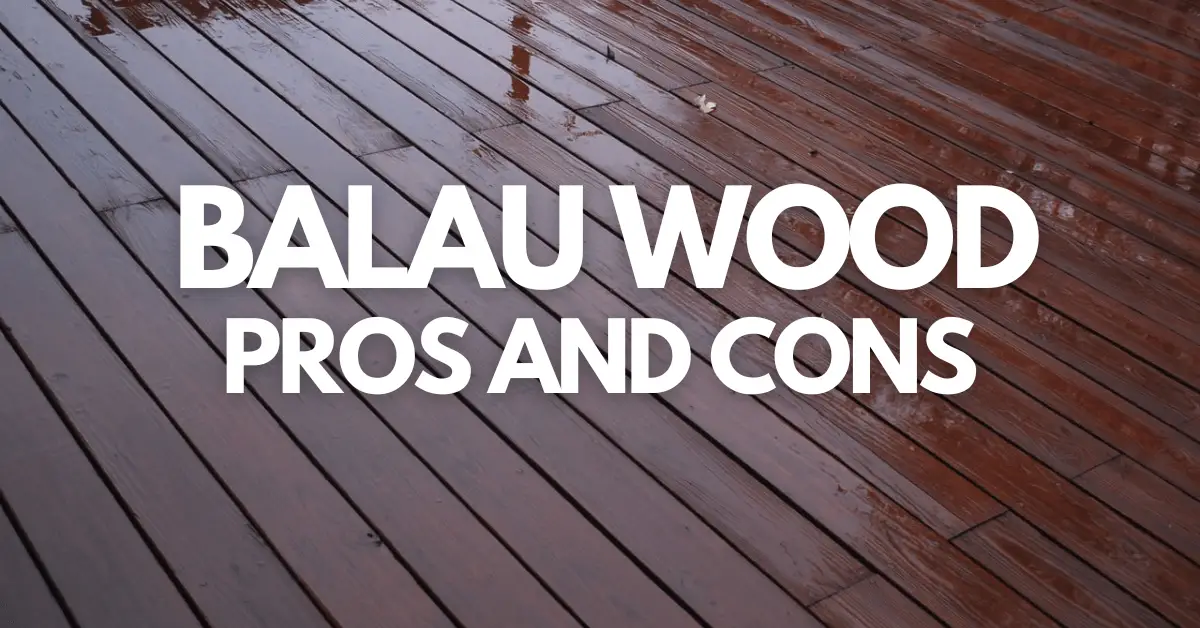
Balau wood has a distinctive grain pattern and ranges from dark brown to light brown with darker stripes. The wood has large, open pores with interlocked grain.
The Balau tree grows in tropical rainforests. It can live for up to 400 years and grow up to 50 meters tall.
Balau Wood Pros
Affordable and Widely Available
Balau is a relatively cheap and widely available hardwood. It is a medium-growing wood, but the tree’s growth rate depends on the species of Balau.
Sustainable
Balau is a sustainable wood. It is not listed in the CITES Appendices. Due to the heavy harvesting of some Shorea species, a few species are listed on the IUCN Red List.
Dent- and Scratch-Resistant
Balau wood is extremely hard. Therefore, it is less prone to scratches and dents, making it suitable for flooring and decking. Its Janka hardness value is 1,600 lbf (7,120 N).
Balau Wood Cons
Hard to Work With
Balau wood is not easy to work with because it is hard and heavy. The interlocking and irregular grain can create a blunting effect on tools. Due to the presence of silica, it can also be harmful to cutting tools.
Toxicity
Common problems such as eye, throat, and skin irritation can occur while working with Balau wood. So, be careful when working with it and use appropriate protective equipment.
Not Highly Durable
Balau wood is not highly durable and is also susceptible to insect attack. That is why Balau requires more care and maintenance for outdoor use.
Prone to Cracking or Warping
Balau wood is preferred for decking but is highly prone to cracking and warping if it is not properly dried before use. It is necessary to dry the wood properly to improve its durability and reduce the risk of cracking. Kiln drying or air drying is an essential process.
Requires Regular Maintenance
Balau wood needs regular maintenance, especially when it is used for decking. Due to continuous exposure to sunlight, it is more prone to cracking and discoloration.