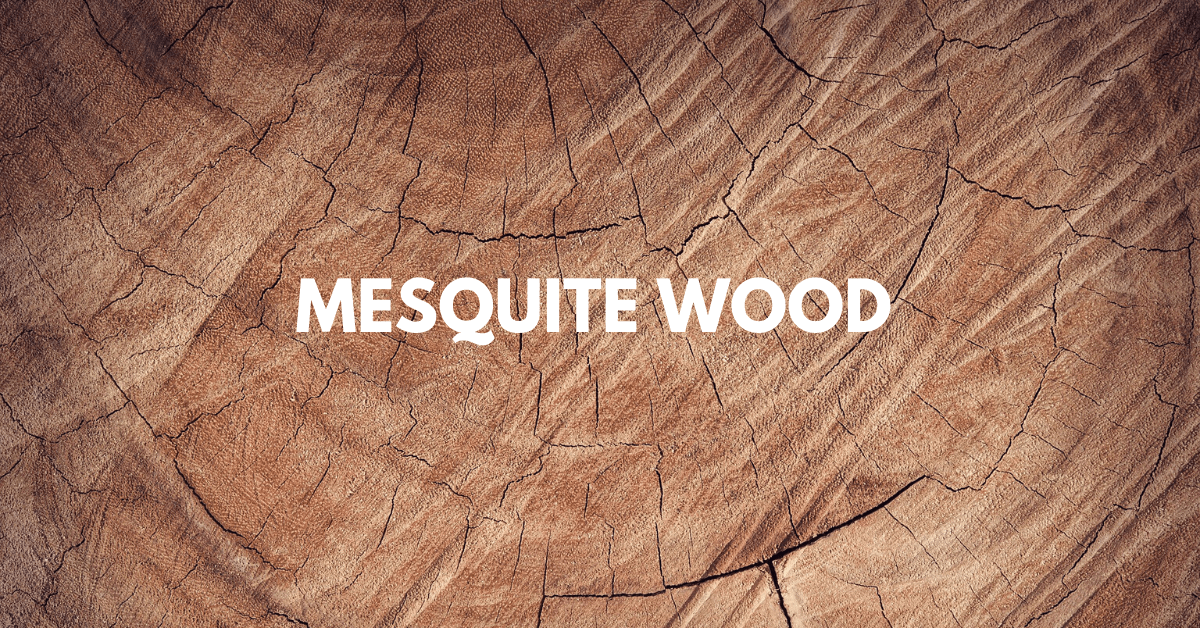
Mesquite wood is one of the hardest and most durable hardwoods found in North America. It is well known for its rich reddish-brown color, beautiful grain patterns, exceptional strength, and distinctive smoky aroma. Besides being a popular wood for furniture and flooring, mesquite is also one of the most widely used woods for smoking meat.
If you’re considering mesquite wood for woodworking, furniture, flooring, or barbecue smoking, this guide covers everything you need to know.
What Is Mesquite Wood?
Mesquite wood comes from trees in the Prosopis genus, which are native primarily to the southwestern United States, Mexico, Central America, and parts of South America.
Mesquite trees are well adapted to dry climates and desert regions. Their deep root systems allow them to survive long periods of drought.
Although most mesquite trees grow between 20 and 40 feet (6–12 m) tall, some species can grow even larger under favorable conditions.
Mesquite is an extremely hard, dense, and durable hardwood. It has excellent natural resistance to decay and insect attack, making it suitable for both indoor and outdoor woodworking projects.
There are more than 40 species of mesquite, with Honey Mesquite (Prosopis glandulosa), Velvet Mesquite (Prosopis velutina), and Screwbean Mesquite (Prosopis pubescens) being among the best known.
Common Uses of Mesquite Wood
Mesquite is a versatile hardwood used in a wide range of woodworking projects.
Common uses include:
- Furniture
- Cabinets
- Flooring
- Live-edge tables
- Cutting boards
- Turned bowls
- Tool handles
- Fence posts
- Decorative woodwork
- Carvings
- Smoking wood
- Firewood
Because of its exceptional hardness and attractive appearance, mesquite is especially popular for rustic and Southwestern-style furniture.
Its natural resistance to decay also makes it suitable for outdoor furniture when properly finished.
What Does Mesquite Wood Look Like?
Mesquite heartwood ranges from golden brown to reddish-brown or dark chocolate brown, often with darker streaks.
The sapwood is pale yellow or cream-colored.
One of mesquite’s most attractive features is its dramatic grain pattern. The grain may be:
- Straight
- Wavy
- Interlocked
The wood has a medium to coarse texture, open pores, and a moderate natural luster.
With age and exposure to light, mesquite usually develops a richer and darker appearance.
Working with Mesquite Wood
Mesquite is generally considered moderately easy to work, although its high density can make machining more demanding than many domestic hardwoods.
Sharp cutting tools are recommended because the wood can quickly dull blades.
Mesquite performs well during:
- Cutting
- Turning
- Carving
- Sanding
- Gluing
- Finishing
Boards containing interlocked grain or numerous knots may produce tear-out during planing.
Despite its hardness, mesquite machines cleanly and produces excellent finished surfaces.
How to Finish Mesquite Wood
Mesquite accepts most finishes very well.
Popular finishing options include:
- Tung oil
- Danish oil
- Polyurethane
- Lacquer
- Varnish
- Hard wax oil
Before applying any finish, sand the surface thoroughly using progressively finer sandpaper.
Applying oil enhances the wood’s rich color and highlights its beautiful grain patterns.
For outdoor furniture, use a high-quality exterior finish to improve weather resistance and reduce moisture absorption.
Advantages and Disadvantages of Mesquite Wood
Like every hardwood, mesquite has both strengths and weaknesses.
Advantages
1. Beautiful Appearance
Mesquite is prized for its rich reddish-brown color and striking grain patterns.
Each board has a unique appearance, making it highly desirable for custom furniture.
2. Extremely Durable
Mesquite is one of the most durable domestic hardwoods.
Its density provides excellent long-term performance in furniture, flooring, and heavy-use woodworking projects.
3. Very Hard
Mesquite has excellent resistance to scratches, dents, and everyday wear.
Its hardness makes it a popular flooring material in high-traffic areas.
4. Naturally Rot Resistant
Mesquite has good natural resistance to decay and insect attack.
When properly finished, it performs well in outdoor environments.
5. Excellent Stability
Compared with many hardwoods, mesquite has good dimensional stability after drying.
This helps reduce movement caused by seasonal humidity changes.
Disadvantages
1. Expensive
Mesquite lumber is generally more expensive than many domestic hardwoods because large, defect-free boards are relatively uncommon.
2. Difficult to Find in Large Sizes
Mesquite trees often produce twisted trunks and multiple branches.
As a result, wide, clear boards are less common than those of species such as oak or maple.
3. Hard on Cutting Tools
Its high density causes faster blade wear than softer hardwoods.
Sharp carbide tooling is recommended.
Is Mesquite Wood Good for Smoking?
Yes.
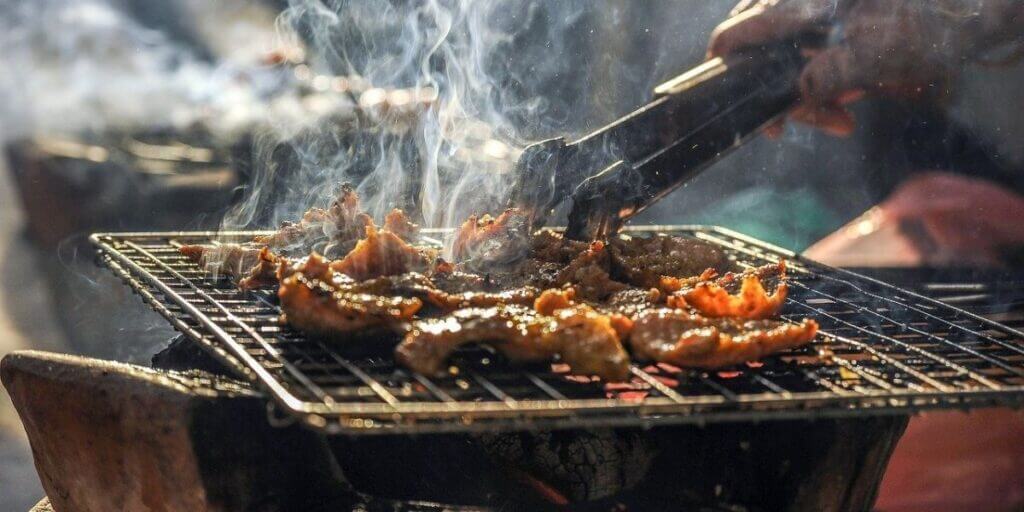
Mesquite is one of the best woods for smoking meat because it produces an intense, earthy, and slightly sweet smoky flavor.
It burns hot and produces a large amount of smoke in a relatively short time.
Mesquite is especially suitable for:
- Beef brisket
- Steak
- Beef ribs
- Venison
- Lamb
- Duck
Because its smoke is much stronger than woods such as oak, pecan, apple, or cherry, many pitmasters use mesquite in moderation or mix it with milder hardwoods.
Using too much mesquite for long smoking sessions may produce a bitter flavor.
Is Mesquite Wood Good for Smoking Brisket?
Yes, but it should be used carefully.
Mesquite pairs exceptionally well with beef brisket because its bold smoke complements rich cuts of meat.
For long smoking sessions, many barbecue enthusiasts combine mesquite with oak to produce a balanced flavor while avoiding excessive bitterness.
Using small amounts of mesquite usually provides the best results.
Frequently Asked Questions
Is Mesquite Wood Good for Firewood?
Yes.
Mesquite is considered one of the best firewoods available.
It burns hot, produces long-lasting coals, and generates approximately 28 million BTUs per cord, making it comparable to many premium hardwood firewoods.
Properly seasoned mesquite usually dries within 6 to 12 months, depending on climate and log size.
How Hard Is Mesquite Wood?
Mesquite is one of the hardest North American hardwoods.
Approximate Janka hardness values include:
| Species | Janka Hardness |
|---|---|
| Honey Mesquite | 2,340 lbf (10,410 N) |
| Velvet Mesquite | Approximately 2,300 lbf |
| Black Mesquite | Approximately 1,940 lbf |
These values make mesquite harder than many commonly used hardwoods, including red oak and black walnut.
Is Mesquite Wood Expensive?
Yes.
Mesquite lumber is generally considered a premium hardwood.
Its price depends on:
- Board size
- Lumber grade
- Availability
- Region
- Figure and grain pattern
Live-edge slabs and highly figured boards often command premium prices.
Where Does Mesquite Wood Grow?
Mesquite naturally grows throughout:
- Southwestern United States
- Mexico
- Central America
- Parts of South America
Because it thrives in dry climates, mesquite is commonly found in deserts and semi-arid regions.
Conclusion
Mesquite is one of the hardest, most durable, and most attractive hardwoods available. Its natural resistance to decay, beautiful grain, and excellent strength make it an outstanding choice for furniture, flooring, cabinetry, and decorative woodworking.
It is also one of the best woods for smoking meat, producing a bold, distinctive flavor that pairs especially well with beef and other red meats.
Whether you’re building furniture, choosing firewood, or preparing barbecue, mesquite remains a versatile hardwood that offers excellent performance in a wide variety of applications.