
If you’ve ever shopped for lumber, fencing, decking, or outdoor furniture, you’ve likely come across cedar wood. Cedar is prized for its beautiful appearance, pleasant aroma, and exceptional resistance to rot. However, many people are surprised to learn that cedar is actually classified as a softwood, despite being more durable than many hardwood species.
So, is cedar a hardwood or softwood? The short answer is cedar is a softwood because it comes from a coniferous tree. However, its performance often rivals that of many hardwoods, which is why the distinction can be confusing.
In this guide, we’ll explain why cedar is classified as a softwood, examine its properties, compare it to hardwoods, and explore its most common uses.
What Makes a Wood Hardwood or Softwood?
One of the biggest misconceptions in woodworking is that hardwoods are always hard and softwoods are always soft.
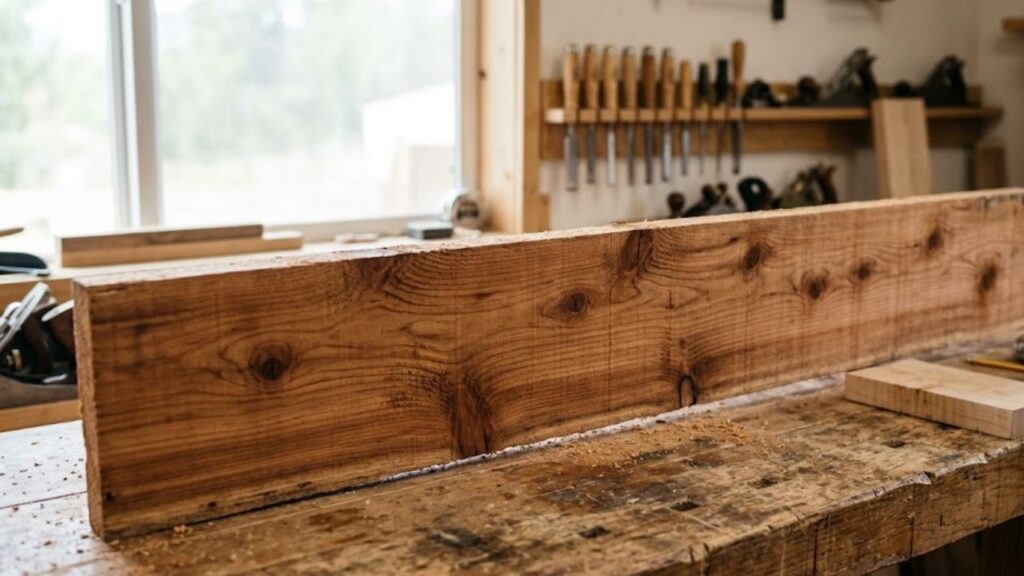
In reality, the terms hardwood and softwood are based on the type of tree the wood comes from, not the actual hardness of the wood.
Hardwoods
Hardwoods come from deciduous trees, which typically lose their leaves each year.
Common hardwoods include:
- Oak
- Maple
- Walnut
- Cherry
- Ash
- Mahogany
These trees reproduce through flowers and enclosed seeds.
Softwoods
Softwoods come from coniferous trees, which usually have needles and produce cones.
Common softwoods include:
- Pine
- Cedar
- Fir
- Spruce
- Redwood
These trees reproduce through exposed seeds contained in cones.
Because the classification is botanical rather than physical, some softwoods are harder than certain hardwoods and vice versa.
Is Cedar a Hardwood or Softwood?
Cedar is a softwood, Cedar trees belong to the conifer family and produce cones instead of flowers. Since cedar comes from a coniferous tree, it is scientifically classified as a softwood.
Despite this classification, cedar is not as soft as many people expect. Its natural durability, dimensional stability, and resistance to decay allow it to perform similarly to many hardwoods in outdoor applications.
Why Cedar Is Classified as a Softwood
The classification has nothing to do with how hard the wood feels.
Cedar is considered a softwood because:
- It comes from a coniferous tree.
- It reproduces using cones.
- It retains needle-like foliage.
- It grows faster than most hardwood species.
Like other softwoods, cedar generally has a straighter grain structure and lower density than typical hardwoods.
Cedar Wood Characteristics
As someone who has worked with cedar for years, I consider it one of the most practical woods available for outdoor projects.
Natural Rot Resistance
One of cedar’s greatest strengths is its natural resistance to decay.
Cedar contains natural oils and extractives that help protect it against:
- Rot
- Fungal decay
- Moisture damage
- Insect attacks
Unlike many other woods, cedar often performs well outdoors without chemical treatment.
Lightweight
Cedar is significantly lighter than most hardwoods.
This makes it easier to:
- Transport
- Cut
- Fasten
- Install
The lighter weight is particularly useful when building fences, pergolas, siding, and outdoor furniture.
Attractive Appearance
Cedar typically displays:
- Reddish-brown heartwood
- Cream-colored sapwood
- Straight grain
- Fine texture
Its warm appearance makes it popular in both rustic and modern designs.
Distinctive Aroma
Fresh cedar releases a pleasant natural fragrance.
The aromatic oils help repel:
- Moths
- Certain insects
- Some wood-damaging pests
This is why cedar is commonly used for closets, chests, and storage cabinets.
Cedar vs Hardwood
Many homeowners wonder how cedar compares to traditional hardwoods.
| Property | Cedar | Typical Hardwood |
|---|---|---|
| Classification | Softwood | Hardwood |
| Weight | Lightweight | Medium to heavy |
| Rot Resistance | Excellent | Varies by species |
| Workability | Very easy | Moderate |
| Outdoor Performance | Excellent | Depends on species |
| Cost | Moderate | Usually higher |
| Density | Lower | Higher |
Although hardwoods are generally stronger and more wear-resistant, cedar often performs better outdoors due to its natural resistance to moisture and decay.
Common Types of Cedar
Several wood species are commonly sold as cedar.
Western Red Cedar
Western Red Cedar is the most popular cedar used in North America.
It is widely used for:
- Decking
- Siding
- Fencing
- Pergolas
- Outdoor furniture
Eastern Red Cedar
Despite its name, Eastern Red Cedar is actually a species of juniper.
It is known for:
- Strong aroma
- Excellent insect resistance
- Attractive reddish heartwood
Spanish Cedar
Spanish Cedar is technically not a true cedar.
It is commonly used for:
- Humidors
- Cabinets
- Fine woodworking
- Musical instruments
Uses of Cedar Wood
Because of its durability and workability, cedar is used in numerous applications.
Outdoor Projects
- Decking
- Fencing
- Gazebos
- Pergolas
- Garden beds
Home Exteriors
- Siding
- Shingles
- Trim
- Soffits
Furniture
- Patio furniture
- Benches
- Chairs
- Storage chests
Interior Applications
- Closet lining
- Decorative paneling
- Accent walls
- Sauna construction
Advantages of Cedar
- Excellent Rot Resistance: Few woods can match cedar’s natural durability outdoors.
- Easy to Work With: Cedar cuts, drills, and sands easily using standard woodworking tools.
- Attractive Grain Pattern: Its natural appearance often requires little finishing.
- Good Dimensional Stability: Cedar expands and contracts less than many wood species.
- Naturally Insect Resistant: Its oils help deter insects and wood-boring pests.
Disadvantages of Cedar
- Softer Surface: Cedar dents and scratches more easily than hardwoods such as oak or maple.
- Lower Structural Strength: It is not typically used for heavy structural applications.
- Higher Cost Than Pine: While usually cheaper than hardwoods, cedar often costs more than common softwoods like pine.
- Color Changes Over Time: Without protection, cedar gradually weathers to a silver-gray color outdoors.
Is Cedar Strong?
Cedar is moderately strong but is not considered a high-strength wood.
For projects requiring heavy load-bearing capacity, woods such as:
- White Oak
- Hard Maple
- Douglas Fir
- Southern Yellow Pine
are generally better choices.
However, for most fencing, siding, decking, and outdoor furniture applications, cedar provides more than enough strength while offering superior decay resistance.
Frequently Asked Questions
Is cedar harder than pine?
Most cedar species are similar to or slightly softer than many pine species. However, cedar is often more durable outdoors because of its natural oils.
Can cedar be used outside without treatment?
Yes. Cedar naturally resists decay and insects, making it one of the best woods for outdoor use without pressure treatment.
Why does cedar smell so good?
The pleasant scent comes from natural aromatic oils contained within the wood.
Is cedar waterproof?
No wood is completely waterproof, but cedar is highly resistant to moisture and decay compared to many other species.
Is cedar a good wood for furniture?
Yes. Cedar is commonly used for outdoor furniture, storage chests, closets, and decorative furniture pieces.
Final Thoughts
Cedar is unquestionably a softwood, but its exceptional durability often causes people to mistake it for a hardwood. Its natural resistance to rot, insects, and moisture makes it one of the most valuable woods for outdoor construction and woodworking projects.
Whether you’re building a fence, installing siding, crafting outdoor furniture, or lining a closet, cedar offers an excellent combination of beauty, workability, and longevity. While it may not have the hardness of oak or maple, its performance in outdoor environments is among the best of any commercially available wood species.