
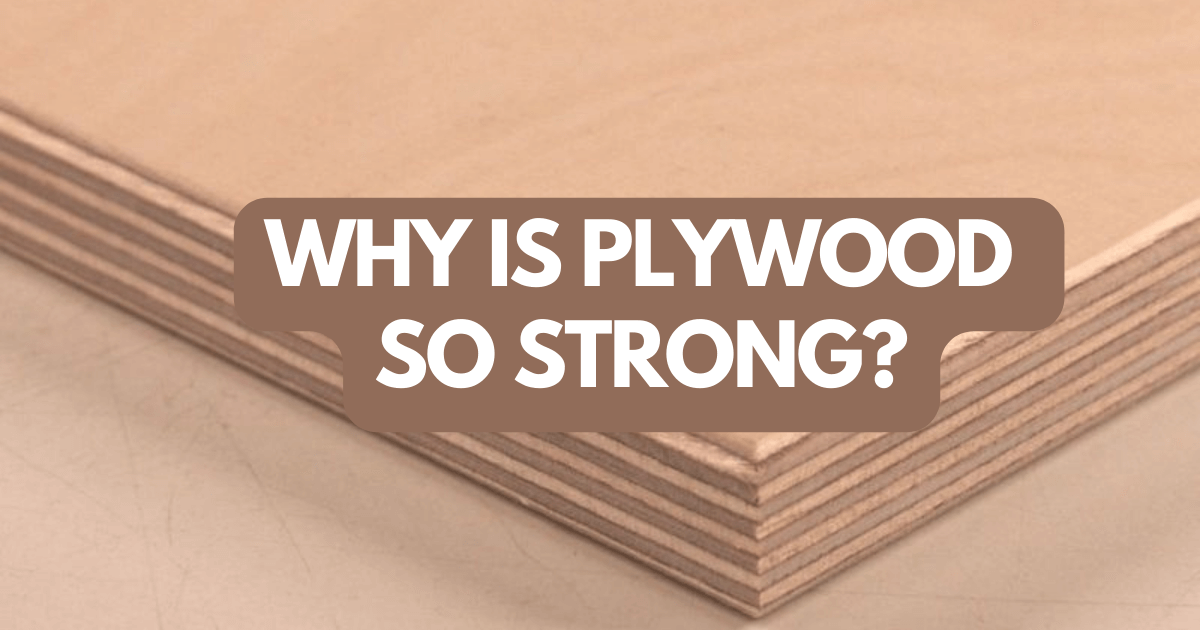
Plywood is one of the most widely used engineered wood products in construction and woodworking. It is used for wall and roof sheathing, subfloors, furniture, cabinets, doors, concrete forms, and many other applications.
But why is plywood so strong compared with many other wood products?
The answer is mainly found in how plywood is constructed. Instead of using one solid piece of wood, plywood is manufactured from multiple thin layers of wood veneer. These veneers are arranged with their grain directions alternating and then bonded together under heat and pressure.
This cross-laminated construction gives plywood a useful combination of strength, stiffness, dimensional stability, impact resistance, and relatively low weight.
However, plywood is not automatically stronger than every piece of solid wood. Its strength depends on the wood species, veneer grade, number and thickness of plies, adhesive bond, panel construction, and intended grade.
What Is Plywood?
Plywood is an engineered wood panel made by bonding thin sheets of wood veneer together.
The veneers are generally arranged so that the grain direction of adjacent layers is perpendicular or otherwise oriented to provide balanced panel performance. The layers are bonded under heat and pressure to form a rigid panel.
The result is a panel that is much more stable and structurally useful than a collection of loose veneer sheets.
Plywood is manufactured in many grades, thicknesses, and panel constructions for different applications. Structural plywood is manufactured to recognized standards that specify requirements for veneer, adhesive bonds, panel construction, dimensions, and workmanship.
Why Is Plywood So Strong?
Plywood gets much of its strength from the combination of several design and manufacturing factors.
The most important are:
- Cross-laminated veneer layers
- Strong adhesive bonding
- Distribution of natural wood defects
- Selection and grading of veneers
- Multiple layers working together
- Dimensional stability
- Efficient strength-to-weight ratio
- Controlled manufacturing
Let’s look at each one in detail.
1. Cross-Laminated Layers
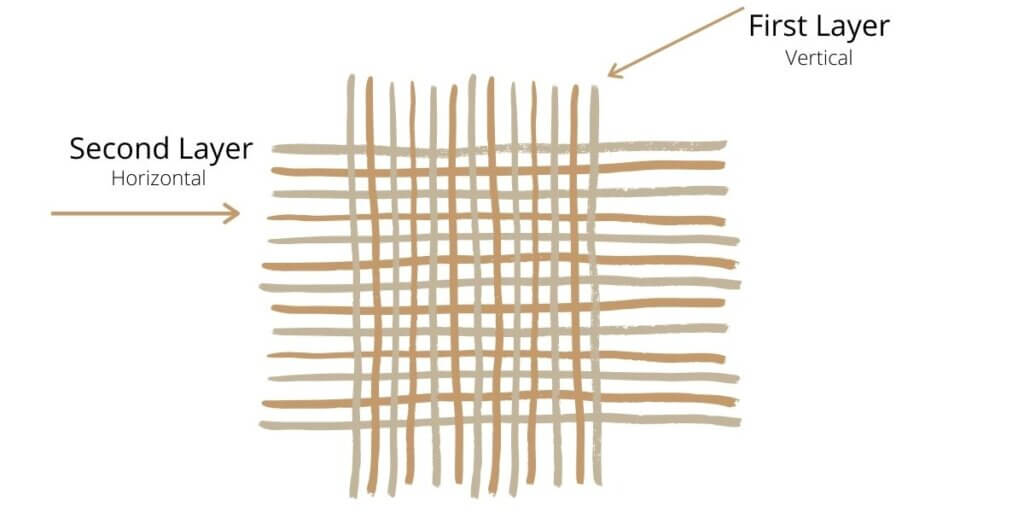
The most important reason plywood is strong is the cross-lamination of its veneer layers.
The grain in one veneer layer is oriented differently from the layer next to it. This creates a panel that can distribute strength and stiffness across more than one direction.
In contrast, solid wood has a much stronger directional behavior because its fibers generally run predominantly in one direction.
Cross-lamination helps plywood:
- Distribute loads
- Improve dimensional stability
- Reduce splitting
- Reduce movement caused by changes in moisture
- Provide strength in both major panel directions
APA identifies cross-laminated construction as one of the primary reasons plywood has strength and stiffness in both directions and better dimensional stability than individual pieces of wood.
Why Does Grain Direction Matter?
Wood is naturally stronger along the direction of its grain than across it.
If you try to split a piece of solid wood along its grain, the result can be very different from applying force across the grain.
Plywood takes advantage of this property by arranging successive veneer layers in different directions.
For example, a simplified plywood panel might have a construction like:
0° → 90° → 0° → 90° → 0°
This creates a balanced panel rather than one that relies primarily on strength in a single direction.
2. Multiple Layers Work Together
A plywood panel contains several veneer layers that act together as one structural element.
Instead of relying on one thick piece of wood, plywood distributes loads through multiple bonded layers.
The number of layers depends on the thickness and construction of the panel.
Thicker plywood generally contains more material and may have more plies, although the exact construction varies by product.
Each layer contributes to the overall performance of the panel.
3. Strong Adhesive Bonds the Layers Together
The veneers would not provide much benefit if they were simply stacked on top of each other.
They are bonded together using adhesives under controlled manufacturing conditions.
Heat and pressure help create a strong bond between the veneer layers and turn the individual sheets into a single panel.
For structural plywood, adhesive bond performance is part of the manufacturing standard. Plywood standards such as PS 1 specify requirements for adhesive bonds, veneer grades, panel construction, dimensions, and workmanship.
The adhesive is therefore an important part of the plywood’s overall strength.
4. Veneer Defects Are Distributed
Natural wood contains knots, splits, checks, grain deviations, and other characteristics.
A large defect in a solid piece of lumber can significantly affect its strength at that particular location.
Plywood is manufactured from many thin veneers. During production, veneers are graded and assembled into panels according to the requirements of the particular plywood grade.
This distributes natural wood characteristics throughout the panel rather than relying on one continuous piece of wood.
However, this does not mean plywood contains no defects. Plywood grades allow different types and amounts of repairs and natural characteristics.
APA veneer grades range from A through D, with different grades allowing different levels of appearance characteristics and repairs.
5. Plywood Is Dimensionally Stable
Another important advantage of plywood is its dimensional stability.
Solid wood naturally expands and contracts as its moisture content changes. The amount and direction of this movement depend on the grain orientation.
Because plywood contains cross-laminated veneers, movement in one layer is restrained by adjacent layers.
As a result, plywood generally experiences less overall dimensional movement than an equivalent solid wood panel.
APA specifically identifies cross-laminated construction as a way to reduce shrinkage and swelling compared with solid wood.
This is particularly useful in construction because panels need to remain reasonably stable as environmental conditions change.
6. Plywood Has a High Strength-to-Weight Ratio
Plywood provides a useful combination of strength and relatively low weight.
This is called its strength-to-weight ratio.
A material with a high strength-to-weight ratio can provide structural performance without adding unnecessary weight.
This is one reason plywood is useful in:
- Walls
- Roofs
- Floors
- Furniture
- Cabinets
- Transportation
- Industrial applications
APA specifically lists high strength-to-weight ratio as one of the major benefits of plywood.
7. Plywood Resists Splitting Better in Many Applications
Cross-laminated construction can help plywood resist splitting compared with a single piece of solid wood.
When a screw or nail is installed into plywood, the fastener passes through multiple veneer layers with different grain directions.
This can provide reliable fastener-holding performance when the appropriate plywood grade and installation method are used.
APA lists fastener-holding ability as one of the performance advantages of plywood.
However, plywood can still split, especially near edges, so proper fastener placement and pre-drilling may be necessary for certain applications.
8. Manufacturing Quality Matters
Plywood strength is not determined only by the fact that it contains multiple layers.
The manufacturing process has a major effect on the final product.
Important factors include:
- Wood species
- Veneer strength
- Veneer thickness
- Veneer grade
- Number of plies
- Grain orientation
- Adhesive type
- Pressing conditions
- Panel thickness
- Manufacturing quality
- Product standard
This is why two plywood sheets with the same thickness can have different performance characteristics.
Structural plywood is manufactured according to standards that establish requirements for materials, construction, adhesive bonds, dimensions, and workmanship.
How Is Plywood Made?
Plywood manufacturing involves several major steps.
Step 1: Selecting the Logs
Suitable logs are selected according to the type of plywood being produced.
The wood species used can influence the strength, appearance, weight, and other properties of the finished panel.
Step 2: Debarking
The bark is removed from the logs before they are processed into veneer.
Step 3: Producing Veneer
Logs can be peeled using a rotary lathe to produce thin sheets of veneer.
These veneers become the individual layers used to manufacture the plywood panel.
Step 4: Drying the Veneers
The veneers are dried to an appropriate moisture content for manufacturing.
Proper moisture control is important because excessive moisture can interfere with bonding and manufacturing.
Step 5: Grading the Veneers
The veneers are inspected and graded according to the requirements of the plywood being produced.
The grade affects the appearance and, for structural products, can also affect allowable performance.
Step 6: Applying Adhesive
Adhesive is applied between the veneer layers.
The adhesive must be appropriate for the intended plywood product and exposure classification.
Step 7: Arranging the Veneers
The veneers are arranged in a cross-laminated configuration.
The grain direction of adjacent layers is changed to provide balanced panel performance.
Step 8: Pressing
The assembled veneers are placed in a press.
Heat and pressure are used to bond the layers together and create a single panel.
Step 9: Trimming and Sanding
After pressing, the panels may be trimmed to the required dimensions.
Depending on the product, the faces may also be sanded to create a smoother surface.
Step 10: Grading and Quality Control
The finished panels are checked according to the applicable product standard and grade.
Structural plywood is subject to specific requirements for panel construction, veneer quality, adhesive bonds, dimensions, and workmanship.
Is Plywood Stronger Than Solid Wood?
This question does not have a simple yes-or-no answer.
Plywood is not universally stronger than solid wood.
A high-quality solid wood beam, board, or structural member can be stronger than a plywood panel of the same dimensions.
However, plywood has several advantages over a single piece of wood:
- More balanced strength
- Better dimensional stability
- Less movement across the panel
- Good strength-to-weight ratio
- Large panel sizes
- Consistent engineered construction
- Good resistance to splitting in many applications
Therefore, plywood can outperform solid wood in some applications while solid wood can outperform plywood in others.
The correct comparison depends on species, grade, thickness, dimensions, loading direction, moisture conditions, and intended use.
Why Is Plywood More Stable Than Solid Wood?
Solid wood is anisotropic, meaning its physical properties differ depending on direction.
Wood moves differently along the grain than across the grain.
In plywood, adjacent veneer layers are oriented differently. Their movement is therefore restrained by neighboring layers.
This cross-lamination reduces the amount of dimensional movement compared with a solid wood panel of similar size.
This is one of the major reasons plywood is so useful for large flat panels.
Does Thicker Plywood Mean Stronger Plywood?
Generally, increasing plywood thickness can increase its load-carrying capacity and stiffness, but thickness alone does not determine strength.
Other factors include:
- Veneer species
- Veneer grade
- Number of plies
- Panel construction
- Grain direction
- Adhesive bond
- Span
- Load direction
- Support conditions
- Moisture exposure
For structural applications, use the performance rating and design information for the specific plywood product rather than assuming that any thicker sheet is automatically stronger.
Does More Plywood Layers Mean More Strength?
More plies can contribute to panel strength and stiffness, but the relationship is not simply “more layers = stronger.”
The thickness and quality of each veneer, its orientation, the species, the adhesive bond, and the overall panel construction all matter.
A plywood panel is engineered as a complete system.
Is Plywood Strong in Both Directions?
Plywood has strength and stiffness in both major panel directions because of its cross-laminated construction.
However, it is not necessarily equally strong in every direction.
The face grain direction, panel construction, species, and product grade affect directional performance.
Structural plywood panels also have a designated strength axis, and panel capacity can depend on how the panel is oriented relative to its supports.
Therefore, when using plywood structurally, follow the manufacturer’s span ratings and installation requirements.
Why Does Plywood Not Warp as Easily as Solid Wood?
Plywood is less prone to large-scale warping because the alternating grain directions of its veneers restrain movement.
When moisture changes cause one layer to expand or contract, the adjacent layers limit that movement.
This does not mean plywood can never warp.
Plywood can still warp because of:
- Uneven moisture exposure
- Improper storage
- Poor manufacturing
- Incorrect installation
- Unbalanced construction
- Prolonged exposure to water
Proper storage and installation remain important.
Is All Plywood Strong?
No.
Plywood comes in many different grades and types.
Some plywood is manufactured primarily for appearance, while other products are designed for structural applications.
For example, APA identifies different plywood grades and performance-rated products for applications such as sheathing, flooring, siding, and sanded finish work.
Therefore, you should select plywood according to the intended application rather than assuming every plywood sheet has the same strength.
What Makes Structural Plywood Strong?
Structural plywood is manufactured and rated for specific structural applications.
Its performance depends on:
- Veneer species
- Veneer grade
- Panel construction
- Adhesive bond
- Panel thickness
- Manufacturing quality
- Performance rating
Structural plywood standards such as PS 1 establish requirements for these factors.
For construction, look for the appropriate product marking, grade, span rating, or certification rather than choosing plywood based only on appearance.
Does Plywood Get Weaker When It Gets Wet?
Moisture can affect plywood performance, but the extent depends on the plywood’s construction and exposure classification.
Some plywood products are manufactured for exterior exposure, while others are intended only for temporary or limited moisture exposure.
APA distinguishes between Exterior and Exposure 1 bond classifications. Exterior panels are designed for repeated wetting and drying or long-term weather exposure, while Exposure 1 panels are not intended for permanent weather exposure.
Importantly, bond classification is not the same thing as decay resistance.
Proper design, drainage, installation, and maintenance are also required to protect wood panels from deterioration.
Advantages of Plywood
The construction of plywood provides several advantages.
High Strength-to-Weight Ratio: Plywood provides substantial structural performance without being excessively heavy.
Dimensional Stability: Cross-laminated veneers reduce the movement associated with moisture changes.
Good Impact Resistance: Plywood can perform well when exposed to impacts and repeated use, depending on its grade and construction.
Good Fastener Holding: Plywood provides reliable fastening performance when the appropriate grade, thickness, and fasteners are used.
Large Panel Sizes: Large sheets make it possible to cover walls, floors, roofs, and other surfaces with fewer joints.
Versatility: Plywood is manufactured in many grades and thicknesses for different applications.
Easy to Work With: Plywood can generally be cut, drilled, routed, sanded, and fastened using common woodworking tools.
Limitations of Plywood
Although plywood is strong and versatile, it also has limitations.
Can Be More Expensive Than Some Alternatives: High-quality plywood can cost more than some lower-cost engineered panels.
Edges Can Be Vulnerable: The exposed veneer layers along plywood edges can require additional protection depending on the application.
Moisture Can Still Cause Damage: Plywood is not automatically waterproof. The appropriate grade must be selected for the exposure conditions.
Strength Varies by Grade: Not all plywood has the same structural capacity.
Surface Quality Varies: Plywood can range from utility-grade panels to highly finished decorative products.
Plywood vs OSB: Which Is Stronger?
Plywood and OSB are both engineered wood structural panels, and neither should simply be labeled “stronger” in every situation.
Their performance depends on the specific product, grade, thickness, and application.
Plywood is made from wood veneers, while OSB is made from oriented wood strands.
Plywood is often valued for its lighter weight, dimensional stability, and fastener-holding characteristics, while OSB can offer efficient structural performance at competitive cost.
For structural applications, compare the actual performance ratings of the products rather than choosing solely based on the material name.
Plywood vs MDF: Which Is Stronger?
Plywood is generally better suited to structural and load-bearing applications than standard MDF.
MDF is manufactured from refined wood fibers and is commonly selected for its smooth, uniform surface and ease of machining.
Plywood, on the other hand, is made from cross-laminated veneers and is commonly used where strength, stiffness, and dimensional stability are important.
For furniture components, cabinetry, wall panels, and structural applications, the appropriate choice depends on the specific requirements of the project.
Why Is Plywood Used in Construction?
Plywood is widely used in construction because it combines:
- Strength
- Stability
- Relatively low weight
- Large panel dimensions
- Good fastener holding
- Ease of installation
- Multiple grades for different applications
Common construction applications include:
- Wall sheathing
- Roof sheathing
- Subflooring
- Flooring
- Concrete forming
- Siding
- Structural panels
APA lists plywood applications including subflooring, wall and roof sheathing, single-layer flooring, concrete forming, siding, and other construction uses.
How Strong Is 3/4-Inch Plywood?
There is no single strength value for all 3/4-inch plywood.
A 3/4-inch plywood panel can have very different structural properties depending on its species, grade, construction, and performance rating.
For structural work, use the manufacturer’s published design values or span ratings for the specific panel.
Panel thickness is only one part of the strength equation.
Does Plywood Have a Grain Direction?
Yes.
The face veneer has a visible grain direction, and the internal veneers are arranged in different directions.
For many structural plywood products, the panel has a primary strength axis. APA notes that span ratings apply when the panel’s strength axis is positioned across the supports as specified.
This is why plywood should be installed according to the manufacturer’s instructions rather than simply placed in any orientation.
Final Thoughts
Plywood is strong because it combines the natural strength of wood with engineered construction.
Its cross-laminated veneer layers are the most important feature. By changing the grain direction between layers, plywood can distribute strength and stiffness in multiple directions while reducing dimensional movement.
Strong adhesive bonds hold the veneers together, while veneer grading, species selection, panel thickness, and controlled manufacturing determine the performance of the finished sheet.
However, plywood is not automatically stronger than every type of solid wood. Its real advantage is that it provides a predictable combination of strength, stability, weight, and versatility for many applications.
When choosing plywood for construction, don’t judge its strength by thickness or appearance alone. Check the grade, species group, performance rating, thickness, span rating, and exposure classification to make sure the panel is appropriate for the job.
Frequently Asked Questions
Why is plywood stronger than regular wood?
Plywood can be stronger and more stable than a comparable solid wood panel in some applications because it is made from cross-laminated veneer layers bonded together. The alternating grain directions distribute strength and reduce dimensional movement.
Is plywood stronger than solid wood?
Not always. Plywood and solid wood have different strengths and weaknesses. Plywood often provides better dimensional stability and balanced panel performance, while a particular piece of solid wood may be stronger in a specific direction.
What makes plywood so strong?
The main factors are cross-laminated veneer layers, strong adhesive bonds, veneer quality, wood species, panel thickness, and controlled manufacturing.
Why does plywood have layers?
The layers are arranged in different grain directions to improve the panel’s strength, stiffness, and dimensional stability.
Why is plywood stronger than MDF?
Plywood is made from cross-laminated wood veneers, giving it structural strength and stiffness. MDF is made from wood fibers and is generally selected for its smooth, uniform surface rather than structural performance.
Is plywood stronger than OSB?
Neither material is universally stronger. Performance depends on the specific grade, thickness, product rating, and application. Compare the manufacturer’s structural ratings when choosing between them.
Does plywood bend easily?
Plywood can bend under load, but standard plywood is generally designed to remain relatively rigid. Special flexible plywood is manufactured specifically for bending applications.
Does plywood warp?
Plywood is generally more dimensionally stable than solid wood, but it can still warp when exposed to uneven moisture, improper storage, poor installation, or prolonged wet conditions.
Is thicker plywood always stronger?
No. Thickness is important, but plywood strength also depends on species, veneer quality, number of plies, grain orientation, adhesive bond, grade, and loading conditions.
Is plywood waterproof?
No. Ordinary plywood is not automatically waterproof. Plywood products are available with different exposure and bond classifications, and the appropriate product should be selected for the environment in which it will be used.
What is the strongest type of plywood?
There is no single “strongest plywood” for every application. Structural performance depends on species, grade, construction, thickness, and the specific load being considered.
How many layers does plywood have?
Plywood can contain different numbers of veneer layers depending on its thickness and construction. The exact number varies by manufacturer and product.
Why is plywood used for flooring?
Plywood provides a combination of strength, dimensional stability, relatively low weight, and good fastener holding, making suitable grades useful for subfloors and some finished flooring applications.
Why is plywood used for roof and wall sheathing?
Structural plywood provides a large, relatively lightweight panel that can transfer loads and provide sheathing over framing. Appropriate performance-rated panels are selected according to span, load, and exposure requirements.
Comments are closed.