
Pink ivory wood is a dense hardwood from Southern Africa, prized for its natural pink to reddish color. It is commonly used for turned objects, jewelry, knife handles, inlays, and other decorative pieces where a small amount of wood can make a strong impression.
However, its attractive appearance comes with a few challenges. Pink ivory can be expensive, difficult to machine, and hard to find in larger, defect-free sizes. Its color can also change with age.
Here is what you should know about pink ivory wood before buying it or choosing it for a woodworking project.
What Is Pink Ivory Wood?
Pink ivory is commonly sold under the scientific name Berchemia zeyheri, although it is also listed botanically as Phyllogeiton zeyheri. Other common names include red ivorywood and pink ivorywood.
Despite its name, pink ivory is entirely plant-based. The word “ivory” refers to the wood’s characteristics, not to any animal material.
The tree grows in parts of Southern Africa, including Zimbabwe and South Africa. It is evergreen to semi-deciduous, depending on growing conditions. According to the South African National Biodiversity Institute, it can reach about 15 meters, or 49 feet, tall.
The colorful heartwood is the part most valued by woodworkers. Its appearance makes it particularly appealing for projects that would otherwise need a stain or dye to achieve a pink shade.
Pink Ivory Wood Characteristics
| Characteristic | Description |
|---|---|
| Common timber name | Pink ivory |
| Scientific name | Berchemia zeyheri, also listed as Phyllogeiton zeyheri |
| Native region | Southern Africa |
| Wood type | Hardwood |
| Tree height | Can reach approximately 49 feet (15 meters) |
| Average dried weight | Approximately 65 lb/ft³ (1,035 kg/m³) |
| Janka hardness | Approximately 3,230 lbf (14,370 N) |
| Heartwood color | Pale pink, vivid pink, or deeper red |
| Grain | Straight to interlocked |
| Texture | Fine and even |
These figures describe typical material. Individual boards vary in color, grain, density, and condition.
What Does Pink Ivory Wood Look Like?
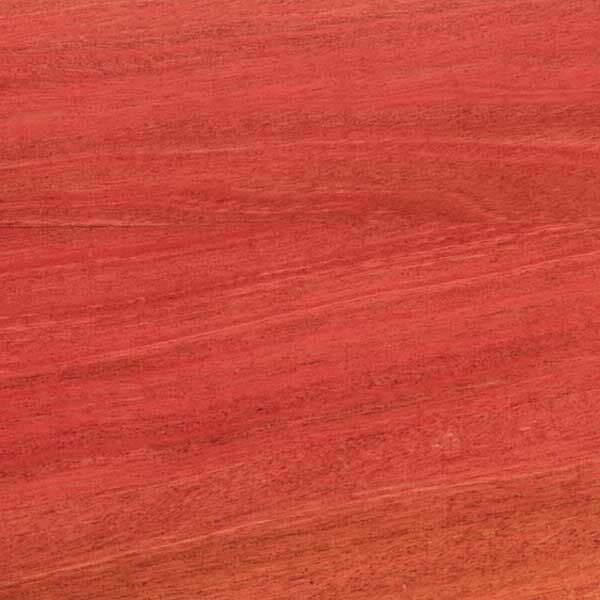
Pink ivory’s main attraction is its naturally colorful heartwood. Some pieces have a soft, brownish-pink shade, while others display much stronger pink or red tones. The lighter sapwood provides a noticeable contrast.
Do not expect every piece to match the bright pink photographs found in online listings. Color varies between trees and even within the same board.
Its fine texture allows a carefully prepared surface to look smooth and polished. Grain can be straight or interlocked, so an attractive piece may still require careful cutting.
Does Pink Ivory Wood Stay Pink?
Not necessarily. Its color can change as the wood ages and is exposed to light. A freshly worked surface may look different from the same piece after years of use.
If color is your main reason for choosing pink ivory, allow for that change in your design. Keep decorative objects away from prolonged direct sunlight, and test your chosen finish on an offcut.
A clear finish can alter the wood’s appearance immediately, too. Do not assume that a product labeled “clear” will leave the original shade completely unchanged.
Common Uses of Pink Ivory Wood
Pink ivory is particularly useful for small projects where its color remains the focal point. Specialty timber suppliers list uses including turning, carving, knife handles, pool cues, veneer, and inlay.
1. Turned Objects
Pens, decorative handles, bottle stoppers, and chess pieces are practical ways to use small blanks.
For a first project, a simple shape makes sense. It lets you become familiar with the material before attempting thin walls or delicate details.
2. Jewelry and Decorative Items
Pendants, earrings, and small ornaments make good use of colorful offcuts. When planning jewelry, consider the finished piece’s weight as well as its appearance.
A small pink ivory accent can also add interest to a larger object without requiring an entire board.
3. Knife Handles
Pink ivory is used for knife scales and handles, combining a decorative appearance with a hard surface.
However, hardness alone does not guarantee a reliable handle. Sound material, accurate fitting, suitable adhesive, and secure assembly are all important.
4. Boxes and Inlays
For a jewelry box or keepsake box, consider using pink ivory for the lid, edging, or a narrow inlay.
This approach keeps the distinctive color visible while allowing you to build the main structure from a more readily available wood.
5. Musical Instruments and Pool Cues
Pink ivory appears in specialty instrument work and pool cues, including decorative components.
Its use in an instrument does not automatically make it a better-sounding material. The purpose of the component and the instrument maker’s design matter more than the wood’s appearance.
Pink Ivory Wood Pros
Naturally Distinctive Color
The pink and red shades offer an unusual appearance without requiring a colored stain. This is especially useful when you want the natural grain to remain visible.
High Hardness
With a Janka hardness of approximately 3,230 lbf, pink ivory offers substantial resistance to indentation. However, it can still be scratched or damaged, and the finish needs appropriate care.
Attractive Finished Surface
Its fine texture and natural luster can produce an appealing surface on carefully sanded and finished objects.
Useful in Small Quantities
You do not need a large amount to create an effective design. A narrow strip, small handle, or box lid can provide the visual interest you need.
Pink Ivory Wood Cons
High Cost
For an everyday project, the cost may be difficult to justify. Allow for waste when deciding whether a particular blank represents good value.
Challenging Workability
Pink ivory can dull cutting edges, and interlocked or figured areas may tear out during machining. It requires more care than an easy-working furniture wood.
Limited Choice of Larger Pieces
Finding a small turning blank is often more practical than finding a wide board with the exact color and condition you want. Design around available material before committing to a large project.
Color Variation and Aging
Two pieces may not match, and their appearance can change over time. This matters when replacing a component or building a matching set.
Defects Can Reduce Usable Material
Check the seller’s description for cracks, knots, and other defects. A cheaper blank may offer less usable wood than its overall dimensions suggest.
Working with Pink Ivory Wood
Plan your cuts before starting, particularly when the blank is expensive or only slightly larger than your finished piece.
- Keep tools sharp. Dull edges make an already demanding material harder to work.
- Take controlled cuts. Test the cutting direction on a spare section before working on a visible surface.
- Support delicate details. Avoid assuming that a hard wood will tolerate thin, unsupported shapes.
- Pre-drill for screws. Choose the pilot hole to suit the fastener and application.
- Test glue and finish. Use offcuts to check the joint and the finished color before assembly.
- Confirm the drying condition. A wax-coated blank is not necessarily dry or ready for final sizing.
Use dust extraction and suitable eye and respiratory protection when machining or sanding wood.
Is Pink Ivory Wood Expensive?
Yes, pink ivory is generally sold as a premium specialty hardwood. However, a single price per board foot is not a reliable guide to every purchase.
Color, dimensions, defects, drying condition, and the seller’s location all affect the price. Small craft blanks also include preparation and retail costs that make them difficult to compare directly with rough lumber.
For example, at the time of checking, Bell Forest Products listed a ¾ × ¾ × 5½-inch pen blank for $5.50. Treat that as an example of a specific retail product, rather than a standard market price.
Compare pieces by the amount of usable material they provide for your project.
Is Pink Ivory Wood Rare?
Pink ivory can be difficult to find in the specialty lumber trade, particularly when you need larger pieces with strong, consistent color.
However, limited retail availability does not establish that the tree is “one of the rarest in the world.” Its presence in its native habitat and the availability of export-quality woodworking blanks are different questions.
Buy from a supplier who can explain the material’s origin. Avoid paying extra solely because a listing makes dramatic claims about rarity.
Is Pink Ivory Suitable for Furniture?
Yes, pink ivory can be used in furniture. Cost and material size are the main practical limitations.
For most projects, it makes more sense as an accent: drawer pulls, edging, inlaid details, or small decorative panels. An entire table or cabinet would require considerably more matching material.
What Should You Check Before Buying?
Before placing an order, check:
- Actual-piece photographs: Confirm whether the images show your piece or a representative sample.
- Drying condition: Ask whether the blank is dried or still needs seasoning.
- Defects: Look for checking, cracks, knots, and areas you will need to remove.
- Usable dimensions: Leave room for trimming, flattening, and shaping.
- Color requirements: Buy matching pieces together when consistency matters.
Pink ivory is a rewarding choice when its natural color is central to the design. Start with a small, sound blank, test your finish, and choose a project that makes good use of the material you have.