
Choosing plywood for kitchen cabinets or bathroom furniture can be confusing. One seller recommends marine plywood, while another offers BWP plywood and says it is the same thing. Both products may even carry similar waterproof claims.
The main difference is that BWP describes a boiling-water-proof grade, while marine plywood must meet a marine plywood specification. In India, IS 303:2024 includes BWP-grade general-purpose plywood, while IS 710:2024 covers marine plywood.
Some products are both marine plywood and BWP, but the word “BWP” alone does not establish marine-grade certification.
Here is how to compare them and choose the right plywood for your project.
What Is Marine Plywood?
Marine plywood is manufactured to meet requirements intended for demanding moisture exposure and marine applications.
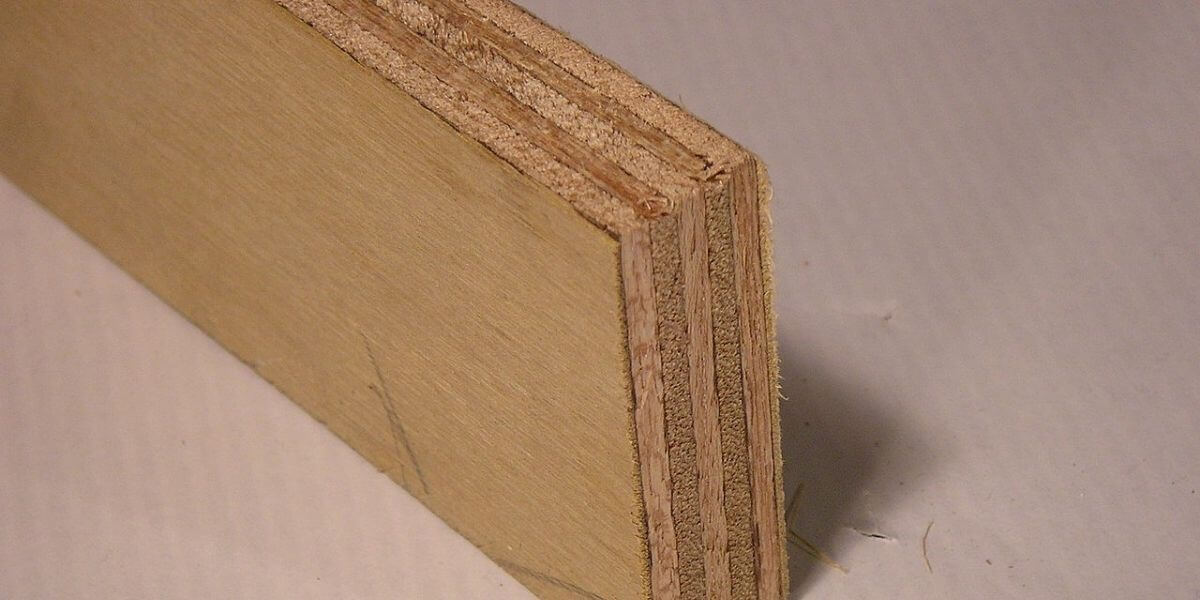
Like other plywood, it consists of wood veneers bonded together, usually with the grain direction alternating between adjacent layers. Its suitability depends on the panel’s construction, bonding, and tested properties.
In India, the relevant marine plywood standard is IS 710:2024. The Bureau of Indian Standards’ marine plywood product manual specifies adhesives conforming to the BWP type under IS 848.
However, waterproof bonding does not turn the wood veneers into a material that cannot absorb moisture. Marine plywood still needs appropriate installation and protection for its intended use.
What Is BWP Plywood?
BWP stands for Boiling Water Proof. It identifies plywood designed to meet demanding water-resistance requirements, including resistance to bond failure under specified testing conditions.
An important change affects how buyers should understand the term: IS 303:2024, the Indian standard for general-purpose plywood, includes MR, BWR, and BWP grades.
The BIS implementation circular for IS 303:2024 explicitly identifies the addition of BWP grade.
This means a genuine BWP panel can be general-purpose plywood under IS 303. You should not assume that every BWP sheet is certified as marine plywood under IS 710.
Marine Plywood vs BWP Plywood: Comparison Table
| Feature | Marine Plywood | BWP General-Purpose Plywood |
|---|---|---|
| What the term identifies | Plywood meeting a marine specification | A boiling-water-proof grade of general-purpose plywood |
| Relevant Indian standard | IS 710:2024 | IS 303:2024, BWP grade |
| Main distinction | Meets the requirements of the marine plywood standard | Meets the requirements for BWP general-purpose plywood |
| Typical consideration | Marine work and demanding moisture-related applications | Furniture and cabinetry where enhanced water resistance is needed |
| Suitable for boat construction? | Must match the boat designer’s specified standard and construction system | BWP labeling alone is insufficient |
| Needs surface and edge protection? | Yes, as appropriate for the application | Yes, as appropriate for the application |
| Automatically termite-proof? | Do not assume this from the name alone | Do not assume this from the name alone |
| Price | Depends on the product and specification | Depends on the product and specification |
The key buying question is: Which standard and grade does this particular sheet meet?
Why Are Marine Ply and BWP Often Confused?
Manufacturers and retailers frequently use phrases such as “BWP marine plywood” because marine panels use boiling-water-proof bonding.
That overlap has encouraged people to treat the two terms as interchangeable. Older buying guides also commonly associate BWP exclusively with IS 710.
Today, that shortcut can lead to an incorrect purchase. A product name, a printed “710,” or a salesperson’s description should not replace checking the actual certification.
For example, if your quotation specifies marine plywood under IS 710, a sheet marked IS 303 BWP is a different specification—even though it may be a suitable product for other furniture applications.
Water Resistance: What Does “Waterproof” Really Mean?
Water resistance involves more than whether the layers stay bonded.
A plywood panel can resist delamination while still absorbing moisture through exposed wood. Persistent dampness can affect its dimensions, finish, and long-term condition.
For a cabinet, water can enter through:
- Unsealed cut edges.
- Open joints.
- Plumbing cutouts.
- Screw holes and hardware openings.
- Damaged surface coverings.
This is why a water-resistant grade should be combined with good installation. Repairing a leaking sink and protecting the cabinet’s vulnerable edges can matter as much as choosing the panel.
Laboratory boiling-water tests demonstrate performance under controlled conditions. They are not a promise that unfinished furniture can remain wet indefinitely.
Strength and Durability
Marine plywood is not automatically stronger than every BWP general-purpose panel in every situation.
For furniture, performance depends on several factors:
- Panel thickness.
- Veneer quality and construction.
- Bond quality.
- Relevant mechanical properties.
- Shelf span and support.
- Fastener placement and joint design.
A long, unsupported shelf can sag even when made from expensive plywood. A thinner panel also does not become suitable for a heavy load simply because it carries a marine label.
Specify thickness and support according to the design rather than selecting plywood by its waterproof claim alone.
Which Plywood Is Better for Kitchen Cabinets?
For kitchen cabinets exposed to humidity, cleaning, and occasional splashes, a properly specified BWP product can be a practical choice. Marine plywood may also be selected when the project calls for its specification.
Give particular attention to the sink cabinet. It needs sealed cutouts, protected edges, accessible plumbing, and a design that makes leaks easy to spot.
Different kitchen areas have different exposure levels. Upper cabinets away from the sink are not subjected to the same conditions as a cabinet surrounding water pipes.
Ask your carpenter to specify the material for each area rather than treating the entire kitchen as one identical moisture environment.
Which Is Better for Bathroom Furniture?
For a bathroom vanity, choose a panel approved by its manufacturer for the intended application and protect it carefully during fabrication.
Useful details include:
- Keeping the cabinet clear of standing water.
- Sealing openings around pipes.
- Protecting the bottom edges.
- Providing ventilation.
- Repairing leaks promptly.
Neither marine plywood nor BWP plywood should be treated as a substitute for a bathroom waterproofing system. Directly exposed shower areas require materials and construction specifically suitable for that use.
Can You Use Them Outdoors or for Boats?
Outdoor Furniture
Outdoor suitability depends on more than the adhesive. Rain, sunlight, repeated wetting, and exposed joints all affect the finished piece.
Before choosing either panel, check whether the manufacturer approves the product for the exposure you expect. Use a compatible exterior finishing system and a design that sheds water rather than trapping it.
Boat Building
For a boat, follow the designer’s material specification. The plywood standard, thickness, structural requirements, and protective coating system all matter.
Do not substitute general-purpose BWP plywood solely because a seller calls it waterproof. Likewise, the word “marine” on its own is not enough to confirm that a panel meets a particular boat design’s requirements.
Termite and Borer Resistance
Water resistance and resistance to biological attack are separate properties.
Some plywood products include preservative treatments or specific warranties against termites and borers. Check those claims for the exact product you are buying.
Ask what the treatment covers, whether cut edges need additional protection, and what exclusions apply. A long warranty is useful only when you understand its conditions.
Marine Plywood vs BWP Plywood: Cost
There is no reliable universal price difference between the two labels.
Brand, thickness, veneer selection, finish quality, certification, and delivery costs can all affect the quotation. A premium BWP furniture panel may cost more than another manufacturer’s marine panel.
For a fair comparison, request prices for the same sheet size and thickness, with the exact standard and grade written down.
Also confirm whether the quotation includes:
- Taxes and delivery.
- Cutting or machining.
- Surface finishing.
- Edge protection.
- Installation.
Compare the cost of the finished cabinet, not just the cheapest sheet.
How to Check Plywood Before Buying
1. Check the Standard and Grade
For marine plywood in India, look for the applicable IS 710 marking. For general-purpose BWP plywood, check for IS 303 and the BWP grade designation.
“IS 303” alone does not tell you whether the panel is MR, BWR, or BWP.
2. Verify the BIS Licence
Check the ISI mark and accompanying CM/L licence number. Use the BIS Care app’s licence-verification function to confirm the manufacturer and relevant standard.
3. Inspect the Sheets
Look for visible edge gaps, damaged corners, separation, and excessive warping. Visual inspection cannot establish every internal property, but it can help identify obvious defects.
Do not judge quality by weight alone. Different timber species and moisture levels affect how heavy a sheet feels.
4. Record the Exact Product on the Invoice
Include the brand, product range, thickness, grade, and standard. Photograph the markings before the sheets are cut.
This makes it easier to confirm that the delivered material matches the quotation.
Does Marine or BWP Plywood Need Lamination?
Lamination is one finishing option, not a universal requirement.
Depending on the application, plywood may receive a suitable paint, coating, veneer, laminate, or another specified finish. Follow the panel and finish manufacturers’ instructions.
A decorative laminate on the main face does not automatically protect exposed edges, joints, or plumbing openings. Those details need separate attention.
Marine Ply vs BWP: Which Should You Choose?
For household cabinetry, select a verified panel that suits the expected moisture exposure, furniture design, and budget. A BWP general-purpose product may meet those needs.
When a project specifically requires marine plywood, buy material certified to the required marine standard. Do not accept a substitute based only on a waterproof marketing claim.
The most useful comparison is the actual standard, grade, construction, and intended application. Once those are clear, you can compare prices with confidence.