
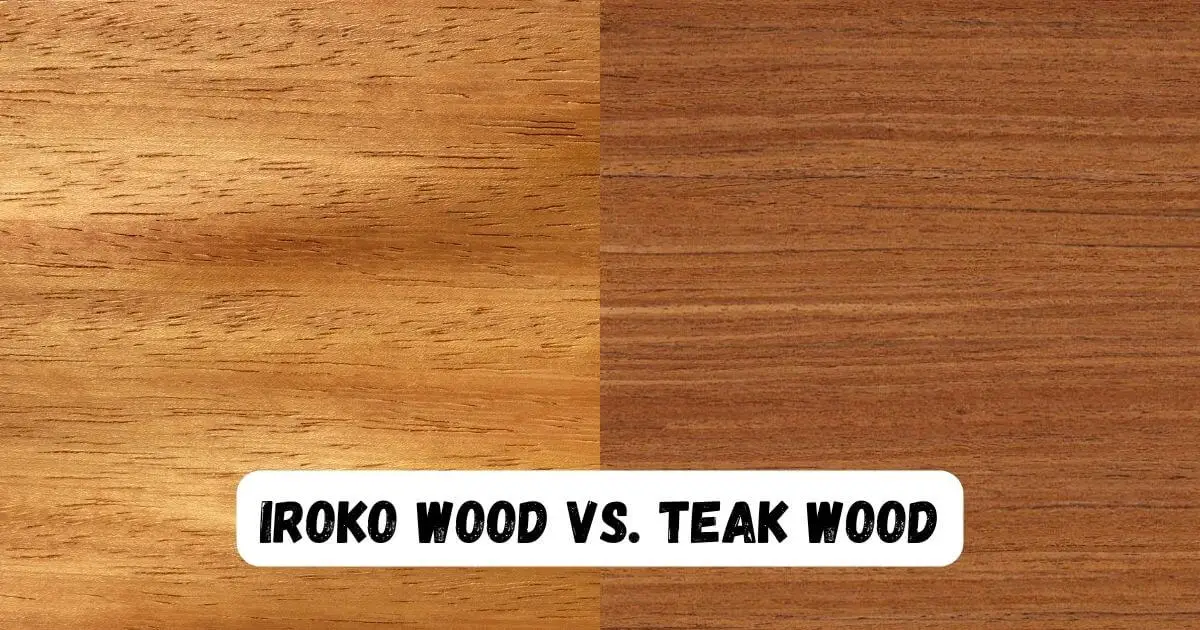
Iroko and teak are naturally durable hardwoods used for furniture, decking, and exterior joinery. Iroko is usually the more affordable option, while teak is prized for its dimensional stability and long record of outdoor performance.
Freshly cut iroko often looks yellowish before developing a richer brown color. Teak typically has golden-brown heartwood and a slightly oily feel. Their appearance can overlap as they age, which helps explain why iroko is sometimes sold as “African teak.”
However, they are different woods. Choosing between them requires looking beyond color to the quality of the timber, its intended use, and your budget.
What Is Iroko Wood?
Iroko wood comes from two African hardwood species: Milicia excelsa and Milicia regia. It is also known by regional names such as odum, mvule, and kambala.
Although commonly called African teak, iroko is not botanically related to genuine teak.
Its naturally durable heartwood makes it useful for exterior furniture, doors, windows, decking, and flooring. Indoors, its warm color suits furniture, cabinetry, and decorative veneers.
Iroko is often chosen when a project needs outdoor durability without the price associated with premium teak.
What Is Teak Wood?
Teak wood comes from Tectona grandis, a hardwood native to parts of South and Southeast Asia. It is also grown in plantations across other tropical regions.
Teak is valued for its golden-brown appearance, natural extractives, and relatively low movement as moisture conditions change.
It is widely used for outdoor furniture, boat decks, interior furniture, flooring, and joinery. However, teak varies in quality: origin, growing conditions, heartwood content, and processing all influence performance.
Iroko vs. Teak: Quick Comparison
| Characteristic | Iroko Wood | Teak Wood |
|---|---|---|
| Botanical name | Milicia excelsa and Milicia regia | Tectona grandis |
| Native region | Tropical Africa | South and Southeast Asia |
| Heartwood color | Yellowish to golden brown, darkening with exposure | Golden to medium brown, sometimes with darker streaks |
| Grain | Often interlocked | Usually straight, occasionally irregular |
| Texture | Medium to coarse | Commonly coarse, with an oily feel |
| Approximate Janka hardness | Around 1,260 lbf in commonly published trade data | Around 1,070 lbf |
| Typical dry density | Around 640–660 kg/m³ | Around 650–670 kg/m³ |
| Outdoor suitability | Good-quality heartwood suits many exterior applications | Good-quality heartwood is highly valued for exterior use |
| Main machining challenge | Interlocked grain and occasional mineral deposits | Silica that dulls cutting edges |
| Typical price position | Usually less expensive | Usually more expensive |
Figures are representative rather than guaranteed. Published results vary with samples, moisture content, origin, and test methods.
Appearance: Can You Tell Iroko and Teak Apart?
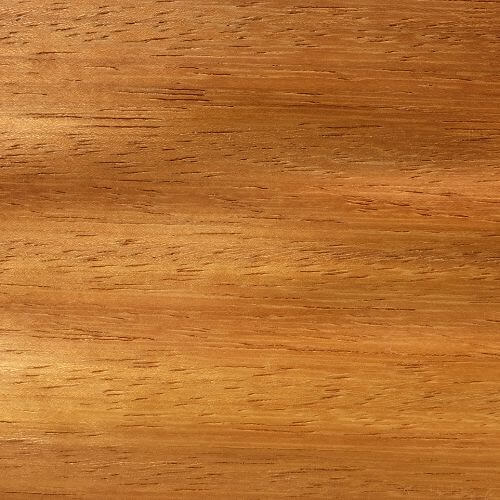
Iroko Color and Grain
Freshly sawn iroko can have a yellow or yellow-brown appearance. With exposure, it commonly develops golden-brown to darker brown tones.
Its interlocked grain may produce an attractive striped appearance, particularly on quartersawn surfaces. Individual boards can differ noticeably in color.
The pale sapwood is usually distinguishable from the darker heartwood.
Teak Color and Grain
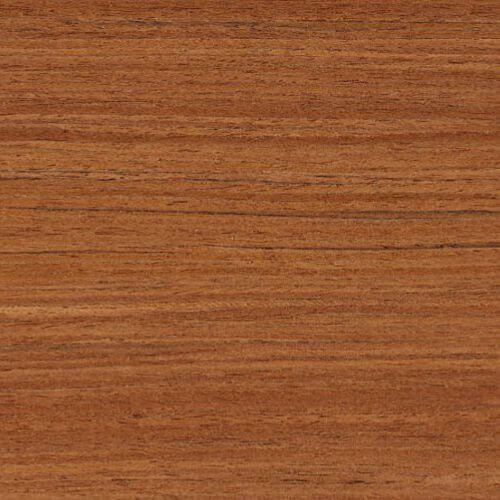
Teak heartwood generally ranges from golden brown to medium brown, sometimes with dark streaks. Its grain is often straighter than iroko’s, although variation occurs.
Despite its reputation for a smooth finished surface, teak is not necessarily fine-textured. Its pores can be quite visible.
Both woods may weather toward gray outdoors when left unfinished. Color alone is therefore unreliable for identification, especially on old furniture.
If you are purchasing teak, ask for the botanical name rather than relying on a trade name containing “teak.”
Durability: Is Teak Better Than Iroko?
Both woods have naturally durable heartwood, but teak is not automatically more durable than every piece of iroko.
CIRAD rates mature iroko heartwood as durable to very durable against decay fungi. Its technical guidance also recognizes suitable outdoor use without preservative treatment when the construction drains well and avoids trapped water.
Teak from natural forests has a strong durability record, but plantation material can vary. CIRAD’s teak technical sheet distinguishes between natural-forest teak and plantation teak rather than assigning every board identical performance.
For buyers, the practical lesson is to check the actual material. Heartwood content, timber quality, drainage, and construction matter more than a blanket claim that one species always lasts longer.
The pale sapwood should not be assumed to share the heartwood’s decay resistance.
Moisture Resistance and Stability
Teak generally offers excellent dimensional stability. Its relatively low shrinkage is one reason it is valued for demanding joinery and marine applications.
Iroko is also a stable hardwood once properly dried, making it useful for doors, windows, and outdoor furniture.
Neither wood is waterproof. Both exchange moisture with their surroundings and can move, check, or deteriorate under unfavorable conditions.
For a garden table, for example, well-designed joints that shed rain are more useful than simply applying extra coats of finish over areas that trap water.
Teak’s durability is associated with its natural extractives. Its silica content is particularly relevant to tool wear; it should not be treated as the sole explanation for resistance to moisture or decay.
Hardness and Weight
Iroko is generally rated harder than teak in commonly published Janka comparisons. This suggests greater resistance to indentation under the test conditions.
However, hardness does not measure every aspect of durability. A harder wood is not necessarily more resistant to rot, more stable outdoors, or less likely to develop scratches in its finish.
Their typical dry densities are also close. It is misleading to describe iroko as dramatically heavier than teak based on a small difference between published averages.
For furniture, board thickness and construction will often have a larger effect on total weight than the choice between these two species.
Workability: Which Is Easier to Use?
Working With Iroko
Iroko can be machined successfully, but its interlocked grain may tear out during planing. Sharp tools, controlled cuts, and attention to grain direction help.
Some boards contain hard calcium carbonate deposits that can damage or rapidly dull cutting edges.
Its extractives can also complicate gluing or finishing. Test the intended adhesive and coating on offcuts before committing to a large project.
Working With Teak
Teak’s generally straight grain can make it pleasant to shape, but its silica content has a pronounced dulling effect on tools. Carbide tooling is useful.
The oily surface can affect adhesion. Prepare freshly machined or sanded bonding surfaces as directed by the adhesive manufacturer, and choose products suitable for teak.
Both woods benefit from predrilling near ends and edges. Use effective dust extraction and appropriate protection when machining or sanding.
Uses: Where Does Each Wood Work Best?
Outdoor Furniture
Both can make good garden furniture when the heartwood, joinery, and construction are suitable.
Teak is often chosen for premium tables, chairs, and loungers. Iroko offers a practical alternative when the budget is tighter.
Compare workmanship as carefully as the wood species. Poor joints can shorten the life of furniture made from otherwise durable timber.
Doors and Windows
Iroko is widely used for exterior joinery because it combines durability, stability, and comparatively accessible pricing.
Teak can also perform well, although its cost may be difficult to justify for a large joinery project.
Flooring
Both woods are used for flooring. Iroko’s hardness can be useful for resisting dents, while teak offers a distinctive appearance and good stability.
For finished flooring, coating quality, installation, and maintenance also influence wear.
Boatbuilding
Both have established marine uses, including decking and selected boat components.
However, being suitable for a boat deck does not automatically qualify a board for every submerged or structural marine application. Follow the vessel designer’s material specifications.
Interior Furniture and Veneer
Either wood can suit cabinets, desks, tables, and decorative panels. Indoors, appearance, board selection, and price may drive the decision more than decay resistance.
Price: Why Is Iroko Usually Cheaper?
Iroko is commonly sold as a lower-cost alternative to teak, but there is no universal price gap.
Teak pricing reflects demand, origin, grade, dimensions, supply, and processing. Its higher price is not simply because it is darker, and iroko’s lower price should not be explained by assuming every iroko tree grows quickly.
When comparing quotes, match:
- Board thickness, width, and usable length.
- Heartwood content and defects.
- Drying condition.
- Rough-sawn versus surfaced material.
- Delivery charges and expected waste.
- Sourcing documentation.
A cheaper board may offer poor value if defects leave little usable timber.
Finishing and Maintenance
A finish can help preserve the brown appearance and manage surface weathering. It does not compensate for poor construction or turn either wood into a waterproof material.
If you prefer a naturally weathered gray appearance, suitable outdoor pieces may be left unfinished according to the maker’s guidance.
If retaining color is important, choose an exterior finish approved for the species and application. Test it first: iroko’s extractives can interfere with some coatings, and teak’s oily surface requires suitable preparation.
Clean gently, remove debris from joints, and avoid leaving furniture in persistent contact with wet soil. Recoat according to the finish’s condition and instructions rather than assuming one schedule fits every climate.
Iroko and Teak: Pros and Cons
| Wood | Main Advantages | Main Limitations |
|---|---|---|
| Iroko | Durable heartwood, attractive aging, good stability, usually lower cost | Interlocked grain, possible mineral deposits, finishing challenges |
| Teak | Excellent stability, valued exterior performance, attractive grain, established marine uses | Higher cost, tool dulling, adhesion preparation, variable timber quality |
Which Should You Choose?
Choose iroko when you want durable hardwood for outdoor furniture, joinery, or flooring and need to control material costs.
Choose teak when its appearance, dimensional stability, or suitability for a specified marine or furniture project justifies the premium.
For either option, buy from a supplier who can identify the species, explain the grade, and provide credible sourcing information. A well-made iroko piece can be a better purchase than poorly constructed furniture carrying a teak label.