Claro walnut is one of the most sought-after hardwoods in fine woodworking today, prized for its dramatic figure, rich color variation, and natural luster. If you’ve ever seen a stunning live-edge table or a high-end gunstock with swirling, marbled grain patterns, there’s a good chance you were looking at Claro walnut. Let’s dig into what makes this wood so special, where it’s used, and what to consider before working with it.
What Is Claro Walnut Wood?
Claro walnut comes from the California black walnut tree (Juglans hindsii), as well as hybrids between Juglans hindsii and English walnut (Juglans regia) rootstock, which are commonly grown in California’s orchards for nut production. Once these orchard trees stop producing nuts efficiently, the trunks and root crowns are harvested for lumber — which is part of why Claro walnut is considered both a luxury wood and a sustainable byproduct of agriculture.
The name “Claro” comes from the Spanish word for “clear” or “light,” referring to the lighter background tone of the wood compared to other walnut species. What truly sets Claro walnut apart, though, is its figure — wild, flowing grain patterns, burls, and color streaks that range from pale tan to deep chocolate brown, often with purple, red, or olive undertones running through it.
Claro Walnut Specifications
| Property | Claro Walnut |
|---|---|
| Scientific name | Juglans hindsii (and hybrids with Juglans regia) |
| Other names | California walnut, California black walnut |
| Tree size | 50–70 ft (15–21 m) tall, 3–5 ft (1–1.5 m) trunk diameter |
| Average dried weight | ~41 lbs/ft³ (660 kg/m³) |
| Janka hardness | 1,000–1,220 lbf (4,450–5,430 N) |
| Rot resistance | Moderately durable |
| Workability | Generally good, can be tricky in highly figured sections |
| Grain | Often wild, swirling, or burled; straight in plainer sections |
| Common uses | Furniture, gunstocks, live-edge slabs, veneers, musical instruments |
Why Claro Walnut Is So Highly Prized
Most hardwoods are valued for consistency — uniform color, predictable grain, easy machining. Claro walnut flips that expectation. It’s valued because it’s unpredictable. Every slab is different, and the most prized boards come from the root crown and crotch areas of the tree, where the grain twists and swirls into patterns that almost look painted on.
This is why Claro walnut commands premium prices, especially for figured or “marbled” slabs. A plain board might look like an ordinary walnut, but a highly figured crotch-cut slab can sell for hundreds of dollars per board foot.
Uses of Claro Walnut Wood
Furniture and slab tables. Claro walnut is a favorite for live-edge dining tables, coffee tables, and statement furniture pieces, where the natural figure and edge of the tree become part of the design.
Gunstocks. This is actually where Claro walnut built its reputation. Its strength-to-weight ratio, shock resistance, and beautiful figure make it one of the top choices for high-end rifle and shotgun stocks.
Veneers. Because the most figured logs are expensive and limited, Claro walnut veneer allows the look to be used across cabinetry, paneling, and furniture at a more accessible cost.
Musical instruments. Some luthiers use Claro walnut for guitar bodies and backs, taking advantage of both its tonal properties and visual appeal.
Turned and carved items. Bowls, pens, and decorative objects benefit from the wood’s color depth and grain movement, especially when finished with a hand-rubbed oil or lacquer.
Wood Identification
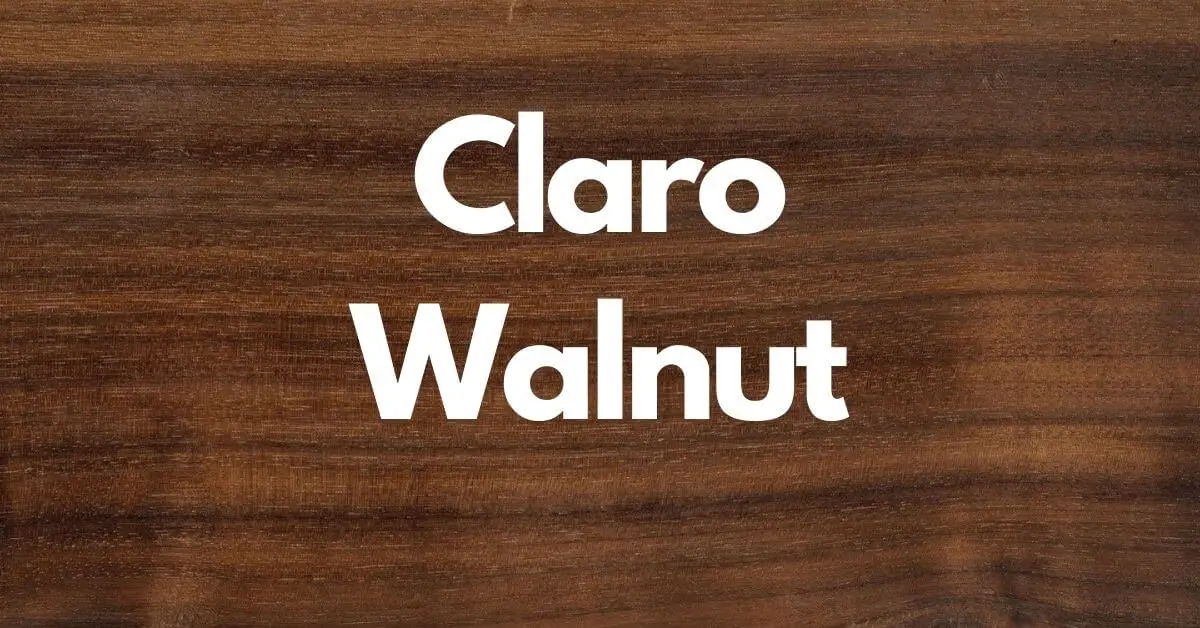
Claro walnut color ranges widely — from light tan and golden brown to deep chocolate, often streaked with darker brown, purple, or grayish tones. The sapwood is typically pale cream to light brown and contrasts noticeably with the darker heartwood, which many woodworkers incorporate intentionally into their designs.
Grain can be straight in plainer-cut boards, but figured Claro walnut often shows curly, wavy, burled, or marbled patterns, especially in crotch and root-cut sections.
Claro Walnut vs. Other Walnut Species
| Wood Species | Janka Hardness (lbf) | Grain Character | Typical Cost | Best Known For |
|---|---|---|---|---|
| Claro Walnut | 1,000–1,220 | Wild, figured, marbled | High (premium for figure) | Slabs, gunstocks, statement furniture |
| Black Walnut (Eastern) | 1,010 | Mostly straight | Moderate | Furniture, cabinetry, flooring |
| English Walnut | 1,220 | Fine, even | Moderate-High | Furniture, veneer, carving |
| Bastogne Walnut | 1,200 | Highly figured (hybrid vigor) | Very High | High-end gunstocks, slabs |
Bastogne walnut, worth a quick mention, is actually a hybrid between Claro and English walnut and is sometimes confused with it — it shares a similar dramatic figure and is equally prized by gunstock makers and furniture builders.
Working with Claro Walnut
Claro walnut machines well overall, but the same wild grain that makes it beautiful can also make it more challenging to work with. Highly figured or burled sections are prone to tearout, so sharp blades, light passes, and sometimes a higher cutting angle are necessary to get clean results.
It glues well, sands to a smooth finish, and takes oil and lacquer finishes beautifully, which is part of why it’s a favorite for showcasing natural grain rather than hiding it under heavy stains.
A few practical tips:
- Use sharp, high-quality blades or router bits, especially on figured sections, to minimize tearout.
- Consider a finish that enhances rather than masks the grain, such as a hand-rubbed oil or a clear lacquer.
- Stabilize burl or highly figured sections before final shaping, as they can be more prone to checking or movement.
- Pre-drill before screwing into denser figured areas to avoid splitting.
Advantages and Disadvantages
Advantages
- Exceptional figure and color — no two boards look the same, making every project unique.
- Good strength-to-weight ratio — durable enough for gunstocks and structural furniture components.
- Workable — machines, glues, and finishes well despite its density.
- Sustainable sourcing — much of the supply comes from retired orchard trees rather than virgin forest harvesting.
- High resale and craft value — furniture and slabs made from figured Claro walnut tend to hold value well.
Disadvantages
- Expensive — highly figured boards and slabs come at a premium price, sometimes significantly higher than standard walnut.
- Inconsistent grain — the same wild figure that makes it beautiful can make machining and finishing less predictable.
- Limited large-quantity availability — because it largely comes from orchard trees rather than dedicated forestry, sourcing large matching quantities can be difficult.
- Tearout risk — figured sections require extra care and sharp tooling to avoid chipping or tearout.
Is Claro Walnut Sustainable?
Yes, generally speaking. Since most Claro walnut comes from retired or non-productive orchard trees in California rather than from clear-cutting forests, it’s often considered a more sustainable choice compared to some imported exotic hardwoods. That said, supply is naturally limited by how many walnut orchards are being retired and harvested at any given time, which contributes to its premium pricing.
Frequently Asked Questions
Is Claro walnut the same as black walnut?
Not exactly. Claro walnut comes from California black walnut (Juglans hindsii) or hybrids with English walnut, while “black walnut” typically refers to Eastern black walnut (Juglans nigra). They’re related but distinct in appearance and grain character.
Why is Claro walnut so expensive?
The price reflects both the dramatic, one-of-a-kind figure found in the best boards and the limited supply, since most high-quality material comes from retired orchard trees rather than dedicated timber forests.
Is Claro walnut good for beginners?
Plain-sawn, less figured boards are quite workable for intermediate woodworkers. Highly figured or burled pieces are better suited to more experienced woodworkers due to the tearout risk.
What’s the difference between Claro and Bastogne walnut?
Bastogne walnut is a hybrid of Claro and English walnut, often showing even more dramatic figure. It’s typically priced even higher than Claro walnut and is especially popular for premium gunstocks.