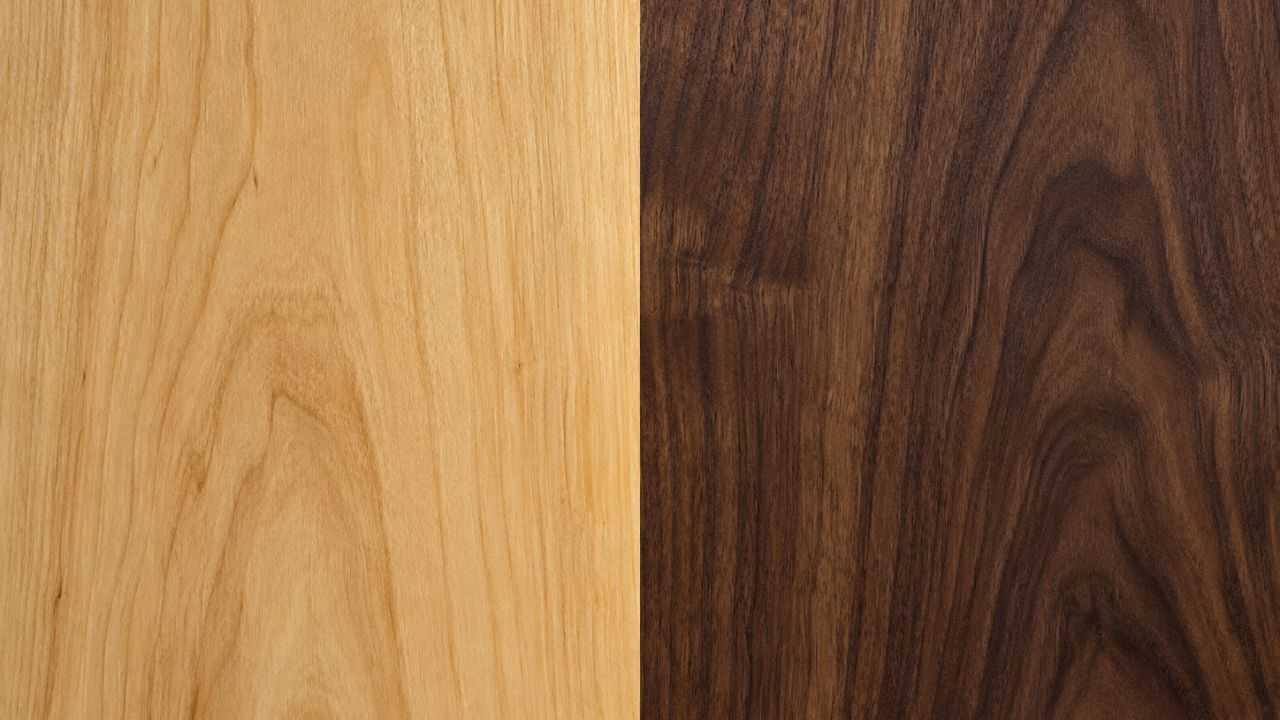
Butternut is lighter, softer, and easier to carve, while black walnut is darker, harder, and better suited to furniture surfaces that receive frequent use. Both are hardwoods belonging to the walnut family. Butternut’s softness does not make it a softwood.
These related woods share an attractive grain pattern, but they offer different advantages. Butternut is particularly useful for carvings, decorative panels, and lightweight interior projects. Black walnut is a popular choice for tables, cabinetry, flooring, and fine furniture.
The better option depends on the appearance, wear resistance, and workability your project requires.
What Is Butternut Wood?
Butternut wood, also called white walnut, comes from Juglans cinerea, a deciduous tree native to eastern North America.
It is a relatively soft, lightweight hardwood with a light brown color and noticeable grain. Its easy cutting and shaping make it especially appealing for hand carving.
Common uses include furniture, cabinetry, architectural millwork, paneling, boxes, and decorative objects. Although butternut can perform well indoors, it is not a dependable choice for untreated outdoor applications where decay resistance is important.
What Is Black Walnut Wood?
Black walnut comes from Juglans nigra, another hardwood tree native to eastern North America.
Its heartwood ranges from light brown to deep chocolate brown, making it popular for furniture and decorative woodworking. Compared with butternut, it is substantially harder and heavier.
Black walnut generally machines well and has good dimensional stability when properly dried. Its heartwood also has useful natural decay resistance. However, that does not make every walnut board waterproof, insect-proof, or suitable for every exterior application.
Butternut vs Black Walnut: Comparison Table
The following figures are representative values for dried wood. Individual boards vary.
| Characteristic | Butternut | Black walnut |
|---|---|---|
| Scientific name | Juglans cinerea | Juglans nigra |
| Other common name | White walnut | American black walnut |
| Wood classification | Hardwood | Hardwood |
| Janka hardness | Approximately 490 lbf | Approximately 1,010 lbf |
| Typical dried weight | About 27 lb/ft³ | About 38 lb/ft³ |
| Heartwood color | Light tan to light brown, sometimes pinkish | Light brown to dark chocolate brown |
| Grain and texture | Usually straight; relatively coarse texture | Usually straight, sometimes figured; medium texture |
| Workability | Easy to cut and carve; can develop fuzzy surfaces | Generally easy to machine; figured grain needs care |
| Resistance to dents | Low | Higher than butternut |
| Outdoor suitability | Best reserved for protected interior uses | Decay-resistant heartwood, but exterior suitability depends on the application |
| Common uses | Carvings, paneling, millwork, boxes, furniture | Furniture, cabinets, flooring, veneer, gunstocks |
Butternut vs Black Walnut Wood Uses
Butternut Wood Uses
Carving: Butternut’s softness makes it easier to remove material with hand tools. Its visible grain also gives carvings more character than woods with a very subtle grain pattern.
Architectural millwork: It works well for decorative moldings, trim, and carved details that do not need high resistance to impacts.
Furniture and cabinetry: Butternut can be used for cabinets, chests, and other indoor furniture. Choose it with the understanding that exposed surfaces can dent relatively easily.
Boxes and decorative objects: Its low weight is helpful for small boxes, display pieces, and other projects where easy handling matters.
Although butternut has also been used for crates and rough utility items, purchasing specialty butternut lumber for disposable packaging is unlikely to be its best use today.
Black Walnut Wood Uses
Fine furniture: Tables, desks, beds, and chairs benefit from its attractive color and useful balance of hardness and workability.
Cabinetry and interior joinery: Walnut is widely used for cabinet doors, decorative panels, and interior woodwork.
Flooring: It is suitable for flooring, but it can still dent. Walnut is softer than common flooring species such as red oak and hard maple, so it should not be described as scratch-proof or exceptionally hard.
Veneer and decorative work: Walnut veneer provides its appearance over a suitable substrate, while figured pieces are valued for accents and small decorative projects.
Gunstocks: Walnut has a long history of use for gunstocks, where grain selection and sound material are important.
Appearance and Color
Butternut Appearance
Butternut heartwood is usually light tan to light brown, sometimes with pinkish or reddish tones. Its pale sapwood may be less visually striking than the contrast found in black walnut.
The grain is generally straight, and its relatively coarse texture produces a visible pattern. A clear finish can highlight these features without making the wood look as dark as walnut.
Black Walnut Appearance
Black walnut heartwood varies from pale brown to deep chocolate brown, occasionally with darker or purplish streaks. The sapwood is usually creamy white.
Straight-grained boards offer a restrained appearance, while curly, wavy, or other figured pieces create a more decorative effect.
Some commercially available walnut is steamed to reduce the contrast between its heartwood and sapwood. Ask the supplier about color selection if you need boards to match closely.
Hardness: Which Wood Resists Dents Better?
Black walnut is considerably more resistant to indentation than butternut.
Its Janka hardness of approximately 1,010 lbf is just over twice butternut’s approximately 490 lbf. This gives walnut an advantage for tabletops, desks, and other surfaces exposed to regular contact.
However, the Janka test measures resistance to indentation. It does not mean walnut is twice as strong in every respect or that it cannot scratch.
Butternut’s lower hardness is an advantage for carving. For a heavily used dining table, the same softness becomes a limitation.
Durability, Stability, and Outdoor Use
Durability can mean resistance to everyday wear or resistance to decay. These are different properties.
Butternut can last well in dry indoor conditions, especially in decorative applications. Its low hardness mainly makes it vulnerable to dents and surface damage.
Black walnut offers better resistance to everyday indentation, and its heartwood has considerably better decay resistance. The American Hardwood Export Council’s walnut profile identifies good stability when dry and strong resistance to heartwood decay.
Nevertheless, walnut is not automatically the best value for decking, fencing, or exposed garden furniture. Its cost, sapwood content, construction details, and exposure all matter. Natural heartwood durability should not be treated as a guarantee for ground contact.
Both woods continue to expand and contract with moisture changes. Proper drying and construction that allows movement remain important.
Workability: Butternut vs Black Walnut
Working With Butternut
Butternut is generally easy to saw, shape, and carve. Sharp tools help cut the fibers cleanly rather than crushing or tearing them.
Its softness can also create fuzzy surfaces during machining or sanding. Work carefully around delicate details and avoid excessive sanding pressure.
Protect the surface from clamp marks with suitable pads. Predrill near ends and edges when needed; soft wood can still split around fasteners.
Working With Black Walnut
Black walnut usually works well with both hand and machine tools. Straight-grained boards are generally straightforward to plane, shape, and join.
Figured or reversing grain can tear out, so sharp cutters and lighter passes are useful. Walnut also glues and finishes well and is suitable for steam bending when the stock and process are appropriate.
For either species, use effective dust extraction and appropriate protection when cutting or sanding.
Staining and Finishing
Both woods accept suitable finishes, but a sample is essential before finishing the project.
Butternut can be stained darker to resemble walnut, although the result will not duplicate walnut’s natural color, density, or hardness.
Black walnut is often finished without a dark stain to preserve its natural variation. Different clear finishes can change its warmth and contrast, so test on an offcut from the same boards.
Neither wood should be described as automatically producing a flawless stain result. Surface preparation, sanding consistency, and the finishing system affect the outcome.
Pricing and Availability
Butternut
Butternut should not be assumed to be widely available or consistently inexpensive.
Widespread losses caused by butternut canker have reduced tree populations, as documented in U.S. Forest Service research. Lumber availability varies by region, supplier, and required dimensions.
Specialty dealers may offer suitable boards or carving blanks, but clear, wide stock can be harder to find. Confirm availability before designing a project around particular sizes.
Black Walnut
Black walnut is generally easier to source through hardwood dealers and is available as lumber, slabs, veneer, and project blanks.
It commonly carries a premium price among domestic hardwoods. Clear boards, attractive figure, substantial thickness, and wide dimensions can increase the cost.
Compare usable material rather than price alone. A cheaper board with defects or unsuitable dimensions may produce less usable wood.
Which Wood Should You Choose?
| Your project or priority | Better starting choice |
|---|---|
| Hand carving | Butternut |
| Lightweight decorative panels | Butternut |
| Light-colored interior woodwork | Butternut |
| Frequently used tabletop or desk | Black walnut |
| Dark natural furniture finish | Black walnut |
| Flooring | Black walnut |
| Decorative boxes | Either, depending on color and wear requirements |
| Exposed outdoor construction | Consider application-specific alternatives before choosing either |
Choose butternut when easy carving, low weight, and a lighter appearance matter most. Choose black walnut when you want a darker natural color and better resistance to dents in everyday furniture.
Frequently Asked Questions
Is Butternut a Type of Walnut?
Yes. Butternut and black walnut both belong to the genus Juglans, but they are different species. Butternut is Juglans cinerea, while black walnut is Juglans nigra.
Is Butternut a Softwood?
No. Butternut is a hardwood with relatively soft wood. Hardwood classification refers to the type of tree, not the material’s measured hardness.
Can Butternut Replace Black Walnut in Furniture?
Sometimes. It can work for cabinets, decorative panels, and furniture where a softer surface is acceptable. It is less suitable as a direct replacement when indentation resistance is a priority.
Which Is Better for Beginners?
Butternut is often easier for beginners learning hand carving. Black walnut is also approachable for general woodworking, particularly when the boards have straight grain. The better choice depends on the task, not simply the woodworker’s experience.