Apple wood is a dense hardwood obtained from deciduous trees in the Malus genus. The Apple trees are grown throughout many temperate regions, primarily for their fruit, but their wood is also valuable for woodworking, carving, firewood, grilling, and smoking food.
Apple wood has a fine texture, attractive reddish-brown color, and high surface hardness. It can produce beautiful furniture and turned objects, although the small size of apple trees limits the availability of wide, long boards.
For cooking, seasoned apple wood produces a mild, sweet, fruity smoke that pairs particularly well with pork, poultry, fish, and vegetables.
Apple Wood Characteristics
| Property | Typical Value |
|---|---|
| Scientific name | Malus spp., including Malus domestica |
| Common names | Apple, crab apple, wild apple |
| Wood type | Hardwood |
| Average dried weight | About 52 lb/ft³ or 830 kg/m³ |
| Janka hardness | About 1,730 lbf or 7,700 N |
| Crushing strength | About 6,030 lbf/in² or 41.6 MPa |
| Color | Light reddish brown to deep red-brown |
| Grain | Usually straight, sometimes irregular |
| Texture | Fine and uniform |
| Natural decay resistance | Low |
| Common uses | Furniture, carving, handles, bowls, smoking wood, and firewood |
These are average reference values. Properties can vary among apple species and individual trees.
Apple Wood Color and Appearance
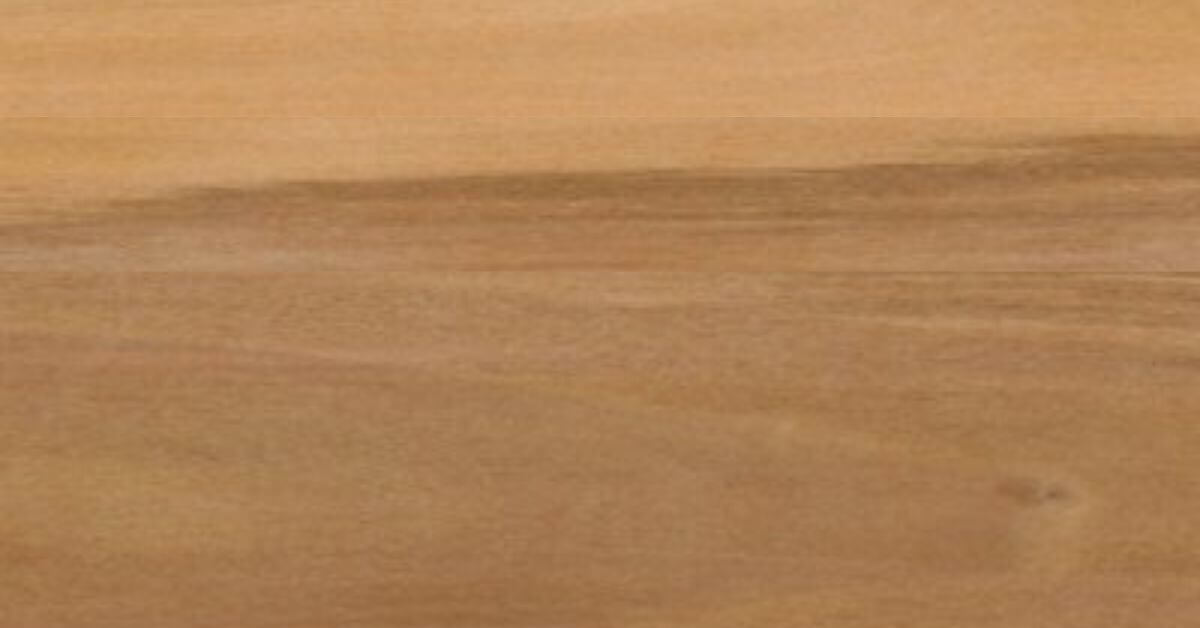
Apple heartwood generally ranges from light reddish or grayish brown to a deeper red-brown. Darker and lighter streaks may appear throughout the wood.
The sapwood is usually pale cream and can contrast clearly with the heartwood. Freshly cut apple wood may appear relatively light, but its color often becomes warmer and darker as the wood ages and oxidizes.
Color varies according to the apple species, tree age, growing conditions, soil, drying method, and the part of the tree from which the board was cut.
Apple Wood Grain and Texture
Apple wood usually has a straight, fine grain and a smooth, uniform texture. Irregular or interlocked grain can occur around branches, crotches, and curved sections of the trunk.
Its fine texture allows it to take a smooth finish, making apple wood attractive for small furniture parts, bowls, handles, carvings, and turned objects.
Is Apple Wood a Hardwood?
Yes, apple wood is a hardwood because it comes from a broadleaf flowering tree.
It is also physically hard and dense. Apple wood has a commonly cited Janka hardness of approximately 1,730 lbf, making it harder than black walnut, cherry, white oak, and hard maple based on typical reference values.
| Wood Species | Janka Hardness |
|---|---|
| Black walnut | 1,010 lbf |
| Sweet cherry | 1,150 lbf |
| White oak | 1,350 lbf |
| Hard maple | 1,450 lbf |
| Apple wood | 1,730 lbf |
| Hickory | 1,820 lbf |
Janka hardness measures resistance to denting and surface wear. It does not, by itself, determine a wood’s overall strength, stability, or outdoor durability.
What Is Apple Wood Used For?
Apple wood has several valuable uses, although its availability in small pieces limits large-scale production.
Smoking and Grilling
Apple is one of the best-known fruitwoods for smoking food. It produces a mild, slightly sweet smoke that adds flavor without overpowering most foods.
Apple wood is commonly used for:
- Pork
- Chicken
- Turkey
- Fish
- Beef
- Vegetables
- Cheese
It can be combined with oak or hickory when a stronger smoke profile is desired.
Furniture
Apple wood can be used for small, high-quality furniture and decorative components. Its reddish-brown color, fine grain, and smooth finish make it visually appealing.
Large apple wood furniture is uncommon because apple trees generally produce short, narrow, or irregular logs.
Carving and Turning
Apple wood is used for:
- Bowls
- Spoons
- Handles
- Carvings
- Turned objects
- Small boxes
- Decorative items
Its density allows fine details and a smooth surface, but it can be demanding to carve by hand. Sharp tools are essential.
Tool Handles
Apple wood’s density and fine texture make it suitable for small tool handles and other objects that need a hard, smooth surface.
The grain should be inspected carefully before using it for a handle that will receive repeated impact.
Firewood
Properly seasoned apple wood makes excellent firewood. It produces strong heat, good coals, relatively few sparks, and a pleasant fragrance.
Utah State University Extension lists apple at approximately 27 million BTUs per full cord of dry wood. Actual heat output depends on moisture content, cord measurement, species, and burning conditions.
Advantages of Apple Wood
Attractive Appearance
Apple wood has warm reddish-brown color and fine grain. It can produce distinctive furniture, bowls, handles, and decorative pieces.
Hard and Dense
Its high density provides good resistance to dents and everyday surface wear.
Smooth Finish
Apple wood can be sanded and polished to a smooth surface. It generally accepts glue and finish well when properly prepared.
Good for Turning
Its fine texture and density make it suitable for bowls, handles, and detailed turned objects.
Excellent Smoking Flavor
Seasoned apple wood produces a mild smoke that complements many foods without creating the intensity associated with woods such as mesquite.
Useful Orchard By-product
Apple lumber and smoking wood may be recovered when orchard trees are pruned, damaged, or removed. Responsible use can give the material a second purpose, although its sustainability still depends on sourcing and processing.
Disadvantages of Apple Wood
Limited Board Sizes
Apple trees are relatively small and branch heavily. Long, wide, clear boards can be difficult to obtain.
Difficult to Machine
Its high density can make apple wood challenging to saw, carve, or plane. It may burn during machining if tools are dull or feed rates are too slow.
Prone to Movement and Checking
Apple wood has relatively high shrinkage and must be dried carefully. Poorly dried pieces may crack, check, distort, or warp.
Low Natural Decay Resistance
Apple wood is rated as non-durable against heartwood decay. It is not a good choice for untreated outdoor or ground-contact projects.
Variable Availability and Price
Apple lumber is less widely stocked than oak, maple, walnut, or cherry. Small specialty pieces may be expensive despite coming from a common fruit tree.
How to Work With Apple Wood
Apple wood can produce excellent results when it is dry and machined carefully.
- Select properly seasoned wood suitable for the project’s environment.
- Inspect the material for cracks, knots, decay, and insect damage.
- Use sharp blades, cutters, and carving tools.
- Maintain a steady feed rate to reduce heat buildup and burning.
- Take light cuts where the grain becomes irregular.
- Drill pilot holes near edges to reduce splitting.
- Sand through progressively finer grits.
- Test stains and finishes on an offcut first.
- Wear eye protection and effective respiratory protection when producing wood dust.
Wood moisture requirements vary by climate and application. Use a moisture meter and allow lumber to acclimate before beginning an indoor furniture project.
Can Apple Wood Be Used Outdoors?
Apple wood is not recommended for untreated outdoor projects because it lacks strong natural resistance to decay and insects.
A suitable exterior coating can slow moisture entry, but it does not make apple wood permanently waterproof or rot-proof. For projects exposed to rain, soil, or standing water, a naturally durable or appropriately treated wood is usually a better choice.
Using Apple Wood for Smoking Food
Use dry, clean wood that is suitable for cooking. Do not smoke food with wood that is:
- Painted, stained, glued, or pressure-treated
- Moldy or decayed
- Contaminated with oil or chemicals
- From an unknown source
- Covered with heavy chemical residue
Wood from commercial orchards may have a pesticide history that cannot always be verified. When the source is uncertain, buy food-grade smoking chips or chunks from a trusted supplier.
Whether chips should be soaked depends on the smoker design and manufacturer’s instructions. Soaking does not automatically improve flavor.
Apple smoke provides flavor; it does not make meat cook faster. Cooking time is controlled by temperature, food size, equipment, and cooking method. Always verify safe internal temperature with a food thermometer.
What Does Apple Wood Smoke Taste Like?
Apple wood produces a mild, subtly sweet, fruity smoke. It is less intense than mesquite or hickory and generally does not overpower delicate foods.
| Food | How Apple Smoke Works |
|---|---|
| Pork | Adds mild sweetness that complements pork well |
| Chicken | Provides light smoke without overwhelming the meat |
| Turkey | Adds a gentle fruity aroma and color |
| Fish | Suitable when used sparingly |
| Brisket | Mild on its own; can be mixed with oak or hickory |
| Beef | Works for a lighter flavor but is less bold than oak or mesquite |
| Vegetables | Adds gentle smoke to peppers, mushrooms, squash, and onions |
Is Apple Wood Good for Smoking Turkey?
Yes. Apple wood’s mild, fruity smoke works well with turkey. It can be used alone or combined with a small amount of a stronger wood.
Is Apple Wood Good for Smoking Chicken?
Yes. Apple is a popular choice for chicken because it creates a lighter smoke flavor than hickory or mesquite.
Is Apple Wood Good for Smoking Brisket?
Apple wood can be used for brisket, but it produces a relatively mild flavor. Mixing it with oak or hickory creates a stronger smoke profile.
Is Apple Wood Good for Smoking Pork?
Yes. Pork is one of the most popular pairings for apple wood. Its mild sweetness complements pork shoulder, ribs, chops, and tenderloin.
Is Apple Wood Good for Smoking Beef?
Yes, but the result will be milder than smoke produced by oak, hickory, or mesquite. Apple can be blended with one of those woods for a stronger flavor.
Is Apple Wood Expensive?
Apple lumber may be moderately expensive because it is not commonly harvested in large commercial volumes. Its price depends on board size, quality, drying, local availability, figure, and demand.
Smoking chunks and chips are more widely available and are generally sold by bag weight rather than by board foot.
Frequently Asked Questions
Does apple wood smell like apples?
Fresh apple wood may have a mild, sweet scent, while its smoke has a light fruity character. It does not usually smell exactly like fresh apples.
Is apple wood good for carving?
Yes, especially for detailed small objects. However, its density makes it harder to carve than basswood or butternut.
Is apple wood rot-resistant?
No. Apple heartwood is generally rated as non-durable against decay and should not be relied upon for exposed outdoor use.
Does apple wood burn hot?
Yes. Properly seasoned apple wood produces high heat and good coals, making it useful as firewood.
Can fresh apple wood be used for smoking?
Seasoned smoking wood is generally easier to use predictably. Fresh wood contains more moisture and can produce inconsistent combustion and undesirable smoke. Follow the smoker manufacturer’s instructions.
Conclusion
Apple wood is a hard, dense, fine-textured hardwood used for small furniture, carving, turning, handles, firewood, and smoking food.
Its attractive reddish-brown color and smooth finish make it valuable for woodworking, while its mild, sweet smoke pairs especially well with pork and poultry.
Its main limitations are small board size, difficult machining, movement during drying, limited availability, and poor natural decay resistance. When properly seasoned and carefully worked, apple wood can produce beautiful and durable indoor projects.