Introduction
Sugar Maple
Sugar maple is also known as hard maple, rock maple, bird’s-eye maple, sweet maple, and curly maple. It is native to the hardwood forests of eastern Canada and Eastern North America. Sugar maple is known as the primary source of maple syrup.
It is widely grown as an ornamental and shade tree. Its leaves look attractive. In addition, its wood is used for cabinets, furniture, and interior finishing.
Red Maple
Red maple is also known as soft maple, swamp maple, and water maple. It is native to Eastern North America. The red maple got its name because of its red flowers, fruits, and twigs.
Red maple is also grown as an ornamental and shade tree. Its leaves and fruits look attractive, and it is often found in parks and gardens.
Properties
| Sugar maple | Red maple | |
|---|---|---|
| Scientific Name | Acer saccharum | Acer rubrum |
| Known as | Hard maple | Soft maple |
| Native to | Eastern North America | Eastern North America |
| Tree Size | 80–115 ft (25–35 m) tall | 65–100 ft (20–30 m) tall |
| Average Dried Weight | 44 lbs/ft³ (705 kg/m³) | 38 lbs/ft³ (610 kg/m³) |
| Janka Hardness | 1,450 lbf (6,450 N) | 950 lbf (4,230 N) |
| Wood color | Reddish brown | Light golden to reddish brown |
| Rot Resistance | Not rot resistant | Not rot resistant |
| Uses | Flooring, veneer, paper, musical instruments | Veneer, paper, boxes, crates, pallets, musical instruments |
Sugar vs Red Maple Uses
Best uses of Sugar Maple
Syrup:
Sugar maple is one of the most important maple species for making maple syrup. Other maple species can also be used, but their sugar content is lower.
The sap is extracted by drilling a hole into the tree and inserting a tap. The sap is collected in a container. The tree should be at least 12 inches in diameter before tapping.
Flooring:
Sugar maple is widely used for flooring because of its higher density and hardness. High-density wood is less prone to scratches and dents.
Best uses of Red Maple
Boxes, Crates, and Pallets:
Red maple is mainly used for making boxes, crates, and pallets. It is lighter than sugar maple, which makes it easier to handle and transport.
Common Uses
Ornamental Trees:
Both sugar maple and red maple are widely grown as ornamental and shade trees. Their dense crowns provide good shade in summer.
Furniture:
Both woods are used for furniture. The heartwood gives an attractive reddish-brown appearance.
Paper (Pulpwood):
Both species are suitable for pulpwood because of their straight grain.
Musical Instruments:
Sugar maple and red maple are also used in musical instruments due to their strength and workability.
Wood Color
- Sugar Maple: Sapwood ranges from nearly white to light golden, while heartwood is darker reddish-brown.
- Red Maple: Heartwood is reddish-brown, and sapwood is almost white.
Workability
Sugar maple and red maple both have good workability. They are fairly easy to work with hand and machine tools. Some difficulty may occur with high-speed machines, such as routers.
Red maple is easier to work with because it is less dense than sugar maple.
Do Sugar and Red Maple Cause Allergies?
Some maple species may cause skin irritation, runny nose, or asthma-like symptoms. It is recommended to wear protective gear while working with maple wood.
Rot Resistance
Both sugar maple and red maple are rated as non-durable and are susceptible to insect attack. They are not suitable for outdoor use without treatment.
Sugar Maple vs Red Maple Identification
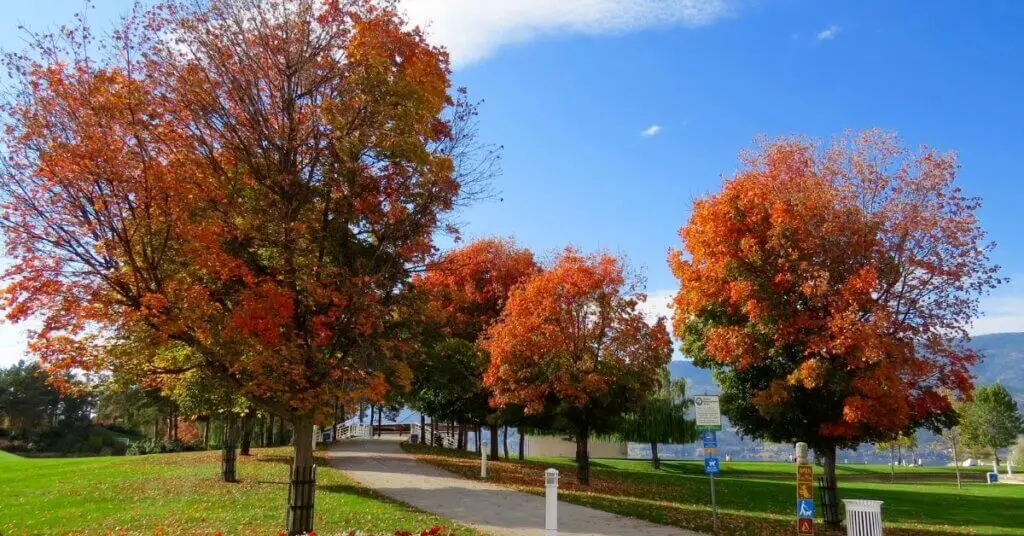
Leaves
- Sugar Maple:
Leaves have 5 lobes, dark green on top and lighter underneath. - Red Maple:
Leaves have 3–5 lobes and are generally smaller than sugar maple leaves.
Bark
- Sugar Maple:
Smooth in young trees and becomes rough and fissured with age. - Red Maple:
Smooth and light when young, becoming darker and rough over time.
Flower
- Sugar Maple:
Yellow flowers appear before leaves. Blooms in April–May. - Red Maple:
Red flowers appear before leaves. Blooms in March–April.
Fruit
Both produce samaras (winged seeds).
- Sugar Maple: About 1 inch long
- Red Maple: About ½–1 inch long
Growth Rate
Both sugar maple and red maple grow at a medium to fast rate, typically 12–24 inches per year under good conditions.
Read Also
Comments are closed.