
The primary purpose of wood siding is to protect the walls from exterior elements, insulate the home, and create aesthetic appeal. Wood siding is relatively easy to install and maintain, and it is also environmentally friendly.
There are many siding materials available on the market that are more durable and cheaper than wood, but they do not have the natural texture and color of solid wood.
Wood siding can last about 25 to 30 years with regular maintenance, but its durability depends on the quality and species of the wood, as well as how well it is maintained.
We are going to explain some simple steps to clean siding so that you can increase its durability and enhance its appearance.
Note: This is a method for cleaning wood siding, not vinyl siding. The cleaning methods for vinyl siding and natural wood siding are quite different, so be sure to follow the proper instructions.
Things You’ll Need
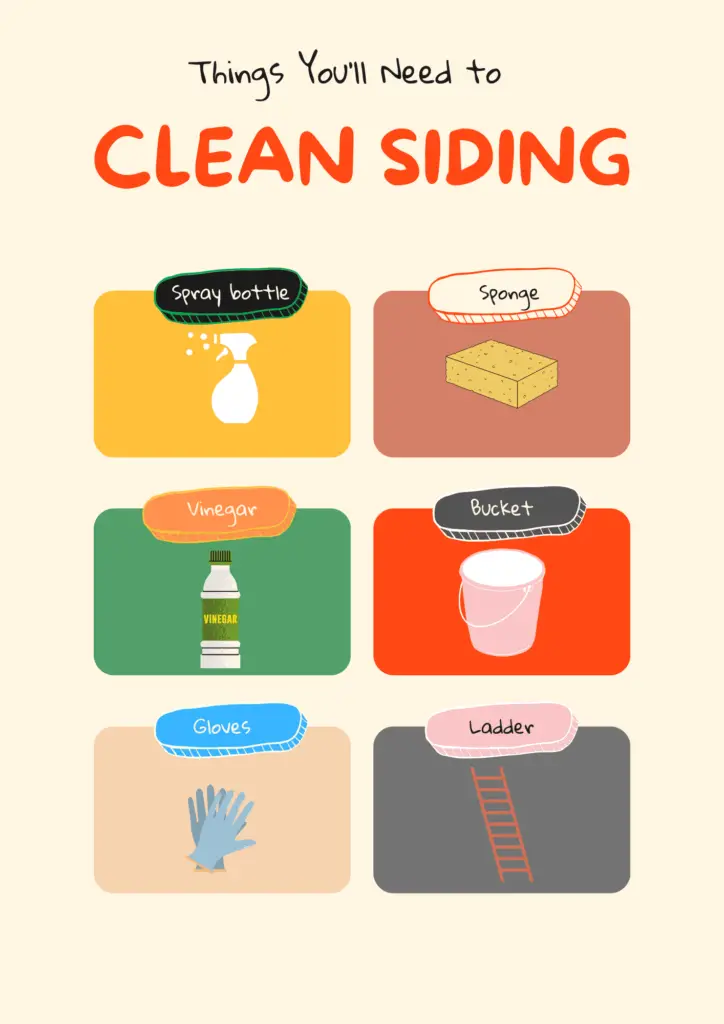
- Spray bottle
- A soft-bristled brush or a sponge
- Vinegar or Mild soap or a quality siding cleaner
- Protective eyewear and gloves
- Ladder
- Optional: a bucket, a scraper, and a putty knife
Step 1: Prepare the Siding for Cleaning
Before we begin cleaning, we need to prepare the siding. Here are some checkpoints that you should follow:
- Close doors and windows properly so that water cannot enter during cleaning.
- Remove any electrical wires that are in contact with the siding.
- Cover or remove electrical switches, lamps, and anything else that could be damaged by contact with water.
- Remove any loose dirt or debris from the siding using a soft-bristled brush or broom.
- Wet the siding and wait 5 minutes so that the stains can be cleaned more easily.
Step 2: Prepare the Cleaning Solution
Make a solution containing 75% water and 25% white vinegar. Do not use undiluted vinegar on the siding, as it can damage the wood. Always dilute the vinegar by adding the proper amount of water.
This solution is suitable for light and moderate mildew stains. However, if you find that the siding has a lot of mold, you can make a solution containing 70% water and 30% vinegar.
If you are using mild soap or detergent, mix it according to the manufacturer’s instructions.
Step 3: Start From Top to Bottom
Dip a soft cloth, sponge, or soft brush into the cleaning solution and wring it out until it is only slightly damp. Working from top to bottom, wipe the siding with the cloth or sponge, using circular motions to remove dirt and grime.
In areas where there is a heavier accumulation of dirt, you may need to scrub more with a brush. Be careful not to scrub too hard, otherwise, you may damage the paint or stain.
If any part of the siding is damaged or rotted, repair or replace it. Otherwise, the rot can spread to other parts of the siding as well.
Step 4: Let the Siding Dry
Once you’ve finished cleaning, allow the siding to dry completely before applying any sealant or paint. This will help ensure that the siding is properly protected and lasts for many years.
If there are any stubborn stains or particularly dirty areas, you may need to use a stronger cleaning solution. Be sure to follow the manufacturer’s instructions for any cleaning product or pressure washer that you use.
Rinse the siding with a garden hose to remove any remaining dirt and soap.
Things to Avoid When Cleaning Wood Siding
- Don’t use a high-pressure washer, as it can dent or damage your wood siding. If you only have the option of using a pressure washer, set it to the lowest pressure setting. Be careful not to get too close to the wood, as the pressure can damage it.
- Avoid using chemical-based detergents, as these chemicals can discolor the stain and damage the wood grain.
- Don’t scrub too hard in the same area.
- Do not use straight vinegar, as it can damage the wood grain.
- Always test any cleaning solution on a small, inconspicuous area of the siding before applying it to the entire surface. This will help you ensure that the solution does not cause any damage or discoloration.
Conclusion
Cleaning siding can be a difficult task if you have never worked on a DIY project before. Working at height can also be dangerous. If you are confident that you can safely complete the task, you can do it yourself. Otherwise, consider hiring a professional siding cleaner.