
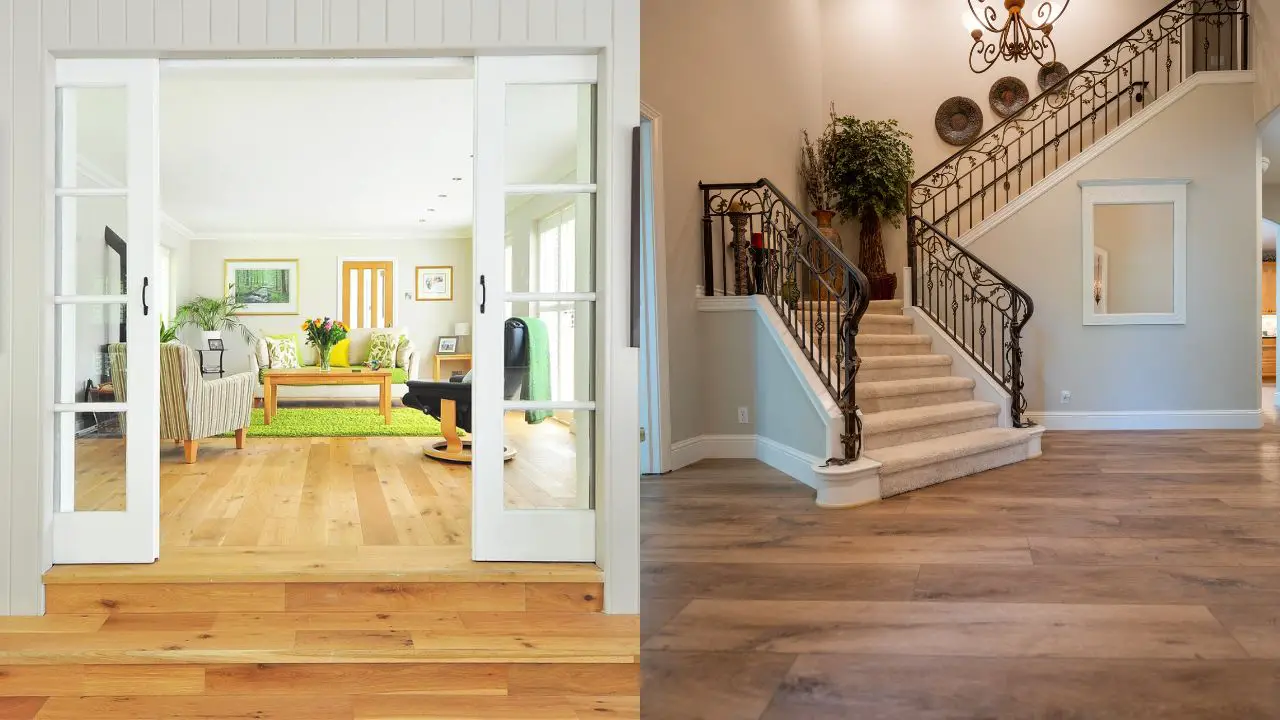
Choosing a floor is a high-stakes game. It’s the most used surface in your home. Today, the battle is between the natural prestige of Engineered Hardwood and the bulletproof convenience of Luxury Vinyl Plank (LVP).
Which one will survive your household? Let’s break it down.
1. Quick Comparison Table
| Feature | Engineered Hardwood | Luxury Vinyl Plank (LVP) |
| Material | Real Wood Veneer over Plywood | 100% Synthetic (PVC/Stone Dust) |
| Water Resistance | Water-resistant (Surface only) | 100% Waterproof |
| Lifespan | 20–50 years (Can be refinished) | 10–20 years (Must be replaced) |
| DIY Friendliness | Moderate (Requires special tools) | High (Score and Snap) |
| Resale Value | High (Considered a luxury asset) | Moderate (Functional but common) |
2. The “Feel” Factor: Warmth vs. Utility
- Engineered Hardwood: It has “Soul.” It stays warm in winter and feels solid underfoot. Because the top layer is real oak, maple, or walnut, no two planks are the same.
- LVP: Modern LVP is beautiful, but it can feel “repetitive.” Since it’s a printed image, you might see the same knot pattern every few feet. It can also feel colder and “clickier” if a high-quality underlayment isn’t used.
3. The “Pet & Kid” Test
If you have a 70lb Golden Retriever or toddlers who treat the house like a water park:
- LVP is the clear winner. It is virtually scratch-proof and won’t warp if a juice box leaks and sits there for an hour.
- Engineered Hardwood is tough, but a dog’s claws can leave “character marks” (scratches) over time.
4. Acoustic Secret: Which one is quieter?
One thing most blogs ignore is Sound.
- Hardwood absorbs some sound but can be echoey in empty rooms.
- LVP needs a high-quality cork or foam backing. Without it, LVP can sound “hollow” or “plastic-y” when you walk on it with hard shoes.
5. Don’t Lose Money on “Wastage”
Flooring is expensive, and nothing is worse than having 3 boxes left over—or being 2 planks short.
💡 Pro Tip: Whether you buy Hardwood ($8/sqft) or LVP ($3/sqft), you must account for a 10% wastage factor for cuts and corners.
This is especially vital for Engineered Hardwood where one wrong cut can cost you ₹500 ($10) instantly. Planning your “stagger” (the pattern of the joints) ensures you use every inch of the plank.
6. The Verdict: Where should they go?
Kitchen & Bathroom? → LVP
Don’t risk real wood near a leaking dishwasher or a splashing bathtub. LVP’s waterproof core (SPC/WPC) is built for this.
Living Room & Master Bedroom? → Engineered Hardwood
These are the areas that define your home’s value. The organic beauty of real wood creates an atmosphere that plastic simply cannot replicate.
7. Frequently Asked Questions (The “Real” Answers)
- Q: Can I put LVP over tile?
- Yes! As long as the grout lines aren’t too deep, LVP is thin and flexible enough to go right over old flooring.
- Q: How many times can I sand Engineered Hardwood?
- Check the “Wear Layer”: If the top wood layer is 3mm-4mm, you can sand it 1-2 times. If it’s 1mm, you can never sand it.
- Q: Does sun fade the floor?
- Both can fade, but LVP usually has UV-resistant coatings that hold up better against harsh sunlight through big windows.