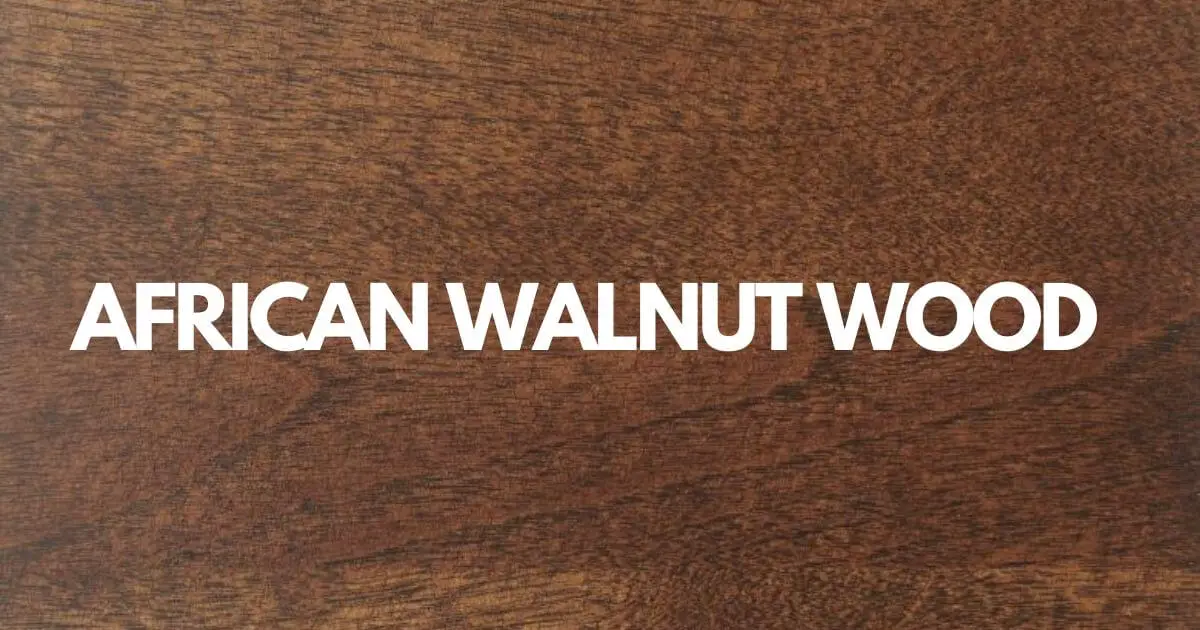
African walnut wood is highly valued for its strength, durability, and attractive appearance. It is native to West and Central Africa and ranges from golden yellow to reddish brown, sometimes with darker streaks and veins. It also gives excellent results after finishing.
African walnut wood is commonly used for high-quality furniture, cabinetry, flooring, paneling, veneer, and decorative items. It is an ideal choice for many interior applications.
African walnut wood comes from the medium- to large-sized African walnut tree, which can grow up to 100–150 ft (30–46 m) tall. There are many walnut species, and African walnut is one of them.
Each walnut species has its own characteristics. If African walnut wood does not quite meet your needs, you can also consider Black Walnut or English Walnut.
| Scientific Name: | Lovoa trichilioides |
|---|---|
| Average Dried Weight | 34 lbs/ft³ (540 kg/m³) |
| Janka Hardness | 940 lbf (4,180 N) |
| Crushing Strength | 6,700 lbf/in² (46.2 MPa) |
| Shrinkage | Radial: 3.7%, Tangential: 5.9%, Volumetric: 10.8%, T/R Ratio: 1.6 |
African Walnut Wood Advantages
Appearance
African walnut wood is known for its attractive color and ability to take a good finish. It can range from golden yellow to reddish brown, with darker streaks or highlights. The sapwood is generally medium yellow to light gray.
The color of African walnut wood can darken over time when exposed to sunlight or air. Applying a suitable finish can help protect the wood and maintain its appearance.
Durability
African walnut wood is known for its good durability and resistance to decay. It can withstand normal wear and tear, making it suitable for a variety of interior applications.
However, its durability can vary depending on the conditions in which it is used. Proper finishing and maintenance can help extend its service life.
Easy to Work
African walnut wood has a generally straight grain and medium density, making it relatively easy to work with both hand and machine tools.
It can be sawn, machined, sanded, and finished effectively. The wood also takes stains and finishes well, making it a good choice for furniture and cabinetry.
Rot Resistance and Stability
African walnut wood has good natural resistance to decay. However, it is not as resistant to rot and moisture as highly durable species such as teak or some types of mahogany.
The wood also has good dimensional stability, meaning it is less likely to warp or shrink significantly when humidity and temperature change.
African Walnut Wood Disadvantages
Susceptible to Termites
African walnut wood has good natural decay resistance, but it can still be susceptible to termites and other wood-destroying insects.
If you plan to use the wood outdoors or in areas where it may be exposed to insects, appropriate treatment and protection are recommended.
Expensive
African walnut wood is considered an expensive hardwood in many markets. Lumber prices can vary based on factors such as grade, quality, availability, regional supply, and demand.
Many other wood species available in the market are less expensive and can provide a similar appearance, including alder, red gum, and yellow poplar.
Availability and Sustainability
African walnut wood is not as widely available as many common hardwood species. Its availability can vary depending on the region, supplier, lumber size, and demand.
When purchasing African walnut, look for responsibly sourced lumber and ask the supplier about its origin and certification when available.
Softness
African walnut is relatively soft compared with some harder hardwood species. Its Janka hardness is approximately 940 lbf, so flooring and other high-wear applications may be more susceptible to dents and scratches than harder species.
Proper finishing and regular maintenance can help protect the surface.
Is African Walnut a Hardwood?
Yes, African walnut is a hardwood. It comes from Lovoa trichilioides, a broadleaf tree native to tropical Africa.
Although it is classified as a hardwood, African walnut is not among the hardest wood species. Its relatively moderate hardness makes it easier to work than many very dense hardwoods.
Is African Walnut Good for Furniture?
Yes, African walnut is an excellent choice for interior furniture. Its attractive color, straight grain, workability, and ability to take stains and finishes make it suitable for tables, chairs, cabinets, desks, and other furniture.
It can also be used for decorative furniture where appearance is especially important.
Is African Walnut Good for Flooring?
African walnut can be used for flooring, but its moderate Janka hardness should be considered. At approximately 940 lbf, it is softer than many popular flooring species, such as oak.
It can work well in areas with normal foot traffic when properly finished and maintained. However, homes with heavy traffic, pets, or activities that may cause impacts may benefit from a harder flooring species.
Is African Walnut Good for Outdoor Use?
African walnut is primarily better suited to interior applications. Although it has some natural resistance to decay, it should not be considered a replacement for highly durable outdoor species such as teak.
If African walnut is used outdoors, it should be properly finished, protected from prolonged moisture, and maintained regularly.
African Walnut vs. Black Walnut
African walnut and Black Walnut are different wood species. The African walnut comes from Lovoa trichilioides and is native to tropical Africa, while Black Walnut comes from Juglans nigra and is native to North America.
Black Walnut is generally darker and is widely used for premium furniture, cabinetry, flooring, and decorative woodworking. African walnut has a lighter golden-brown to reddish-brown appearance and is valued for its distinctive grain and color.
| Feature | African Walnut | Black Walnut |
|---|---|---|
| Scientific name | Lovoa trichilioides | Juglans nigra |
| Origin | Tropical Africa | North America |
| Typical color | Golden yellow to reddish brown | Light brown to dark chocolate brown |
| Janka hardness | About 940 lbf | About 1,010 lbf |
| Common uses | Furniture, cabinetry, veneer, flooring | Furniture, cabinetry, flooring, decorative work |
African Walnut Wood Care and Maintenance
Proper care can help preserve the appearance and performance of African walnut wood.
- Keep the surface clean and free from dirt and grit.
- Avoid prolonged exposure to water and moisture.
- Use a suitable wood finish for added protection.
- Wipe up spills as soon as possible.
- Avoid harsh cleaning chemicals.
- Repair scratches and surface damage when necessary.
- For flooring, use protective pads under furniture to reduce dents and scratches.
Final Thoughts
African walnut is an attractive hardwood with a distinctive golden-brown to reddish-brown appearance, good workability, and moderate durability. It is particularly well suited to furniture, cabinetry, veneer, paneling, flooring, and decorative woodworking.
Its moderate hardness makes it easier to work than many very dense hardwoods, but it can also make the wood more susceptible to dents and scratches in high-wear applications. Its limited availability and price may also be disadvantages.
Overall, African walnut is a good choice when you want a beautiful, workable hardwood for interior applications and are willing to pay a premium for its appearance and characteristics.